

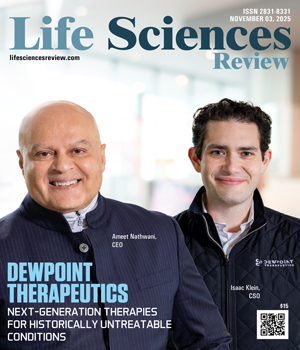
Dewpoint Therapeutics stands at the forefront of a new era in drug discovery, unlocking possibilities for patients with conditions once deemed untreatable. Its approach is grounded in biomolecular condensate science, at the nexus of physics and cell biology, leading to a novel understanding of the organizational structure within cells in the form of a liquid-like, membraneless compartment. This provides a new lens for understanding disease and access to novel and previously undruggable targets. By transforming condensates into a druggable space, Dewpoint delivers first-in-class molecules that ignite novel therapeutic possibilities. Its proprietary discovery platform identifies novel condensate targets informed by the genetics of human disease, validates them through disease‐relevant models and discovers accessible small molecule modulators capable of modulating condensates and their and disease-driving functions. “In a world where actionable targets are running out, our goal is to find new targets, and create a new generation of drugs against them that are both innovative and highly accessible,” says Ameet Nathwani, CEO. Dewpoint is the first condensate biology company, with a clear vision of becoming a flag bearer in this emerging field, assembling the best minds to lead the way. The founding team brought together pioneers in the field, including Tony Hyman, who first recognized the liquid-like nature of biomolecular condensates, Rick Young, who identified transcriptional condensates, and Nobel Prize winner Phil Sharp, who contributed deep expertise in drug development and clinical translation, helping guide the organization’s early scientific and strategic direction. Combining cutting-edge science with proven development expertise, Dewpoint delivers transformative clinical advancement in a field where traditional drug discovery had plateaued. An Industrial-Scale Discovery Engine Dewpoint’s success comes from an integrated discovery engine that unites four essential components—target discovery, condensate modulator (c-mod) discovery, drug optimization, and translation. These elements work together seamlessly, guiding discoveries through early research to drug candidate. Target identification combines human genetics with proprietary condensate prediction algorithms to uncover new targets, while cutting-edge biology validates and visualizes these targets in disease-relevant systems. Once a target is identified, the platform screens for new molecules, searching for novel chemistry that modulate disease-driving condensate targets in a precise and desirable manner. This process relies on close collaboration between biology, chemistry, data science, and AI. Optimization then refines early leads into development-ready candidates using proprietary assays and computational tools. Finally, translation carries these candidates through IND-enabling studies to prepare them for clinical trials.
Clinical Laboratory
When women are diagnosed with ductal carcinoma in situ (DCIS)—an early, non invasive form of breast cancer—the natural question is, “What’s the right treatment for me?” For decades, the answer has been shaped by broad categories. Based on visible features such as tumor size, grade, surgical margins and hormone receptor status, doctors would place patients into generic “low risk” or “higher risk” categories. But the treatment advised would be the same; surgery followed by radiation, even for those whose tumors looked relatively harmless. Radiation, however, isn’t a one-size-fits-all safeguard. Two women with tumors that look identical on paper can face very different outcomes—one might gain real protection against recurrence, while the other might endure side effects with little or no added benefit. And traditional tools couldn’t reliably distinguish between them. PreludeDx™ created DCISionRT® to change that. Instead of relying solely on how a tumor appears based on clinical and pathologic factors alone, the test integrates clinical and pathologic factors with the tumor’s underlying biology—the molecular signals that dictate its behavior. From this, it generates a Decision Score™ that provides two answers at once: a woman’s 10-year risk of recurrence, and the likelihood that radiation will significantly reduce that risk. “Our test provides doctors the clarity to make a better and more informed treatment decision and patients the confidence that their treatment is the right one for them and not a one-size-fits-all approach,” says Troy Bremer, Chief Scientific Officer. DCISionRT assesses seven key protein biomarkers within the tumor. These biomarkers act like fingerprints, revealing how fast the tumor grows, how sensitive it is to hormones, how well it repairs itself under stress, and how it regulates its cell cycle. The biological signals are combined with standard clinical data, such as age, tumor size and surgical margins, and then entered into PreludeDx’s proprietary algorithm. The algorithm then generates a score on a 10-point scale, where higher numbers indicate a higher recurrence risk and benefit from radiation therapy. The Decision Score categorizes each patient into one of three categories—low, elevated and residual risk—with very different implications for risk and treatment..

Clinical Laboratory

A Japanese-American man grew up believing he came from a proud Samurai bloodline. That was the story passed down in his family, shaped by heritage and rooted in honor. But when he opened his CRI Genetics report, the narrative took a surprising turn. Only 58 percent of his DNA was of Japanese descent. The rest pointed to Chinese, Vietnamese, and even Peruvian ancestry. What began as a search for confirmation became a journey through forgotten trade routes, cultural intersections, and ancestral revelations. His sense of identity expanded beyond borders. Complex global stories became deeply personal. At CRI Genetics, stories like this are common. Customers set out to confirm one story and end up unlocking hidden truths that reshape their identity. This kind of rediscovery is exactly what CRI Genetics was built to make possible while putting the customer at the center of everything it does. The goal is not just to scratch the surface of your identity, but to deliver deeper self-knowledge than you can get anywhere else. The company blends scientific precision with emotional insight. They turn strands of genetic data into experiences that help people understand their ancestry, their health, and their human potential. “We didn’t set out to build another ancestry company. We wanted to create a bridge between rigorous science and real people, between raw data and life-changing insight, so that every person who opens one of our kits walks away feeling seen,” says Alex Mulyar, CEO. Personalized from the Start At CRI Genetics, ancestry is more than just tracking family names or geographical roots. It’s a comprehensive, multi-layered journey. Most DNA companies stop at five to eight generations of ancestry. CRI Genetics pushes the boundaries of genetic science. Their reports trace your ancestry back up to 50 generations into your family’s past, deep into the Renaissance era. One simple cheek swab could put six centuries of family history in your hands..
CRO
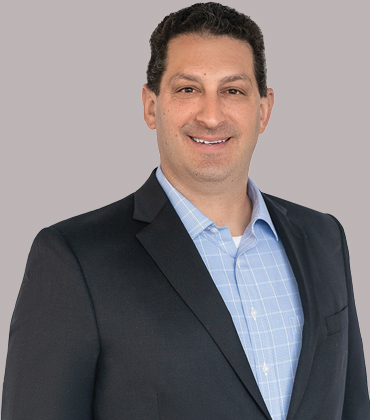
ERA Health Research is a physician-led, national clinical research site network specializing in advancing high-impact studies with speed, precision, and proven performance. Founded by emergency physicians in Kirkland, Washington—one of the first hospitals impacted by COVID-19—ERA quickly built a reputation for excellence by running a pioneering monoclonal antibody infusion research study and quickly expanding into complex, high-demand therapeutic areas. To date, ERA has participated in approximately 150 clinical studies across multiple therapeutic areas, demonstrating depth of experience and operational consistency that sponsors and CROs depend on. These studies span blood manipulation therapies, neurology and cognitive decline, and AI-powered cardiac imaging, along with established strengths in diabetes, obesity, GLP-1 receptor agonists, and hospital-based point-of-care research. Sponsors and CROs rely on ERA to execute even the most complex protocols, including helping to support those seeking 510(k) approval, all thanks to its full-time principal investigators and highly trained nurse coordinators who combine deep clinical expertise with patient-focused engagement. ERA’s model is unique: the organization integrates Registered Nurses (RNs) directly into its recruiting team, leveraging their medical expertise to carefully identify and screen the most appropriate participants for each study. These RNs work alongside physicians to assess inclusion and exclusion criteria, ensure safety, and optimize participant suitability—improving data integrity, patient outcomes, and overall study performance. ERA excels at identifying and recruiting a broad range of study participants, ensuring strong representation across all ethnicities and backgrounds. This commitment to inclusion enhances data diversity and relevance, producing more accurate and representative results that better reflect real-world populations. Sponsors recognize ERA’s ability to meet diversity goals while maintaining precision, compliance, and patient care excellence. This physician-led structure differentiates ERA from traditional research sites that depend on part- time or third-party staff. Full-time investigators ensure that trials stay on schedule, deviations remain under 3 percent, and queries are answered within 48 hours. The combination of physician leadership, skilled nurse coordinators, RN-driven recruiting practices, and inclusive enrollment strategies drives patient retention above 99 percent and enables ERA to consistently achieve top national enrollment rankings for both hospital-based point-of-care studies and complex pharmaceutical/device trials. Built on transparency and selectivity, ERA only undertakes trials it can execute successfully, prioritizing quality over quantity. This approach creates consistently high-value outcomes, extending sponsor relationships and often securing additional or larger studies. Many patients return for multiple trials—some completing a dozen—reflecting deep satisfaction and trust..
Clinical Trial
High-quality and representative clinical trial data has never been more critical for sponsors and contract research organizations (CROs), as they advance new treatments. At Peters Medical Research (PMR), diversity and scientific precision go hand in hand—powering high-integrity results across Phase II–IV clinical studies. With more than two decades of success completing nearly 300 clinical trials, it has earned a reputation for being not only a top enroller but also a full-spectrum top performer. As an affiliate of Bethany Medical, the largest independent healthcare provider in the Triad region, PMR taps directly into a database of more than 250,000 patients across 16 locations and 14 medical specialties. This network affords broad access to a diverse population that reflects the real-world diversity of our local communities. The site employs innovative recruitment strategies, strong community engagement and a commitment to underserved populations to ensure inclusivity. “We partner with patients today to deliver the treatments of tomorrow, driving medical research forward with purpose, precision and speed,” says Dr. Lenin Peters, founder and CEO. Dr. Peters, a gastroenterologist with hands-on experience in initial proton pump inhibitor studies, recognized early on that clinical trials often lacked diversity, limiting the applicability of their results. This insight became the catalyst for establishing PMR. Since PMR began over 20 year ago with a focus on GI disorders as their primary therapeutic area, the organization has since expanded to support clinical trials across myriad therapeutic areas. PMR’s reputation for rapid, reliable enrollment is backed by measurable success. In a recent lung cancer study, the site enrolled 729 participants in just 12 months. A complex migraine trial reached its target of nearly two dozen participants in only one month, and an obesity study achieved full randomization in under six weeks—clear evidence of PMR’s operational excellence and recruitment expertise. Committed to broadening access to clinical research, PMR continuously refines its recruitment strategies to reach underserved and low-income communities. Recognizing that trial participation can feel intimidating for those unfamiliar with medical research, the organization places strong emphasis on health literacy and community education. Through Bethany Medical Clinic, PMR provides accessible educational materials and resources that empower patients to make informed decisions about participation. By integrating marketing, branding, and innovative educational approaches, PMR builds awareness, fosters trust, and ensures that research opportunities are inclusive and approachable for all..
Clinical Laboratory
Clinical Trial Diversity in HIV
Sherene Shakib Min, MD, MPH, VP, Head of Clinical Development, ViiV Healthcare
Drug Discovery and Development

The Rub: Medical Affairs is Far More Than a Commodity in Rare and Genetic Disease
Henry David Cremisi, MD, FACP, Executive Medical Director, Medical Affairs, Caidya
Drug Discovery and Development

Managing Changes for Improved Outcomes
Mike VanDerwerken, Director of Pharmacy, Saratoga Hospital
Life Science Marketing
Enhancing the Efficiency of Healthcare Services
Paul Casey, MD, MBA, FACEP, SVP, Chief Medical Officer, Rush University Medical Center
CRO

Challenges of Adding International Nurses to Your Workforce
Greg Jamison, Director of Nursing, UofL Health

IN MY OPINION
Drug Discovery and Development
Compassionate Care Enhanced by Digital Innovation
Simon Curtis, M.H.A., Chief Ambulatory Officer & Chief Operating Officer, Physician Practices, Duke University Health System
LAST WORD
Drug Discovery and Development
Braving the Situation of Medical Scheduling
Melissa Harder, Director of Scheduling, Community Health Systems
IN FOCUS

The Expanding Frontier of DNA Testing Services
The DNA testing services industry is rapidly evolving, driven by technological advancements and growing consumer interest, impacting health, ancestry, and various sectors while expanding its applications.

Assessing the Economic Impact of Integrated Drug Discovery on Biopharmaceutical R&D
Discovery-as-a-Service integrates technology and CROs to enable efficient drug discovery, democratize access to R&D, accelerate innovation, and transform biotech collaboration through flexible monetization strategies.
EDITORIAL
Accelerating Treatment Development with Advanced Technologies
Breast cancer decision-making tools now provide clinicians with real-time data, enabling more accurate and tailored treatment decisions. Similarly, integrated drug discovery platforms are accelerating the identification of potential therapies, bridging gaps between research and clinical applications.
In clinical trials, novel platforms are reducing timelines and increasing participant diversity, leading to more reliable results. When combined with cutting-edge DNA testing services, these trials offer deeper insights into genetic predispositions, enhancing the development of targeted therapies.
Meanwhile, medical research services are driving innovation in genomics, immunotherapy and beyond, further advancing the understanding of diseases and treatment. Together, these innovations are unlocking new frontiers in medicine and therapeutic possibilities.
In this edition, we spotlight companies leading the way in innovation and strategies to enhance patient care, streamline research, and improve outcomes. We feature insights from industry leaders, including Greg Jamison, Director of Nursing at UofL Health, and Sherene Shakib Min, VP of Global Clinical Development at ViiV Healthcare. Their perspectives highlight the challenges and progress in addressing workforce diversity in nursing and clinical trials, driving positive change in the industry.
We hope that the insights shared by industry leaders, along with the innovative companies featured in this edition, will guide you in making informed decisions for advancing your organization’s goals.
