



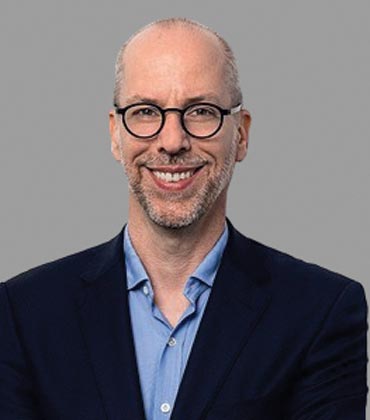
 Thilo Kamphausen, Head of Business Development
Richter BioLogics supports the commercial production of therapeutic proteins, antibodies (including VHH/Nanobodies), bacterial vaccines and pDNA with a fully integrated development to-manufacturing model.
Backed by deep expertise in process and analytical validation and process performance qualification, the Germany-based contract development and manufacturing organization (CDMO) reduces execution risk, improves timeline predictability and supports seamless progression from start to finish.
“Our clients are involved with our manufacturing team from the beginning. There are no translation errors, here are no surprises,” says Thilo Kamphausen, Head of Business Development.
Richter BioLogics specializes in microbial process development, fermentation, purification, and GMP manufacturing. Process development, analytical strategy and manufacturing are aligned, ensuring every stage supports the next without disruption.
With nearly four decades of GMP manufacturing experience and recent investments in new GMP production lines, Richter BioLogics continues to strengthen its position as a trusted partner for biotechnology and pharmaceutical companies worldwide.
Building Integration from Day One
During a new microbial program, cross-functional teams engage simultaneously, whether developing a process from scratch or transferring an existing one for largescale manufacturing. Development scientists, analytical specialists and manufacturing teams work as a single project team from the outset, allowing decisions to be made with downstream manufacturing in mind. A dedicated project manager coordinates activities across departments, ensuring analytical strategies support process development milestones while maintaining a clear focus on GMP manufacturability.
This integrated approach reduces the risk of misalignment during technology transfer and manufacturing scale-up, creating continuity throughout development and production.
Connecting Fermentation and Purification
Microbial manufacturing demands precise coordination between upstream and downstream operations. Richter BioLogics has these activities designed as interconnected components of a unified manufacturing workflow.
It operates two independent multi-product GMP facilities, with upstream processing and downstream processing lines housed in separate suites. This decoupled setup provides clients with a high degree of process flexibility. Fermentation and purification activities are planned as an integrated workflow within a single project timeline to ensure seamless transitions between manufacturing stages.
During fermentation, upstream teams document harvest parameters in real time while downstream purification specialists engage during the final stages of cultivation to prepare for purifying the harvest.
This integration is supported by close collaboration across scientific, manufacturing and quality functions. The same cross-functional collaboration allows potential manufacturing issues to be addressed collectively before they become downstream execution risks. The company´s focused mid-sized structure enables direct communication and short decision-making pathways, allowing rapid responses to project needs while maintaining strict GMP compliance.
Embedding Quality Throughout Manufacturing
In-process samples are evaluated against predefined acceptance criteria throughout manufacturing, providing real-time insight into process performance. Results are reviewed collaboratively by manufacturing and analytical teams, creating opportunities to address deviations before they impact final product quality.
Richter BioLogics embeds analytical development and quality control directly into ongoing manufacturing campaigns. Its multi-site GMP-certified laboratories support analytical development, in-process monitoring, troubleshooting, comparability studies, release testing and stability programs. This infrastructure enables parallel workstreams, helps manage peak analytical demand, maintains business continuity and allows teams to adapt quickly to evolving client and process requirements.
-
Our clients are involved with our manufacturing team from the beginning. There are no translation errors, here are no surprises.
In-process samples are evaluated against predefined acceptance criteria throughout manufacturing, providing real-time insight into process performance. Results are reviewed collaboratively by manufacturing and analytical teams, creating opportunities to address deviations before they impact final product quality.
This proactive quality strategy strengthens risk management while helping clients avoid costly delays associated with late-stage manufacturing issues or regulatory concerns. Identifying and addressing challenges early, Richter BioLogics enhances process consistency and product reliability.
Documentation, Traceability and Regulatory Confidence
With more than 35 years of operating GMP-compliant facilities, Richter BioLogics views GMP manufacturing as a quality and documentation discipline. Comprehensive documentation behind every batch ensures processes are legible to regulators, auditable by clients and reproducible across campaigns.
Its batch record practices are designed to ensure complete traceability across development and manufacturing. Each GMP batch is executed against a master batch record that captures critical process parameters, in-process results and process events, along with their investigation, assessment and resolution. It has supported clients through regulatory interactions with the EMA, FDA and other global agencies, where the quality of its documentation has been consistently recognized. Notably, Richter BioLogics completed an FDA inspection in 2026 with zero observations, reflecting the operational discipline applied to every batch record, system and quality decision.
This commitment extends beyond manufacturing operations to materials management as well. Raw materials are tested upon receipt, stored under controlled conditions and tracked through comprehensive inventory systems. Media preparation, buffer formulation and chromatography resin handling follow established procedures supported by detailed documentation, helping minimize risk and maintain process consistency throughout production.
Plasmid DNA Manufacturing for Next- Generation Therapies
The operational capabilities developed across Richter BioLogics’ microbial manufacturing platform are increasingly being applied to plasmid DNA production. As pDNA plays an increasingly important role in next-generation vaccines and therapies, demand for GMP-grade material continues to outpace industry manufacturing capacity, making reliable supply a strategic priority for sponsors.
pDNA production is Richter BioLogics’ established service supported by its proprietary highyield pART platform process, designed to be scalable, robust and future-ready. The manufacturing pathway is clearly structured. It begins with tightly controlled bacterial fermentation optimized for plasmid yield and quality. Using well-characterized host strains and defined media formulations, manufacturing teams carefully manage cultivation conditions to maximize performance.
Following fermentation, downstream processing employs multi-step chromatographic and filtration techniques to isolate the target supercoiled pDNA from host cell proteins, genomic DNA, endotoxins and unwanted pDNA isoforms.
Final release testing is conducted under GMP conditions using a comprehensive analytical panel that evaluates identity, purity, potency and safety attributes. Extensive analytical capabilities support the demanding quality requirements of pDNA and enable it to serve clients from early development through clinical manufacturing.
pDNA is currently supplied for several commercial and near-commercial products, reflecting the consistent quality and regulatory robustness its partners rely on. Working alongside clients, Richter BioLogics rapidly mobilized its microbial production, purification and analytical capabilities to keep programs on track without compromising quality. This highlights the dependable supply, trust and long-term partnerships that continue to define its client relationships.
Advancing Biologics Through Expertise and Client-Centricity
A compelling endorsement for Richter BioLogics’ approach comes from the global pharma and biotech clients. They consistently highlight the quality and engagement of its project teams, describing the relationship as a true partnership over a manufacturing contract. It has supported programs requiring rapid optimization before GMP manufacturing, with its process development teams working alongside client scientists to troubleshoot fermentation performance, develop purification strategies under time pressure and deliver GMP-ready processes on schedule.
“Being customer-centric means placing our clients’ product success at the heart of everything we do. We understand that choosing a CDMO is about finding a true partner, one that will carry the same sense of accountability for the program’s success that the client does,” says Kamphausen.
As demand for GMP-grade microbial products continues to rise, the need for experienced manufacturing partners will only grow. Recognized as the Biopharmaceutical CDMO Manufacturer of the Year in Europe 2026, Richter BioLogics is meeting this demand through continued investment in capacity, scientific expertise and operational excellence. Its recent facility expansions, strong regulatory track record and integrated service model position it to support the next generation of biologics.
Choosing Microbial CDMO without Losing Process Control
Commercial biologics programs rarely stall because a sponsor failed to reserve manufacturing capacity. Delays are more likely to appear when fermentation assumptions, purification readiness, assay design and batch documentation fall out of sync. Microbial manufacturing is particularly sensitive at this stage. A process that performs well during development can quickly lose momentum if harvest conditions are not fully understood or impurity clearance has not been aligned with the characteristics of the molecule. For executives evaluating a CDMO, manufacturing capacity is important, but maintaining process continuity is even more critical.
The strongest CDMOs do not treat development and manufacturing as separate stages handed from one department to another. Instead, they manage them as a continuous, controlled process. Analytical strategy is developed while the process is still being refined, manufacturing constraints are identified before GMP transfer, sampling routes are planned early and documentation evolves alongside the program instead of being rebuilt for clinical or commercial manufacturing. This goes beyond administrative efficiency. It is an important part of controlling risk. Changes to analytical methods or batch records late in development can trigger comparability work and make regulatory review more challenging.
"Richter BioLogics aligns well with the priorities many sponsors look for when they need microbial expertise backed by GMP manufacturing."
A thorough evaluation should also examine how fermentation and purification work together in practice. Separate upstream and downstream suites can offer sponsors greater flexibility, but only if the transition between them is carefully managed. Having real-time harvest data, purification teams ready to receive material, buffers prepared in advance and clear sample routes in place helps avoid the disruption that often occurs between the bioreactor and the first chromatography step. The same level of scrutiny applies to plasmid DNA manufacturing, where supercoiled content, host-cell impurities, endotoxin burden and unwanted isoforms all influence whether the final material is suitable for its intended use.
Quality systems should be assessed through evidence, not broad assurances. Every GMP manufacturing program generates extensive documentation, and that record should remain clear and consistent from raw material receipt and media preparation through in-process testing, deviations, investigations and final product release. Buyers should look at whether quality control is integrated closely enough with manufacturing to detect early process signals. They should also consider whether the CDMO has the in-house analytical expertise needed for release testing, stability studies, troubleshooting and comparability work, instead of relying on outside laboratories whenever challenges arise.
"For sponsors working to demanding timelines, Richter BioLogics brings together specialized microbial expertise, disciplined documentation, in-house analytical testing and direct project coordination."
Scale also deserves careful consideration. A larger facility does not automatically make decisions faster, and a smaller specialist may not have enough built-in redundancy. A better question is whether the manufacturing model gives sponsors direct access to scientific expertise while providing the GMP infrastructure needed to support late-stage development and commercial production. That balance is especially important in microbial biologics. Therapeutic proteins, antibody fragments, bacterial vaccines and plasmid DNA each bring different manufacturing demands, so buyers should look beyond broad claims about capacity and examine the depth of process and analytical expertise behind them.
Richter BioLogics aligns well with the priorities many sponsors look for when they need microbial expertise backed by GMP manufacturing. Its capabilities span process development, analytical development, microbial GMP manufacturing and plasmid DNA production, including the pART plasmid platform. The company operates independent upstream and downstream processing lines across two multiproduct GMP facilities, with quality control integrated throughout manufacturing campaigns. It supports therapeutic proteins, VHH or Nanobody formats, bacterial vaccines and plasmid DNA. A long GMP manufacturing track record, recent capacity expansion, in-house analytical capabilities and a 2026 FDA inspection with zero observations provide added confidence. For sponsors working to demanding timelines, Richter BioLogics brings together specialized microbial expertise, disciplined documentation, in-house analytical testing and direct project coordination.
...Read more
Biopharmaceutical CDMO Manufacturers in Europe Info
Q1
What Are Biopharmaceutical CDMO Manufacturers, and Why Are They Important?
Biopharmaceutical CDMO Manufacturers provide outsourced development and manufacturing services that help pharmaceutical and biotechnology companies advance biologic therapies from early development to commercial production. Their capabilities typically include process development, analytical testing, GMP manufacturing, quality management and regulatory support. As biologic medicines become more complex, Biopharmaceutical CDMO Manufacturers help innovators accelerate development while maintaining product quality, scalability and regulatory compliance.
Q2
How Does Richter BioLogics Support Biopharmaceutical CDMO Manufacturers?
Richter BioLogics demonstrates the capabilities expected of leading Biopharmaceutical CDMO Manufacturers through more than 35 years of expertise in microbial-derived biopharmaceuticals. Headquartered in Hamburg, Germany, the company operates a development facility and two cGMP-compliant manufacturing sites that support recombinant proteins, peptides, antibodies, plasmid DNA and bacterial vaccines. Its integrated services span process and analytical development through commercial GMP manufacturing for pharmaceutical and biotechnology partners worldwide.
Q3
What Capabilities Should Organizations Look for in Biopharmaceutical CDMO Manufacturers?
When evaluating Biopharmaceutical CDMO Manufacturers, organizations should consider expertise in biologics development, GMP manufacturing capacity, regulatory compliance, process scalability, analytical capabilities and project management. Experience across multiple product classes, flexible manufacturing platforms and a proven quality system can help support efficient technology transfer and dependable commercial production as development requirements evolve.
Q4
How Do Biopharmaceutical CDMO Manufacturers Accelerate Biologic Development?
Biopharmaceutical CDMO Manufacturers streamline the journey from laboratory research to commercial supply by integrating process development, scale-up, manufacturing, quality control and regulatory support within a coordinated workflow. This approach reduces operational complexity, shortens technology transfer timelines and allows biotechnology companies to focus on innovation while relying on established GMP infrastructure and specialized manufacturing expertise.
Q5
What Distinguishes Richter BioLogics Among Biopharmaceutical CDMO Manufacturers?
Richter BioLogics stands out among Biopharmaceutical CDMO Manufacturers through its specialization in microbial expression systems using bacteria and yeasts, regulatory-approved manufacturing facilities and extensive experience producing recombinant proteins, antibody fragments, plasmid DNA and vaccines. The company has completed more than 1,000 GMP batches, supports commercial biologic products and continues to expand its manufacturing and quality capabilities to meet growing industry demand.
Q6
How Should Organizations Evaluate Biopharmaceutical CDMO Manufacturers?
Organizations selecting Biopharmaceutical CDMO Manufacturers should assess scientific expertise, manufacturing flexibility, regulatory inspection history, quality systems, scalability and long-term partnership capabilities. The strongest providers combine technical expertise with transparent project management, reliable delivery and the ability to support programs from early development through commercial manufacturing. Choosing an experienced partner can help reduce development risk while supporting successful biologics commercialization.
