



 Wenting Chen, Co-Founder and CEO
As a vertically integrated contract development and manufacturing organization (CDMO), Laviana Pharma navigates this complexity. By emphasizing early-stage formulation testing, Laviana helps uncover potential stability and delivery issues early, reducing downstream risks and accelerating the path to clinical success. Its scientific rigor and integrated capabilities make it a vital partner for companies bringing next-generation therapeutics to market.
Speed and proximity have become Laviana’s key advantages. It has a specialized formulation laboratory in the U.S. designed specifically for the early-phase development of high-molecular-weight drug candidates. Working locally with U.S. clients means faster decisions, real-time adjustments and shorter timelines.
The Hidden Force Behind Biotech Success Stories
Over the past 20 years, Laviana has helped develop hundreds of candidates and contributed to the successful launch of more than 30 drugs. Some of its early-stage collaborations have led to biotech breakthroughs later acquired by major pharmaceutical firms, an indicator of Laviana’s quiet but critical role in drug development success stories.
Starting as a small CRO, Laviana quickly moved on to establishing its own pilot plant. After the R&D and manufacturing sites moved to their new locations, the upgrades Laviana received provided an advantage in equipment and capacity. Not only is Laviana able to do hydrogenation up to 2000 L, but the new trending high potency capability has also been recently added to Laviana’s portfolio. With a total manufacturing capacity of up to 106,700L, reactor sizes up to 6300L, and a team of more than 100 scientists, Laviana serves some of the most reputable pharmaceutical companies in the world.
“Our role is to make drug development faster,” says Wenting Chen, co-founder and CEO. “Having early-stage development capabilities close to home with our hybrid supply chain strategy proves vital during emergencies like the pandemic when global supply chains get severely disrupted.”
-
Over the past 20 years, Laviana has helped develop hundreds of candidates and contributed to the successful launch of more than 30 drugs. Some of its early-stage collaborations have led to biotech breakthroughs later acquired by major pharmaceutical firms, an indicator of Laviana’s quiet but critical role in drug development success stories.
“Our role is to make drug development faster,” says Wenting Chen, co-founder and CEO. “Having early-stage development capabilities close to home with our hybrid supply chain strategy proves vital during emergencies like the pandemic when global supply chains get severely disrupted.”
This strategy balances the reliability of local collaboration with the efficiency of global infrastructure.
Building a Seamless Pipeline from Discovery to Delivery
Along with the U.S.-based formulation lab, Laviana brings the globally distributed R&D and manufacturing network to advance programs from early development through commercialization. In Cangzhou, China, Laviana manages GMP manufacturing and the scale-up of high-potency APIs, where attention to regulatory compliance and technical detail is non-negotiable. Across the country in Beijing, the process development team uses AI-assisted retrosynthesis not as a buzzword, but as a practical tool, reworking complex synthesis routes to improve yields and cut down production time. Laviana’s fully automated facility in China is at the core of this integration, designed to support projects from early-stage research to late-phase clinical trials and commercial readiness.
Together, these sites form a tightly coordinated system where formulation, scale-up and production aren’t siloed but seamlessly connected.
Beyond accessibility, Laviana is committed to shaping a more accountable pharmaceutical industry—one that balances scientific innovation with the public good.
The Values-First Global Expansion of Laviana
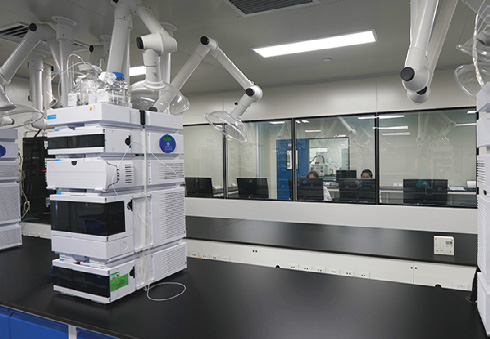 At the heart of its global evolution is “Smart Culture,” a values-driven framework centered on sustainable teamwork, responsiveness and respect for people. These principles guide how Laviana collaborates with biotech firms, academic researchers and healthcare entrepreneurs—ensuring each partnership is purposeful and impact-driven. Safety and quality remain non-negotiable. Laviana has built fully protected labs and CNAS-accredited facilities that meet globally recognized standards, equivalent to ILAC accreditation, demonstrating its promise to protect people while maintaining world-class compliance.
Laviana views its international footprint not just as an operational scale but as a platform to deliver a broader impact. That means embedding environmental, social and governance (ESG) principles into every aspect of its model—contributing to local economies, investing in regional infrastructure and building systems that prioritize sustainability alongside speed.
All of this is rooted in Laviana’s founding story. What began with two classmates in Beijing—united by a passion for chemistry and firsthand experience in U.S. pharma—has grown into a multinational organization with development and manufacturing hubs across China and the U.S. That early conviction—that science, when guided by values, can bridge borders and accelerate impact—drives Laviana’s mission today.
Preclinical Research Services for a More Demanding Drug Pipeline
Drug developers now face a tighter preclinical window than prior cycles allowed. Candidate complexity is rising, development capital is being scrutinized earlier and supply-chain planning has moved closer to the start of CMC strategy. For executives acquiring preclinical research services, the decision is no longer limited to outsourcing discrete chemistry tasks. It is a choice about whether a partner can turn uncertain science into a development path that remains credible when the molecule advances, the formulation question becomes harder and regulatory expectations begin to shape every technical decision.
The pressure is especially visible in small-molecule and emerging therapeutic programs where preclinical work must support later clinical and manufacturing choices without forcing repeated resets. A weak partner may generate early data, but fail to connect synthesis, formulation, safety, scale-up and documentation into a coherent path. A stronger partner helps buyers reduce rework by identifying process limits early, testing practical routes and preparing a program for the next development stage before urgency compresses decision quality. Speed matters, but speed without disciplined chemistry and safety control can create costly downstream exposure.
Preclinical research services should therefore be judged by how well they combine scientific depth with development continuity. The most valuable providers understand process research, optimization, pilot-scale readiness and formulation implications as connected workstreams rather than isolated tasks. This is particularly important as higher molecular weight compounds, peptides and complex delivery challenges require formulation thinking earlier in development. Buyers should look for partners that can evaluate stability, manufacturability and route feasibility before a promising candidate becomes locked into a fragile development plan.
Safety and technical accountability have also become more central to vendor selection. High-potency compounds, greener chemistry demands and tighter environmental expectations require more than laboratory output. They require a provider with defined safety infrastructure, credible testing practices and the ability to translate chemistry decisions into safer, more consistent scale-up routes. Continuous-flow chemistry, process safety assessment and controlled high-potency handling are not simply technical extras; they indicate whether a partner is prepared for the realities of modern preclinical development. Supply-chain strategy adds another layer to the buying decision. Global development support still matters, particularly in early-stage work where cost discipline and specialized chemistry capacity can accelerate progress. Later stages may require closer regional alignment because regulatory needs, product supply and final market access differ by geography. The best providers help buyers manage that transition by supporting early development globally while building toward a path that can accommodate localization, quality expectations and long-term commercial planning.
Laviana Pharma emerges as a premier choice for executives who need preclinical research services tied to broader CDMO continuity. Founded in 2003, it supports small-molecule innovative drug development from laboratory work through process R&D, process optimization, pilot production, formulation-related services, analytical support and IND/NDA-linked development needs. Its strengths include long experience from preclinical to Phase I work, accumulated processdevelopment knowledge, a US formulation lab, automated research tools, CNAS-certified safety capability, high-potency facilities and continuous-flow chemistry experience. For buyers prioritizing early scientific problemsolving that can carry into later CMC decisions, Laviana offers a practical, chemistry-led path forward.
...Read more
Preclinical Research Services Info
Q1
What Are Preclinical Research Services?
Preclinical Research Services help drug developers examine a candidate before human trials by connecting chemistry, formulation, analytical testing, safety awareness and early manufacturability. The goal is not only to generate lab results but to understand whether a molecule can move through development without avoidable delays, unstable processes or late-stage redesign. For complex therapeutics, this work can shape practical decisions long before clinical demand rises, especially when sponsors must decide whether a candidate is viable enough for continued investment.
Q2
How Does Laviana Pharma Support Early Drug Development?
Laviana Pharma applies Preclinical Research Services through a CDMO model that links early formulation work with later development and manufacturing needs. It operates a specialized formulation laboratory in the U.S. for high-molecular-weight drug candidates, while its broader network includes GMP manufacturing and high-potency API scale-up in Cangzhou and process development in Beijing using AI-assisted retrosynthesis. Its experience includes hundreds of candidates, more than 30 launched drugs, a manufacturing capacity of up to 106,700 L and a team of more than 100 scientists.
Q3
Why Do Complex Molecules Require Earlier Formulation Thinking?
Peptides, GLP-1 receptor agonists and other larger molecules can be fragile, difficult to deliver and sensitive to stability issues. Preclinical Research Services bring formulation thinking forward so teams can evaluate solubility, bioavailability, delivery route and handling risks before the program becomes expensive to change. Earlier testing helps sponsors avoid treating formulation as a late technical fix. It also gives chemistry, analytical and manufacturing teams a shared view of what the molecule can realistically tolerate.
Q4
What Capabilities Help Reduce Risk Before Clinical Trials?
Risk reduction depends on connected capabilities: route scouting, process optimization, analytical support, safety review, pilot-scale readiness and documentation discipline. Preclinical Research Services are most useful when these functions work together rather than in isolated handoffs. That approach can reveal yield limits, impurity concerns, scale-up constraints and handling requirements before clinical timelines put pressure on technical decisions. It also helps development teams compare scientific options against practical cost, timeline and quality consequences.
Q5
How Can Integrated Research and Manufacturing Improve Continuity?
Integrated research and manufacturing improve continuity by keeping early scientific choices aligned with later CMC, regulatory and production expectations. Preclinical Research Services can test whether a synthesis route is scalable, whether a formulation remains stable and whether quality controls can support the next phase. This reduces rework because the development path is shaped with manufacturing realities in mind from the start. Continuity is especially valuable when programs must shift from exploratory research to repeatable production without losing technical context.
Q6
What Quality Factors Matter When Evaluating Preclinical Partners?
Organizations evaluating partners should look for scientific depth, clear safety systems, reliable analytical methods, scale-up experience and responsiveness across sites. Preclinical Research Services also require disciplined communication because small technical decisions can affect cost, timing and regulatory readiness. Facilities, team structure and documented experience matter most when a program involves high-potency compounds, complex molecules or a tight development window. The strongest fit is usually a partner that can explain risks clearly and adapt the development plan without disconnecting science from execution.
