

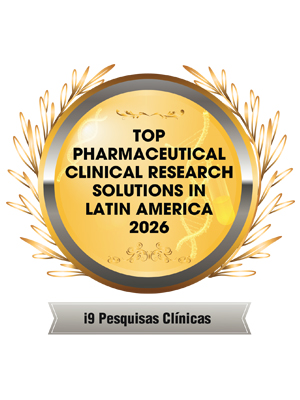
Sponsors are under increasing pressure to accelerate study timelines amid the growing complexity of clinical trials, without compromising patient safety or data quality. Success is no longer defined by enrollment numbers alone, but by a research site’s ability to execute reliably across every stage of the study. This reliability is critical in the competitive Latin American market, where the clinical research environment is entering a period of expansion. Although sponsors now have access to a broader network of research sites across the region, experienced teams capable of consistently delivering quality recruitment, reliable data and strong patient service remain hard to find. i9 Pesquisas Clínicas distinguishes itself in this landscape through a quality-driven approach to trial execution. By prioritizing careful patient selection and clinical data integrity, it brings the scientific rigor and flexibility needed to support reliable study outcomes.
Genomics
Independent pharmacy owners should not have to choose between staying independent and competing at scale. Rede Soma Drogarias was built to prove they can do both. Through its association model, Rede Soma gives independent pharmacies the scale to compete without taking away the independence that makes them successful. Members gain stronger purchasing power, modern technology and professional management support while continuing to operate under their own name, make their own business decisions and remain deeply connected to the communities they serve. Instead of relying solely on the resources they can build individually, they benefit from the collective strength of a much larger network. “We act as a true extension of each pharmacy’s back office, giving owners the intelligence, support and commercial strength to run a more competitive and profitable business without giving up their independence,” says Paulo Ribeiro, CEO..
Clinical Laboratory Services
When a physician orders a genetic test, the report that comes back rarely settles anything on its own. It lists findings but does not clarify which ones matter for this patient, how to explain the results to a family still in the room, or what the next clinical step should be. That interpretive gap is where diagnoses stall and care decisions drift without firm ground. Cligen, a medical genetics clinic founded in Vitória, Brazil, in 2021, was built to close that gap. “We are a clinic before we are a laboratory,” says Dr. Arsonval Lamounier Júnior, medical director. “We place the patient and their family at the center of our approach.” That orientation changes what a physician receives. Every genetic report arrives with a clinical case interpretation. The Cligen team reviews the findings, evaluates the literature relevant to the presentation and calls the referring physician directly. The effect is that, instead of filing the report, deferring to a specialist, or delaying a care decision, the clinician gains a colleague ready to reason through the result in real time. That conversation is what turns a genetic finding into a clinical action. Cligen also maps its referring network, recognizing that physicians vary widely in their comfort with genetics. Those working near the limits of their genomic training receive targeted education, invitations to scientific meetings and direct collaboration on complex cases. As clinicians gain confidence, they order more appropriate tests, interpret results more accurately and deliver better care. Each interaction strengthens the network’s collective genomic literacy..
Pharmacy Management
A molecular structure can show researchers what a biological molecule looks like, but it cannot always explain how that molecule behaves. DNA, RNA, and other biological molecules move, change shape, and interact with their surroundings, and those dynamics can influence how they function. Understanding these changes is particularly important in biomedical research, where molecular behavior can shape everything from nucleic acid therapeutics to bacterial resistance. Investigating these questions requires approaches that connect molecular structure and dynamics with biological function. DansLab applies this approach as a fully academic research group at the University of the Republic in Uruguay, centered on computational biophysics, molecular modeling, and structural bioinformatics, with AI emerging as a newer area of its research. Led by Pablo Dans Puiggròs, principal investigator and professor, the group has more than two decades of experience studying nucleic acids, modified oligonucleotides, protein-nucleic acid complexes, and molecular recognition. Its contribution is centered on scientific research, training students and young researchers, developing and evaluating methods, sharing tools through open science, and building collaborative research connections. That academic foundation is complemented by Institut Pasteur de Montevideo, where access to biomedical researchers, experimental expertise, and specialized infrastructure brings the group closer to biological and biomedical questions. “We are not only users of computational tools. We also develop new methods, force fields, and molecular models. Our goal is to move from sequence and structure to dynamics, function, and molecular mechanism,” says Dans..
Clinical Laboratory Services
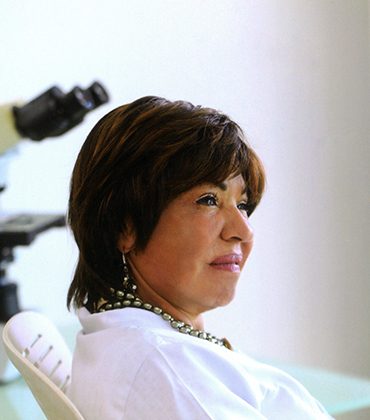
Today, advances in molecular diagnostics, personalized medicine, and biomedical technology have given physicians unprecedented insight into the biology of disease. Yet this progress has created a new challenge: the growing complexity of diagnostic decision-making. Physicians face an expanding universe of tests, platforms, and biomarkers, making it hard to determine the right test for a specific clinical question and interpret the results correctly. What they increasingly need is not simply a laboratory that generates data, but a diagnostic partner capable of transforming complex findings into clinically meaningful answers. Meeting this need has been at the heart of MediPath’s mission for the past two decades. By combining advanced molecular diagnostics, pathology expertise, research, and physician collaboration, it has built an integrated diagnostic model designed to support more informed clinical decisions across Latin America. “We see ourselves as a diagnostic partner, not just a testing provider,” says Argelia Aybar, medical director and founder. “Our pathologists work with physicians to discuss cases, explain testing capabilities, help identify the most appropriate tests and interpret results with confidence.” From Advanced Testing to Clinical Decision Support Founded in 2004 in the Dominican Republic, MediPath emerged during a period when many advanced molecular pathology capabilities were not available locally and specialized samples often had to be sent abroad. Its mission was to bring sophisticated diagnostic solutions closer to physicians and patients while developing the expertise to interpret these technologies locally. The organization expanded its capabilities in response to challenges identified by physicians—beginning with HPV DNA testing, followed by liquid-based cytology with ThinPrep, immunohistochemistry, flow cytometry, real-time PCR, and additional molecular diagnostic applications..
Clinical Trial
Flex Databases has established itself as a leading provider of unified eClinical solutions designed to streamline and strengthen clinical operations for pharmaceutical and medical device organizations. At its core is a single, integrated platform that brings together essential technologies, such as CTMS, eTMF, EDC, QMS, and Pharmacovigilance, into a coherent ecosystem. Together, these modules form a connected operational foundation that supports the full lifecycle of modern clinical trials. In 2025, the average number of modules implemented per client increased by 35 percent, signaling a decisive trend: organizations are consolidating their clinical operations under a single, interconnected environment rather than juggling multiple vendors and fragmented workflows. Several major pharmaceutical and medical device companies have selected Flex Databases specifically for its ability to deliver a fully integrated system, combining CTMS, eTMF, QMS, Pharmacovigilance, Project Management, EDC, and more, within a single cohesive architecture. “We empower life sciences with a secure, unified all in one eClinical platform, delivering flexibility, scalability and efficiency across clinical operations worldwide,” says Marietta Sarkisyan, Global Director, Business Development. Unified Clinical Excellence The complexity of modern clinical research has made it nearly impossible to manage studies effectively without fully integrated systems. When CTMS, eTMF, safety, quality, learning, and financial tools are sourced from different providers, organizations face mounting inefficiencies: redundant data entry, inconsistent workflows, higher training costs and increased risk of operational gaps. Flex Databases eliminates these burdens by centralizing the full clinical lifecycle within one seamless platform. Every component, from EDC and ePRO to Pharmacovigilance, QMS, and a fully exportable TMF, works together through interconnected data flows, electronic signatures, and standardized oversight mechanisms..
Clinical Laboratory Services
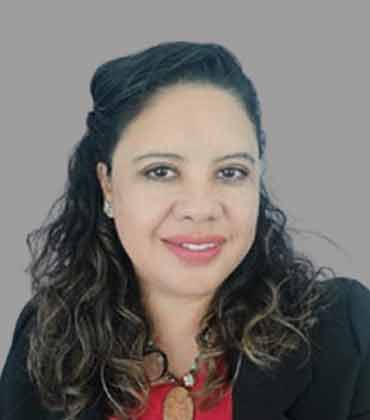
Insights of Pharmacovigilance in Pharmacogenomics
Josefina Mendoza, Regional Lead-PV Alliance LATAM, Head of PV CAMEX, LRP-PV CAM, El Grupo Grünenthal
Life Science Consulting
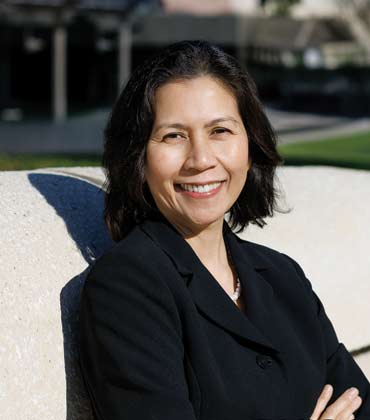
Charting a Trailblazing Path in Clinical Development
Maribelle Guloy, Director of Clinical Development, American Regent, Inc.
Clinical Laboratory
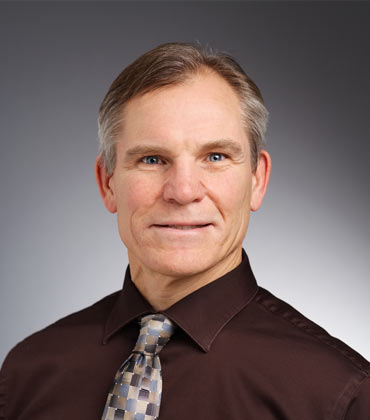
Driving Quality in Laboratory Operations
Michael Baron, Executive Director of Clinical Laboratory Operations, Wisconsin Diagnostic Laboratories
Biomanufacturing

Redefining Pharmacy Practice through Innovation and Leadership
Madeline Camejo, VP and Chief Pharmacy Officer, Baptist Health
Biomanufacturing
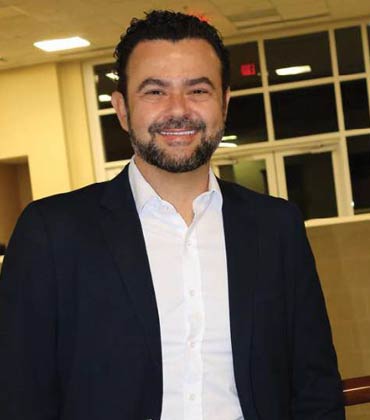
Leading Across Cultures and Beyond Technology
Guilhermo Fragelli, Plant Manager, Union Agener
IN MY OPINION
Biomanufacturing
Leading Across Cultures and Beyond Technology
Guilhermo Fragelli, Plant Manager, Union Agener
LAST WORD
Life Science Consulting
Why a Quality Mindset Must Drive IT Change in Life Sciences
Paul Rascoe, Sr. Manager, IT SAP Systems, Beam Therapeutics
IN FOCUS
Strengthening Pharmaceutical Research Services across Latin American Markets
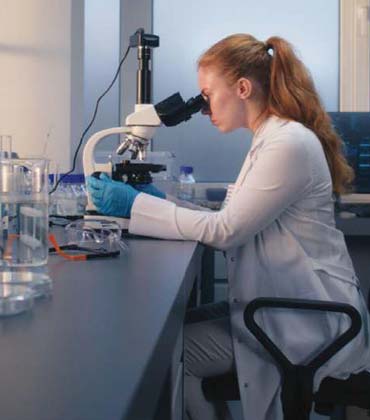
Latin America supports pharmaceutical research growth through infrastructure, investment opportunities, and expanding strategic partnerships.
EDITORIAL
Where Research, Care and Innovation Converge
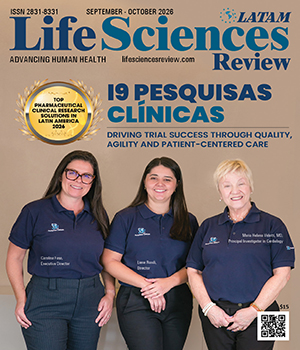
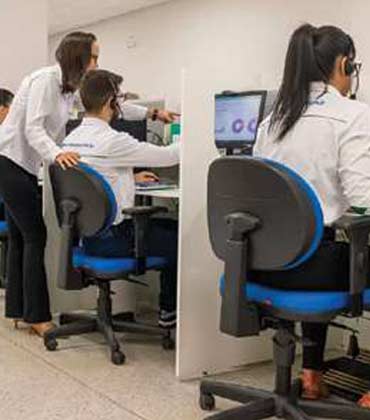
At the center is i9 Pesquisas Clínicas, our Top Pharmaceutical Clinical Research Solutions in Latin America 2026. Based in Campinas, Brazil, i9 supports Phase II, III and IV trials for pharmaceutical companies and CROs, handling everything from feasibility assessments and regulatory submissions to recruitment, patient follow-up, data reporting and study close-out. Its approach brings clinical expertise, regulatory knowledge and patient-centered care together through an experienced team. Dedicated recruitment capabilities and selective use of automation help i9 respond to challenging enrollment requirements while keeping people at the heart of the research process and protecting data quality.
The issue also features Rede Soma Drogarias, our Top Pharmacy Association Network in Latin America 2026, similarly brings scale and coordination to independent pharmacies, giving owners greater purchasing power, technology, business intelligence and professional support while preserving their autonomy and community connections. Cligen, our Top Genomic Testing Solutions in Latin America 2026, extends this focus on practical, connected care by combining genetic testing with case interpretation, physician collaboration and education.
The issue also brings valuable leadership perspectives. Josefina Mendoza, Pharmacovigilance Alliance LATAM & Head of Drug CAMEX at Grunenthal, explores the role of pharmacovigilance in pharmacogenomics, including safety monitoring, genetic testing and long-term surveillance. Michael Baron, Associate Vice President of Clinical Laboratory Operations at Wisconsin Diagnostic Laboratories, highlights workforce development, quality systems and the importance of keeping human expertise at the center as automation advances.
Together, these stories show that meaningful progress comes from pairing scientific capability with disciplined execution and thoughtful care. Explore the issue for perspectives on strengthening research, patient services and laboratory practice across the region.
