

For years, iPSCs have been hailed as the future of drug discovery. Their ability to generate virtually any human cell promised to reshape disease modeling, toxicity testing, and regenerative medicine. Yet the application has struggled to keep pace with the science. Producing mature, highly functional, disease-relevant cells remains one of the field's most persistent and expensive challenges. The bottleneck lies in how those cells are created. Conventional differentiation relies on sequential, one-variable-at-a-time optimization. Researchers tweak a single growth factor, cytokine, or culture condition, wait weeks or even months to evaluate the outcome, and then repeat the process for the next variable. However, stem cell differentiation is governed by complex, interconnected signaling networks, meaning that changing one parameter in isolation rarely reveals how multiple factors work together. As a result, the process can take five to ten years to produce a commercially viable protocol, consume enormous resources, and still yield mixed cell populations that fall short of the purity and functionality modern drug discovery demands. Trailhead Biosystems believes the problem isn't stem cells; it's the way they're engineered into specific cell types. Rather than asking scientists to optimize one experiment after another, the company has built its proprietary High-Dimensional Design-of-Experiments (HD-DoE®) platform to explore thousands of biological possibilities simultaneously using high-throughput robotics, and computational modeling. As a result, the HD-DoE platform replaces sequential experimentation with massively parallel experimentation, enabling researchers to identify optimal differentiation pathways with unprecedented speed and precision.
Antibodies
When it comes to developing next-generation modalities like antibody-oligonucleotide conjugates (AOCs), the partners who are best positioned to advance these programs don’t fit the conventional CDMO model. Building an effective and manufacturable AOC demands specialized expertise, the kind that only comes from decades spent mastering the junction of bioconjugation and antibody design and development. While AOCs build on ADC bioconjugation, oligo payloads introduce a distinct set of challenges that reshape how chemistry, linker selection and analytical characterization must be approached. That's why selecting the right development partner at the start of a program is critical to an AOC’s success. Abzena , a leading global biologic and bioconjugates CRDMO, has spent over 25 years building that expertise, producing over 2,000 bioconjugates,1,400 linker-payloads and 400 ADCs in the process, an experience base that is unmatched. Its expertise in complex conjugates provides a deep scientific foundation for AOC development, where reproducible conjugation, analytical control and scalable processes are critical to moving candidates toward the clinic. “Because of that scientific trend and our legacy of being the go-to provider for developing complex conjugates, we have fast become the leader in AOC drug development,” says Geoffrey Glass, Chairman and CEO..

CDMO
Life sciences organizations spend years developing breakthrough innovations, only to arrive in the market sounding remarkably similar to competing products. Scientific expertise may open the door, but in an increasingly competitive market, differentiation depends on communicating a clear commercial value that customers can recognize and understand. Inveniv has built its approach on helping life sciences organizations build that distinction. It approaches client engagements through a commercial lens, aligning marketing with sales and operational objectives rather than treating it as a standalone function. Organizations are supported from early-stage biotech and drug discovery through development, manufacturing and commercialization. .
Life Science Marketing
At age 34, a woman from Minnesota learned she had metastatic colorectal cancer that spread to her liver. She subsequently underwent a living-donor liver transplant using a portion of her brother’s liver. Six months later, the disease appeared in her lungs. A Chicago surgeon agreed to perform a double lung transplant because she was young and otherwise healthy. Despite extensive clinical evaluation, the care team had limited biological insight into how aggressively her metastatic disease might behave. The estimated cost of her care approached $1.5 million, underscoring the extraordinary financial and clinical stakes of these decisions. Yet the likely behavior of her metastatic disease remained uncertain. Her experience illustrates the uncertainty clinicians may face when treatment decisions rely primarily on clinical and anatomical factors without a validated biological classification of the metastasis. Better biological stratification has the potential to improve patient selection for complex and costly interventions while helping avoid treatments unlikely to provide durable benefit. Metastatic disease accounts for approximately 90 percent of cancer-related deaths. Although clinicians have access to surgery, ablation, radiation and systemic therapies, determining which patients are most likely to experience durable outcomes following local intervention remains difficult. Traditional clinical and anatomical factors do not always capture the underlying biology of metastatic disease. For the Minnesota patient, each decision followed clinical criteria. None could read the tumor..

Biomanufacturing

Custom antibody production remains a relationship-driven discipline in which scientific expertise must be matched with communication, trust, and a deep understanding of each researcher’s goals. At Pocono Rabbit Farm and Laboratory (PRF&L), that philosophy has shaped decades of work supporting universities, biotechnology companies, pharmaceutical organizations, and research institutions worldwide. The company’s story is reflected in the professional journey of Margaret Cleveland, Director of Antibody Production, whose growth within the organization mirrors PRF&L’s commitment to investing in its people. Margaret joined PRF&L in 2009 as a technician and gradually advanced through different roles before becoming Director of Antibody Production. Her experience provides a unique perspective on how technical knowledge, leadership development, and hands-on involvement contribute to successful research partnerships. Rather than viewing antibody production as a transactional service, she approaches each project as a collaborative effort between the laboratory team and the scientists who depend on its expertise..
Cell and Gene Therapy
Orsini
Turning Breakthroughs into Real-World Hope
Brandon Tom, President and Chief Executive Officer
A young boy’s sixth birthday was approaching, the day that he would become ineligible to receive a newly approved therapy for a rare genetic condition. Missing that deadline would have meant losing access to treatment. When his case reached Orsini, the team acted immediately, coordinating with the prescriber, family, payor, and manufacturer. Approvals were secured in record time, and the therapy was dispensed the day before his birthday, making him one of the first commercial patients in the U.S. to receive it. For Orsini, moments like these define the company’s purpose: speed, precision, and compassion when it matters most. Founded in 1987, Orsini has grown in recent years into a critical partner across the cell and gene therapy (CGT) ecosystem. The company’s approach is rooted in collaboration with patients, providers, biopharmaceutical innovators, and payors who share a common goal: to ensure that life-changing therapies reach the people who need them. At the heart of every process lies Orsini’s enduring promise: No Patient Left Behind. Every patient story at Orsini is personal. Blending precision with empathy, the company has guided over 6,800 patients and countless families, providers, and biopharma partners through the intricate pathways of cell and gene therapy, ensuring that care is as compassionate as it is exacting. Orsini provides the operational backbone for biopharmaceutical partners, turning therapy launches into coordinated successes. It delivers a streamlined pathway for healthcare providers by aiding with the benefit verification, reimbursement, and patient education processes. And for patients and families, it offers a steady hand—someone who understands that behind every form, signature, and vial is a life waiting for change..

Medical Writing

Quality In The World Of Medical Device Contract Manufacturing
Stacey Lyons, Director of Quality, Biomerics
Life SR Magazine Special

Revolutionize Your Bathroom Cleaning with Microbes
John Harp, Staff Scientist and Product Management, and Yaashviny Nair, Associate Business Development Manager, Novozymes [NSIS:B]
Agri Biotech

Leading-Edge Labs: A Blueprint For Exceptional Patient Care
Ancel R. Nelson, Laboratory Director, York Hospital
Life Science Testing
Cell Therapies: Here comes the next wave!
Robert Richards, Corporate Director of the Center for Cell Therapy and Transplant, Penn Medicine, University of Pennsylvania Health System
Cell and Gene Therapy

Breaking New Ground in Cancer Care
Dr. Ian Jasenof, Chief Medical Officer, Mile Square Health Center-UI Health; Cancer Center-Director of Strategic FQHC Partnerships, UI Health
Life Science Marketing
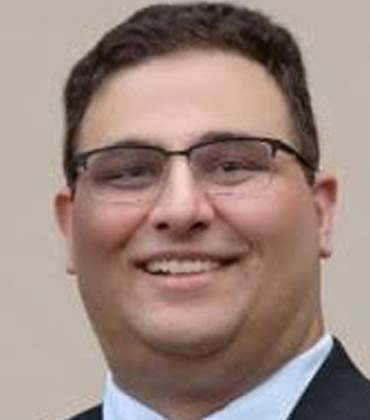
Leadership at the Intersection of Science, Strategy and Storytelling
Jorge Rodriguez, Head of Marketing, Alcami Corporation
Bioprocessing

Where Patient Safety Meets Regulatory STRATEGY
Laura (Salomon) McAvoy, Senior Director, Global Aggregate Reporting and Risk Management Plans, Madrigal Pharmaceuticals
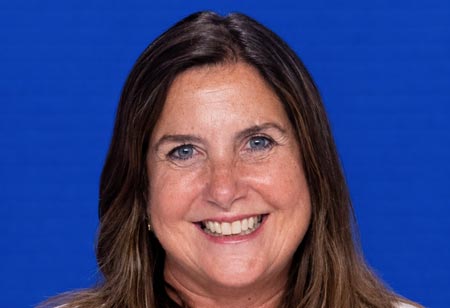
IN MY OPINION
Bioprocessing
Beyond the Contract: The Art of Building Successful MSP Partnerships
Nicole Rosenberger, Senior Vice President, Head of Information Technology, NewAmsterdam Pharma Corporation
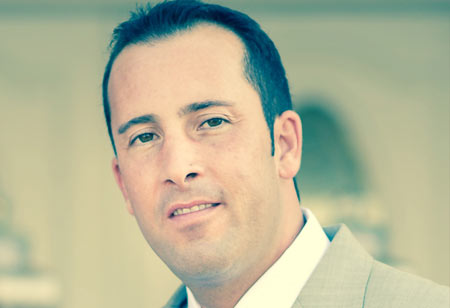
LAST WORD
CDMO
Agility as the Superpower for Clinical Operations
John Benedetto, VP and Global Head of Clinical Development Operations, BioNTech SE
IN FOCUS

Advancements in iPSC Technology: Enhancing Precision Medicine and Therapeutics
iPSC human cell platforms accelerate regenerative medicine, drug discovery, personalized therapies, disease modeling, and precision healthcare innovation globally.

Advancing Targeted Therapies with Next Generation ADC and AOC CDMO Solutions
Advanced CDMO solutions are improving ADC and AOC development through scalable manufacturing, precise analytics, regulatory support and innovative conjugation technologies.
EDITORIAL
Advancing Human Health Through Better Biology and Smarter Decisions
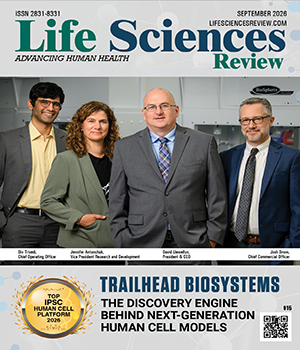
Our cover story features Trailhead Biosystems, recognized as the Top IPSC Human Cell Platform 2026. The company is changing how human cell models are developed through its proprietary HD-DoE platform, replacing conventional sequential experimentation with a data-driven approach that evaluates thousands of biological conditions at once. This allows researchers to develop highly functional, disease-relevant cell models with greater speed, purity and reproducibility, helping accelerate drug discovery and therapeutic research.
Also featured is PersonaDx, honored as a Top Metastasis Biomarker Solutions 2026 provider. Its PersonaCRC assay combines molecular and clinical insights to help clinicians better understand metastatic colorectal cancer and make more informed treatment decisions. Inveniv, recognized as a Top Life Sciences Marketing Solutions 2026 provider, brings a commercial perspective to life sciences marketing. It connects strategy, branding and digital implementation to business goals, helping organizations clarify their market position and communicate their value more effectively.
The edition also features Abzena, named a Top ADC & AOC CDMO Solutions 2026 provider, for its deep bioconjugation expertise and ability to support complex conjugate programs from development through the clinic. Pocono Rabbit Farm and Laboratory (PRF&L), recognized as a Top Antibody Production Services 2026 provider, works closely with researchers to tailor antibody production to their needs while maintaining strong scientific and ethical standards.
Our CXO contributors bring the discussion closer to the realities of care and safety. Robert Richards, Corporate Director of the Center for Cell Therapy and Transplant at Penn Medicine, University of Pennsylvania Health System, examines the clinical and operational changes accompanying new cell therapies. Laura McAvoy, Senior Director, Global Aggregate Reporting and Risk Management Plans at Madrigal Pharmaceuticals, highlights the role of clear processes, communication and patient perspective in drug safety. Together, these stories show that meaningful progress comes from scientific excellence, disciplined execution and a shared commitment to improving patient care. We invite you to explore this edition and discover the people, ideas and innovations shaping the future of life sciences.
