

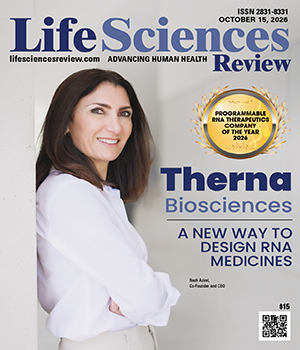
It all started with a conversation at a social event. Nazli Azimi, co-founder and CEO, had already spent years in biotech, first as a scientist and then as an entrepreneur. Her previous two companies had taken immunology programs into Phase II clinical trials before being acquired. She was not looking for another company to build. Then she met Hani Goodarzi, scientific cofounder, who was looking to turn a lifetime of work in RNA biology and machine learning (ML) into something that could move beyond the laboratory and into drug development. Goodarzi had spent his life studying RNA biology and was among the early researchers to incorporate ML into the field, beginning in graduate school and continuing through his postdoctoral research and academic appointments at UCSF and the Arc Institute. For Azimi, what stood out was that he understood both sides of a problem most companies approached from only one direction. He understood the complexity of RNA biology and the AI and ML needed to model it and spoke both languages fluently. That distinction mattered. For Azimi, AI could only be as powerful as its understanding of RNA biology, whose structure, regulatory elements, and behavior across cells and tissues shape how a medicine works. Azimi brought something equally important to the partnership, years of experience turning biological discoveries into medicines. Together, they saw a way to bring those two disciplines together. That became Therna Biosciences. For Azimi, the combination was not simply interesting. It was necessary.
Life Science Testing
Puerto Rico's healthcare system requires patients to navigate a fragmented network of physicians, health plans, specialty pharmacies and financial assistance programs. Much of the care is delivered through independent physician practices that lack the administrative resources needed to coordinate complex therapies. For patients facing cancer, rare diseases and other serious conditions, managing their illness while navigating this complex system can become overwhelming. Alivia Health simplifies the care journey with its integrated pharmaceutical care model. Its model connects patients, physicians, managed care organizations (MCOs) and pharmaceutical manufacturers in a coordinated network. Alivia provides specialty medications, oncology therapies, infusion services and home pharmacy solutions through its integrated model. Bringing traditionally separate services together reduces the administrative, financial and clinical barriers that delay treatment. Patients spend less time navigating the system and more time focusing on their health..
Pharmacy Management

IFM Quality Services, a laboratory quality-assurance provider, once sent a laboratory a proficiency-testing sample containing a higher than expected level of the target bacterium. The agar showed the expected positive color reaction. However, the laboratory reported a negative result because the plate was overrun with target bacteria, making individual colonies indistinguishable. The laboratory had initially misinterpreted the results and did not investigate the unexpected finding, revealing a gap in their testing procedure. A subsequent review and update of the laboratory’s procedure produced a more robust test system, with lessons applicable to other analytical methods. The scenario underlines IFM’s deliberate approach to proficiency testing, using challenging samples to uncover weaknesses that routine testing may not reveal. The value of this approach extends beyond confirming the accuracy of a laboratory’s results. It provides insight into where its methods or result interpretation need strengthening..
Antibodies
NeoBiotechnologies sets a new benchmark in monoclonal antibody production as an original manufacturer delivering an extensive portfolio of over 10,000 expertly designed monospecific antibodies. In a crowded market full of resellers who rebrand products produced by a small contingent of manufacturers, NeoBiotechnologies stands apart. By controlling every step of production—development to rigorous validation—NeoBiotechnologies ensures a level of quality and reliability that no competitor can rival. This hands-on approach addresses a critical issue identified by the National Institutes of Health (NIH): nearly 70% of published research is irreproducible due to antibodies lacking monospecificity. Non-specific antibodies frequently bind to unintended targets, leading to flawed conclusions, wasted resources, and setbacks in research. Rigorous testing and validation allow NeoBiotechnologies to produce highly specific antibodies, reacting exclusively with their intended targets and consistently meeting quality benchmarks. This comprehensive dedication to precision ensures consistent results across applications, including solid tumor analysis, liquid biopsies, urine, and sputum samples—fully equipping researchers and diagnosticians with accurate, reproducible data that advances their work instead of precluding it. “With over 80% of our team dedicated to in-house testing, we ensure unmatched precision and reliability through rigorous development and characterization,” says Dr. Tandon, President and CEO. Widely known as “the MabMan”—the Monoclonal Antibody Man—for his groundbreaking contributions to the field, Dr. Tandon’s journey into monoclonal antibody technology began in the 1980s, when the field was still in its infancy. While conducting breast cancer research at the University of Texas Health Science Center, he identified a critical inefficiency: researchers were often unknowingly purchasing identical antibodies from different companies, rebranded and sold at inflated prices. This practice drained research budgets and wasted valuable time that should have been directed toward advancing discovery. Determined to meet this challenge, he transitioned from academia to establish NeoMarkers, a company dedicated to providing highquality antibodies to the scientific community. Building on this foundation, he launched NeoBiotechnologies in 2013 with a mission to redefine the monoclonal antibody field through uncompromising quality and cutting-edge innovation. Today, NeoBiotechnologies is recognized globally for its contributions to research, diagnostics, and therapeutic applications across oncology, immunology, neuroscience, and metabolism..

Therapeutic and Medical Device
Challenges and opportunities in gene therapy clinical development
Haichen Yang, MD, MA, MBA, Vice President, Clinical Research, Amicus Therapeutics Inc.
Clinical Trial

Inpatient Interdisciplinary Care Model with Pharmacy: Revisiting the Traditional Roles of Clinical Team Members
Lisa Boothby, Director of Pharmacy Services, Ochsner Health
Drug Discovery and Development
A Vision for the Future of Clinical Research
Marti Gardner, System Director, Clinical Research Operations, Norton Healthcare
Blood Bank
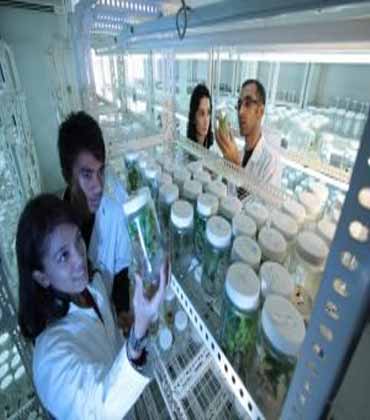
Circular Bioeconomy: Catalyzing Regenerative Life Sciences in APAC

From Investigating Drug Shortages to Preventing them: A Quality Leader's Journey
Joseph Lambert, Pharm.D., BCSCP, Vice President of Corporate Quality Assurance, Biocon Biologics
IN MY OPINION
Life Science Consulting
From Data To Decisions: The Emerging Necessity Of Business Intelligence In Clinical Research
Tyler Beasley, Executive Director, Business Intelligence and Commercial Operations, Velocity Clinical Research, Inc.
LAST WORD
Bioprocessing
Thinking Outside The Box For Hazardous Drug Management
Cindy Brasher, Pharmacy Manager of Compounding, St. Jude Children's Research Hospital
IN FOCUS

Programmable RNA Therapeutics: Advancing Precision Medicine through Next-Generation Molecular Engineering
Programmable RNA therapeutics enable precise gene modulation, accelerating personalized treatment and next-generation medicine.

Enhancing Patient Care Through Integrated Pharmacy Network Services
Healthcare organizations are increasingly focusing on improving coordination, accessibility and service efficiency to create a more connected experience for patients and providers.
EDITORIAL
Building a More Connected Life Sciences Future
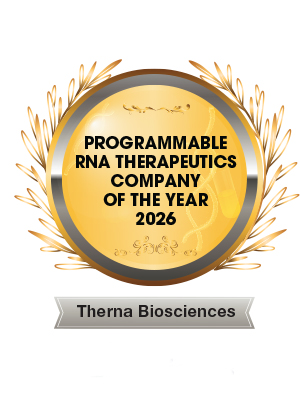
Leading the issue is Therna Biosciences, recognized as the Programmable RNA Therapeutics Company of the Year 2026. Its RNALogix™ platform brings together RNA biology, proprietary experimental data and machine learning to design programmable RNA medicines around the needs of specific diseases. Rather than relying on trial and error, the platform considers factors such as tissue targeting, durability, protein expression, safety, manufacturability and cellular context together. Its ability to identify previously uncharacterized RNA regulatory regions and validate its predictions experimentally also points to new possibilities in RNA drug discovery.
Alivia Health, recognized as Top Integrated Pharmacy Network Services 2026, is helping simplify access to complex therapies in Puerto Rico by bringing patients, physicians, managed care organizations and pharmaceutical manufacturers into a coordinated care model. Peters Medical Research, recognized as Top Clinical Trial Services 2026, is making clinical research more accessible in High Point and the wider Piedmont Triad through its research infrastructure and recruitment capabilities, supporting Phase 2, 3 and 4 studies. IFM Quality Services, recognized as Top Life Science Proficiency Testing Services 2026, is helping laboratories strengthen the reliability of their testing through challenging proficiency-testing samples designed to uncover weaknesses, improve methods and build confidence in results.
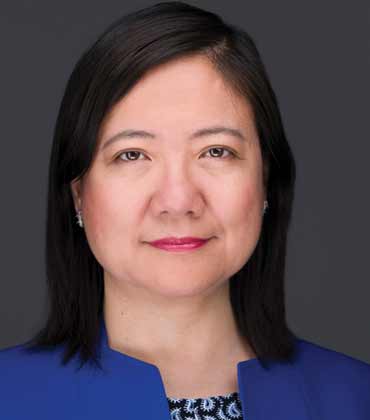
The issue also features perspectives from Haichen Yang, MD, MA, MBA, Vice President, Clinical Research, Amicus Therapeutics Inc., on the regulatory, safety and development challenges surrounding gene therapy and Lisa Boothby, Director of Pharmacy Services, Ochsner Health, on bringing pharmacists more closely into interdisciplinary patient care to strengthen medication safety and education.
Together, these stories show that progress comes from thoughtful design, collaboration and execution with patients at the center. We invite you to explore the ideas shaping the next chapter of life sciences.
