



 Ken Wang, CEO
The spatial surrounding cells is necessary to understand heterogeneous tissue and why cells behave differently depending on their neighbors and environment. Researchers are looking to new tools providing such context to understand diseases like cancer and neurodegenerative disorders.
AtlasXomics Inc. is seeking to transform the way researchers and physicians investigate and treat complex diseases with a novel set of spatial biology tools. The Deterministic Barcoding in Tissue for spatial-omics sequencing (DBiT-seq) platform leverages microfluidics and next-generation sequencing (NGS) to create transformative multi-omic maps (proteomics, transcriptomics, and epigenomics) of tissue at cellular resolution. Ken Wang, CEO of AtlasXomics, explains the vision behind the technology: “DBiT-seq utilizes equipment that is accessible to most researchers: microscopes and NGS services. Our goal is to bring new omics into the field in an affordable way to democratize this method.”
Bringing Spatial Context to Multi-Omics
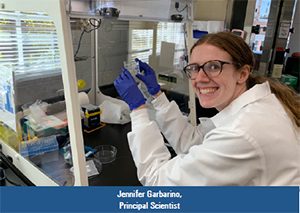
DBiT-seq’s state-of-the-art microfluidic system “labels” different target biomolecules (e.g., thousands of mRNA transcripts and hundreds of proteins labeled with oligonucleotide-tagged antibodies) with spatial barcodes on a tissue section. While single cell technologies allow for the profiling of individual cells isolated from tissue, DBiT-seq locates them in situ to provide invaluable insight into cell organization, tissue development, and disease. Dr. Jennifer Garbarino, Principal Scientist at AtlasXomics, says “This is a significant step up from conventional transcriptomics as the spatial context incorporated on top of other ‘omics’ mapping enables a more accurate assessment of how cellular gene expression influences protein production and activity.”
DBiT-seq combines the robustness and spatial fidelity of Fluorescence In Situ Hybridization (FISH) with the multiplex scalability of NGS to bring spatial context to bulk chemistry methods. Building upon these proven methods, DBiT-seq enables precise ligation of x and y barcodes that provide spatial context. The method involves the sequential flow of unique spatial barcodes through microfluidic channels to guide the ligation of x and y barcodes to target biomolecules. Each intersection area between a microfluidic row and column (x and y) generates an element of tissue defined as a TIXEL™ unit (tissue picture element). Processing the library of spatially encoded target biomolecules through NGS and feeding the raw reads through the Company’s bioinformatics workflow permits reconstruction of a mosaic of TIXEL units. Following the application of both microfluidic chips (A chip with horizontal channels and B chip with vertical channels) to the tissue, AtlasXomics’ software guides the user through the process of locating the region of interest, the pixels of the micrograph corresponding to location of the TIXEL mosaic.
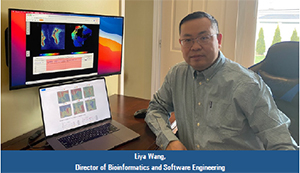
“From image analysis on a desktop to automated bioinformatics workflow in the cloud, and to the interactive exploration of DBiT spatial data over a web browser, AtlasXomics Inc. provides a wide range of software to facilitate analysis, integration with other spatial or single-cell technologies, and deep-diving into the DBiT data itself,” says Liya Wang, Director of Bioinformatics and Software Engineering.
Professor Rong Fan’s group has published on two spatial epigenome applications of DBiT-seq: spatial-CUT & Tag in Science - https:// pubmed.ncbi.nlm.nih.gov/35143307/ - and spatial ATAC-seq in bioRxiv - https://www.biorxiv.org/ content/10.1101/2021.06.06.447244v1.Spatial chromatin accessibility profiling with these assays can reveal the spatially distinct organization of cell types and cell states to improve the understanding of the epigenetic underpinnings in development and disease.
Commercializing the Advances of a Serial Innovator
Based in New Haven, Connecticut, AtlasXomics is the third company founded by Rong Fan, Professor of Biomedical Engineering at Yale University. His first two companies, IsoPlexis and Singler on Biotechnologies, are both focused on single cell technology while AtlasXomics is focused on spatial biology tools. Organized and financially sponsored by Spring Mountain Capital, the same financial group that backed IsoPlexis, AtlasXomics includes Yale University among its shareholders.
The DBiT-seq platform was first published in Cell 2020 demonstrating the simultaneous mapping of the whole transcriptome and dozens of proteins. More recently, the platform was featured in Nature’s “Seven Technologies to Watch” in 2022 - https://www.nature.com/articles/ d41586-022-00163-x - Professor Fan describes his group’s current work on interrogating the same tissue section for whole transcriptome and spatial-ATAC-seq, the first spatial epigenomics assay.
Spatial Epigenomics
Just as the terms mRNA and transcripts became common parlance during the pandemic, “epigenome” may be next. The epigenome has been likened to the “software” that configures the “hardware,” the DNA that contains all the information necessary to create the different cells of the body. Cells contain the same DNA information in their nucleus, but their genes are differentially expressed to make different cells. Epigenetic changes due to the many possible interactions with the environment are heritable changes in gene expression that occur without changes to DNA.
The Company’s rationale for launching the DBiT-seq platform with spatial epigenomics assays is the absence of commercial options in this omics. Moreover, based on venture capitalists’ dollar votes committed to new drug companies in the last two months of 2021, there is an emerging trend to gain understanding of epigenetic states to differentiate drug development.
By pinpointing specific changes in the varying cell groups of the central nervous system in neuro patients, DBiT-seq can help researchers better understand mechanisms of action and identify the safest and most effective approaches to drug discovery
Professor Rong Fan’s group has published on two spatial epigenome applications of DBiT-seq: spatial-CUT & Tag in Science - https:// pubmed.ncbi.nlm.nih.gov/35143307/ - and spatial ATAC-seq in bioRxiv - https://www.biorxiv.org/ content/10.1101/2021.06.06.447244v1.Spatial chromatin accessibility profiling with these assays can reveal the spatially distinct organization of cell types and cell states to improve the understanding of the epigenetic underpinnings in development and disease.
AtlasXomics will start offering spatial-ATAC-seq as a service in mid-2022. Customers send fresh frozen (FF)tissues section mounted on custom slides. The company will use proprietary methods to optimize FF tissue for interrogation with multi-omics methods. Then DBiT-seq is performed with the AtlasXpress™ appliance to facilitate the application of the microfluidic chips to tissue sections mounted on glass slides. The FASTQ file produced by NGS is processed in the company’s bioinformatics workflow to produce a map of the TIXEL units that can be correlated with the micrograph created by the microscope.
AtlasXomics is poised to expand its network and become the go-to partner for new single and combined multi-omic methods and analyses in the marketplace. Believing that no single tool can do it all and that the field is at the very early stages of development, AtlasXomics welcomes collaborations with other spatial biology tool makers that can complement the company’s offerings.
The resulting written data report will be comprised of several components: sample optimization, an unsupervised clustering map (dimensional reduction of the data set results in an unsupervised clustering of the TIXEL units), browser tracks, quality statistics, heat map of gene accessibility, and motif analysis.
The need for an additional reporting feature became apparent from working with key opinion leaders (KOLs) among the company’s early collaborators who wish to explore the data in detail. To serve these collaborators and future customers Director of Bioinformatics Liya Wang states, “We have developed a web-based tool called AtlasXBrowser™ that allows a researcher to type in one or more genes and obtain differential epigenetic state or gene expression. They can look at all the combinations of genes with this tool in a web-based workspace that is accessible 24/7.”
Driving Better Treatment Options for Complex Diseases
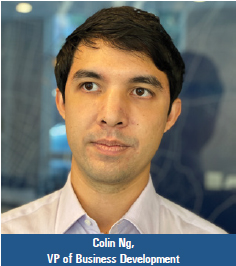
Currently, AtlasXomics is collaborating with KOLs in academia and in research institutes and is planning to offer DBiT-seq’s capabilities as a service by Q3 2022. This service will allow the Company to gain feedback on DBiT-seq’s impact on some of the leading development environments. “Due to the intertwined nature of research and funding, academic universities always strive to be at the forefront of innovation. AtlasXomics is targeting researchers in academia to gain a deeper understanding of R&D needs at the cutting edge of multi-omics research,” explains Colin Ng, Vice President of Business Development at AtlasXomics.
Ushering an Era of Multi-omics
AtlasXomics has exclusively licensed the underlying intellectual property from Yale and is building a patent estate with filings that describe novel chip designs as well as the appliance that aligns the chips. These patents cover enhancements of the platform’s usability and application to new omics. After awareness of the platform is established in the marketplace by the service business, the Company will offer a consumable kit that will enable researchers to run DBiT-seq within their own laboratory settings. The kit will include AtlasXomics’ microfluidic chips, the appliance AtlasXpress, and reagents.
-
DBiT-seq combines the robustness and spatial fidelity of Fluorescence In Situ Hybridization (FISH) with the multiplex scalability of NGS to bring spatial context to bulk chemistry methods
AtlasXomics is poised to expand its network and become the go-to partner for new single and combined multi-omic methods and analyses in the marketplace. Believing that no single tool can do it all and that the field is at the very early stages of development, AtlasXomics welcomes collaborations with other spatial biology tool makers that can complement the company’s offerings.
AtlasXomics and EpiCypher announce partnership to commercialize spatial epigenomics assays
Thursday, January 25, 2024
NEW HAVEN - AtlasXomics and EpiCypher have joined forces to collaborate on the development of CUT&Tag kits and assay services for spatial epigenomics applications. These assays will be designed on AtlasXomics' DBiT-seq platform, utilizing CUT&Tag reagents and antibodies from EpiCypher. This collaboration aims to expand the spatial 'omics toolbox to include histone post-translational modifications (PTMs), transcription factors, and other chromatin regulators.
Spatial technologies play a crucial role in enabling joint analyses of cellular and molecular heterogeneity from intact tissues. Applying ultra-sensitive chromatin mapping assays, such as CUT&Tag, to spatial techniques is essential for studying biological mechanisms in development and disease. CUT&Tag, developed by Dr. Steven Henikoff at Fred Hutchinson Cancer Center and commercialized by EpiCypher, employs a fusion of Tn5 transposase, protein A, and protein G (pAG-Tn5) to cleave and add sequencing adapters at antibody-bound chromatin. Due to its exceptional sensitivity and versatility, CUT&Tag has become the leading platform for single-cell and spatial epigenomics applications.
AtlasXomics' DBiT-seq platform, originally developed by Professor Rong Fan at Yale University, utilizes a combination of microfluidics and next-generation sequencing for high-resolution spatial profiling in tissues. DBiT-seq has gained significant traction in the field, with successful applications in various tissues across more than 50 laboratories worldwide. While AtlasXomics has already commercialized DBiT-seq for spatial ATAC-seq assays to map chromatin accessibility, the partnership with EpiCypher aims to introduce spatial CUT&Tag for profiling chromatin proteins, including histone PTMs and transcription factors.
"By seamlessly integrating molecular biology with histology, the DBiT-seq platform is revolutionizing epigenomics research," stated Colin Ng, Vice President of Business Development at AtlasXomics. "We have developed robust spatial assays that incorporate EpiCypher's proprietary pAG-Tn5 enzyme and high-efficiency antibodies to provide the optimal balance of sensitivity and specificity required for in-depth exploration of histone modifications and chromatin-associated proteins. Together, we will bring spatial CUT&Tag assays to market, including an expanded set of validated antibodies to provide customers with immediate access to diverse critical targets."
EpiCypher holds key rights to CUT&Tag technology and a proprietary nucleosome-based approach to develop ultra-efficient antibodies for spatial and single cell CUT&Tag assays. "Spatial CUT&Tag depends on specific and efficient core reagents to capture more data per cell, which allows deeper biological insights," said Dr. Martis Cowles, Chief Business Officer at EpiCypher. "We are very impressed with the DBiT-seq platform and look forward to working with AtlasXomics to maximize its impact on chromatin science and precision medicine."
AtlasXomics and EpiCypher have focused initial development efforts on fresh frozen samples. Their long-term goal is to optimize spatial CUT&Tag for formalin-fixed paraffin-embedded (FFPE) samples, thereby greatly enhancing the versatility of these assays for clinical applications.
