CLOSE

Specials

I agree We use cookies on this website to enhance your user experience. By clicking any link on this page you are giving your consent for us to set cookies. More info

Skip to: Curated Story Group 1
Life Sciences Review
US
EUROPE
APAC
CANADA

About Us

Conference

Partner With Us

  • US
    • EUROPE
    • APAC
    • CANADA
    • LATAM
  • Drug Discovery
    Antibodies
    BioTech
    Cell and Gene Therapy
    Clinical Trial
    Drug Discovery and Development
    Life Science AI
    Regenerative Medicine
    Therapeutics
  • Biomanufacturing
    Biomanufacturing
    Bioprocessing
    Blood Bank
    CDMO
    Clinical Laboratory
    CRO
    Life Science Testing
    Skin Care
    Supplements
  • Business Services
    Life Science Consulting
    Life Science Facility Service
    Life Science Financial Services
    Life Science Marketing
    Life Science Recruitment Firms
    Pharma Wholesale and Distribution
    Pharmacy Management
    Regulatory and Compliance
    Regulatory Services
  • Leadership Perspectives
  • Innovation Insights
  • Research
  • News
  • Magazines
  • CXO Awards
×
#

Life Science Review Weekly Brief

Be first to read the latest tech news, Industry Leader's Insights, and CIO interviews of medium and large enterprises exclusively from Life Science Review

Subscribe

loading

Thank you for Subscribing to Life Science Review Weekly Brief

Genomics Latam

Top Molecular Modeling and Structural Bioinformatics Research Groups in Latin America 2026

Molecular modeling and structural bioinformatics research groups help life sciences teams study biological structures through computational analysis. With a focus on protein modeling, molecular simulation, data interpretation and research validation, they support deeper scientific insight and stronger drug discovery.

Solutions
DansLab: Uncovering the Dynamics Behind Molecular Function
DansLab
Uncovering the Dynamics Behind Molecular Function
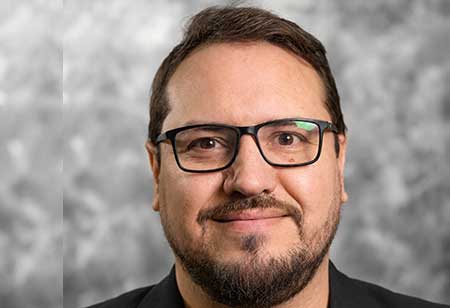
Pablo Dans Puiggròs, Principal investigator and Professor
A molecular structure can show researchers what a biological molecule looks like, but it cannot always explain how that molecule behaves. DNA, RNA, and other biological molecules move, change shape, and interact with their surroundings, and those dynamics can influence how they function. Understanding these changes is particularly important in biomedical research, where molecular behavior can shape everything from nucleic acid therapeutics to bacterial resistance. Investigating these questions requires approaches that connect molecular structure and dynamics with biological function.
Read more
State of Industry

Harnessing Molecular Modeling: Catalyzing Innovation in Latin America

Research teams focused on molecular modeling and structural bioinformatics provide substantial value for companies aiming to enhance their understanding of biology and molecules. This is particularly important in the dynamic landscape of Latin America, where the biotechnology, pharmaceutical, academic sciences, and healthcare industries are continually advancing their capabilities.

Read more
Deep Dive

Molecular Modeling that Connects Structure to Mechanism

Structural biology projects often reach a point where a static structure stops answering the question that matters. A sequence may identify the system and a solved structure may show one conformation, yet therapeutic design or mechanism work can depend on how that structure moves, changes state and interacts with its molecular environment. Research leaders evaluating a molecular modeling group should therefore look beyond software access or compute capacity. The harder question is whether the group can connect simulation to a biologically useful interpretation without treating the model as an answer in itself.

Read more

Molecular Modeling and Structural Bioinformatics Research Groups in Latin America Info

Q1
What Do Top Molecular Modeling and Structural Bioinformatics Research Groups in Latin America Do?
Top Molecular Modeling and Structural Bioinformatics Research Groups in Latin America use computational approaches to study how biological molecules are structured, move, interact and influence function. Their work can support academic research, drug discovery, biomolecular engineering and mechanistic studies by turning sequence and structural information into testable scientific questions. Strong groups combine modeling expertise with biological interpretation rather than treating computation as an isolated technical exercise.
Q2
What Capabilities Do Molecular Modeling Research Groups Typically Provide?
Top Molecular Modeling and Structural Bioinformatics Research Groups in Latin America may work across molecular simulation, structural analysis, sequence-to-structure interpretation, model development, computational biophysics and data-driven analysis. Depending on the research question, capabilities can include studying proteins, nucleic acids, molecular complexes and conformational changes. Molecular modeling research groups are most useful when methods are selected around the biological problem and linked to appropriate validation.
Q3
What Is Driving Demand for Structural Bioinformatics and Molecular Modeling in Latin America?
Top Molecular Modeling and Structural Bioinformatics Research Groups in Latin America are increasingly relevant as life science research generates larger structural and sequence datasets and seeks more efficient ways to explore complex molecular questions. Demand is also shaped by growing interest in computational drug research, precision biology and interdisciplinary collaboration. Structural bioinformatics helps research teams prioritize hypotheses and examine molecular behavior before committing resources to more intensive experimental work.
Q4
How Should Research Partners Evaluate Molecular Modeling and Structural Bioinformatics Groups?
Top Molecular Modeling and Structural Bioinformatics Research Groups in Latin America should be evaluated on scientific depth, methodological transparency, reproducibility, interdisciplinary expertise and the ability to connect computational results with biological evidence. Research partners should also consider whether a group can explain assumptions, limitations and uncertainty clearly. Strong molecular modeling research groups demonstrate that their workflows are appropriate for the system being studied rather than relying on one standard method for every project.
Q5
How Do These Research Groups Create Value for Life Science Programs?
Top Molecular Modeling and Structural Bioinformatics Research Groups in Latin America can create value by helping research teams narrow experimental priorities, investigate mechanisms, compare molecular states and identify questions that deserve further testing. Computational biology research can reduce unnecessary trial-and-error by organizing complex evidence into clearer hypotheses. Its greatest value comes from complementing experimental work, improving research efficiency and supporting more informed decisions about where laboratory time and resources should be focused.
Q6
What Role Do Technology and Scientific Expertise Play in This Field?
Top Molecular Modeling and Structural Bioinformatics Research Groups in Latin America depend on both advanced computational tools and experienced scientific judgment. Molecular simulation, structural databases, machine learning and high-performance computing can expand what researchers are able to analyze, but technology alone does not guarantee meaningful conclusions. Structural bioinformatics is strongest when specialists choose suitable models, test assumptions, assess uncertainty and integrate computational findings with relevant biological and experimental knowledge.
Life Sciences Review
Follow on LinkedIn

About

  • Home
  • About Us
  • Partner With Us

Stay Connected

  • Subscribe
  • Newsletter
  • Sitemap

Contact Us

  • editor@lifesciencesreview.com
  • sales@lifesciencesreview.com
  • marketing@lifesciencesreview.com

Legal

  • Editorial Policy
  • Privacy Policy
  • Terms of Use

© 2026 Life Sciences Review . All rights reserved. Headquartered in Fort Lauderdale, FL, USA.

This content is copyright protected

However, if you would like to share the information in this article, you may use the link below:

https://www.lifesciencesreview.com/a/molecular-modeling-and-structural-bioinformatics-research-groups-in-latin-america