



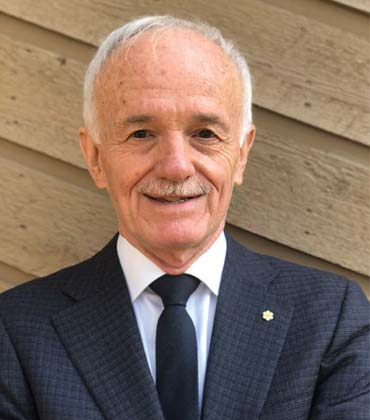
 Philip Halloran, CEO
Transcriptome Sciences Inc. (TSI), a privately held research company, has progressively moved toward molecular definitions. By leveraging genome-wide technologies like microarrays, TSI offers a deeper, more precise understanding of tissue biopsies transforming the industry.
A commercial spin-off of the Alberta Transplant Applied Genomics Centre (ATAGC) at the University of Alberta, TSI is a pioneer in driving industry-wide change. It is dedicated to discovering the molecular basis of disease states and seeking commercial applications that improve treatments and outcomes.
“We have developed a system that overcomes the limitations of traditional histology, which is plagued by subjectivity, reproducibility challenges, and the inability to capture specific molecular details,” says Philip Halloran, CEO.
Through cutting-edge research and diagnostics, it has processed and analyzed approximately 15,000 biopsies, each using a microarray—a small, one-centimeter square chip containing 500,000 distinct features, which allows the evaluation of accurate gene expression across every cell within the biopsy. TSI’s extensive global network, comprising up to 150 collaborators across Australia, Europe, the United States, and beyond, is instrumental in advancing this science. For every biopsy, it employs a series of software classifiers—algorithms that interpret the vast amount of data into clinically meaningful terms.
The culmination of its efforts is the Molecular Microscope® Diagnostic (MMDx) System. The tool reads transplant biopsies and generates over 500,000 individual measurements. These are interpreted by specialized software into the expression of approximately 20,000 genes.
With up to 150 collaborators worldwide, TSI’s biopsy reading system is utilized in clinical trials to advance scientific understanding and routine diagnostics. The powerful tool is also used within diagnostic centers in the U.S., the Czech Republic, and Austria, where it guides healthcare professionals in better caring for transplant patients. TSI’s ability to work in tandem with these partners while leading the charge in medical innovation further solidifies its status as an industry trailblazer.
Unlike conventional methods, TSI’s approach eliminates subjective assessments by pathologists and instead pairs these results with parallel microscopic findings for a more thorough evaluation. This breakthrough highlights the company’s ability to provide a clearer path to effective treatments and underscores its role in transforming patient care.
Corroborating this is a clinical trial published in The New England Journal of Medicine, which demonstrated that while traditional histology suggested that only some patients were responding to a new treatment for antibodymediated rejection, the MMDx revealed that nearly all patients responded, albeit to varying degrees. The system also showed that once treatment ceased, all patients experienced a relapse, offering a more complete and nuanced understanding of treatment outcomes.
We have developed a system that overcomes the limitations of traditional histology, which is plagued by subjectivity, reproducibility challenges, and the inability to capture specific molecular details
In a clinical scenario involving a patient in Berlin, Germany, TSI’s algorithms accurately assessed the level of rejection and predicted future outcomes based on a vast reference set of thousands of biopsies. This collaborative ecosystem exemplifies MMDx’s success across diagnostic centers.
Looking ahead, TSI envisions a future where its molecular microscope platform will be accessible to all heart transplant centers in the U.S. and Europe. As the medical community increasingly trusts and adopts these advancements, it is set to play a crucial role in improving patient outcomes, particularly in managing conditions like antibody-mediated rejection. By leveraging its molecular platform, TSI is advancing the understanding of transplant patients, guiding treatment decisions, and monitoring the long-term effectiveness of therapies.
With an estimated 1.5 million people living with organ transplants worldwide, TSI’s work is vital in accurately diagnosing problems, directing appropriate treatments, and conducting targeted clinical trials, ultimately improving the lives of patients. In doing so, TSI is paving the way for the future of transplant medicine.
