



 Dolores Baksh, CEO
These clinical trials require a critical starting material, such as plasmid DNA (pDNA). While commonly employed, pDNA generation comprises long lead times due to a complicated bacteriabased manufacturing process, which often results in recombination and mutation events at the AAV inverted terminal repeats. TAAV Biomanufacturing Solutions, which offers an alternative to plasmids — TAAV-manufactured enzymatic DNA is named neDNA™.
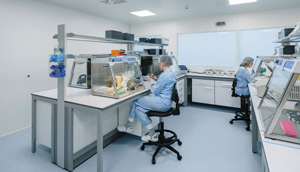
neDNA™ is produced using an enzymatic process that allows for rapid generation of DNA molecules, within a matter of days, leading to faster turnaround times and speed to clinic. The generation of pDNA, by comparison, comprises long lead times due the E.coli-based manufacturing, a process with large footprint, that can result in low yields and heterogeneity of the final product due to the amplification of complex and unstable sequences, and even batch failure. Circumventing these hurdles is TAAV Biomanufacturing Solutions, which offers an alternative to plasmids—neDNA™, TAAVmanufactured enzymatic DNA.
“Enzymatic DNA allows us to work with complex genetic sequences that form the sequence of interest and deploy it in any number of projects, enabling us to collaborate with a broad array of research groups working on rAAV gene therapies,” says Dolores Baksh, CEO of TAAV Biomanufacturing Solutions.
A Bespoke Take on Biomanufacturing
As a gene therapy progresses through the various phases of a clinical trial, the quality grade requirements change accordingly. Each gene therapy developer will have specific or even multiple grade needs based on the phase of clinical study their therapies are in. As such, neDNA™, TAAV-manufactured enzymatic DNA, is offered in multiple quality grades and is, therefore, produced in appropriate ISO-classified production suites using GMP standards relative to the grade of material used for research, clinical, or commercial purposes.
TAAV’s ability to serve a variety of the gene therapy developers’ needs is enabled by their manufacturing capabilities. Designed to facilitate more control, the process uses specific enzymes in precise concentrations to serve particular purposes, generating a distinct synthetic DNA molecule as the final product. This enables this technology to be easily deployed in the generation of rAAVs for a broad array of development purposes and clinical studies.
The process begins once a client enters into a contract and sends a sequence of interest. After confirming a cloning strategy on the enzymatic DNA precursor backbone, TAAV starts generating the enzymatic DNA based on a small quantity of template and, depending on the final yield required, uses a scalable process to achieve mg to g scale quantities of enzymatic DNA.
“We pride ourselves on being able to deliver phaseappropriate quality-grade enzymatic DNA to support clients through their clinical development programs,” adds Baksh.
Following the manufacturing process, quality control testing is performed by TAAV’s QC team at its laboratories. The client receives a certificate of analysis that highlights the product specifications.
Enzymatic DNA allows us to work with complex genetic sequences that form the sequence of interest and deploy it in any number of projects, enabling us to collaborate with every lab or research group working on gene therapy
TAAV’s most appreciable feature is that it goes beyond a one-size-fits-all solution. At the core of its onboarding process is the understanding that each client has something distinct to offer to the scientific and medical communities.
TAAV engages in initial discussions to highlight their value proposition and to learn more about the client’s gene of interest in its target therapeutic method and/or indication. To ensure a complete understanding of the project, TAAV brings in a multidisciplinary team that includes their scientists for discussions to establish a common scientific, quality, and manufacturing dialogue.
A dedicated project manager works with the client to ensure their inputs are considered, project deliverables are met, and data is relayed at every step of the way. The project manager’s final task is to ensure the synthesized enzymatic DNA is seamlessly delivered to the client and ready to be used in their project.
A client may deploy the enzymatic DNA in any number of experimental studies as a starting material for rAAVs, including process development, toxicology, clinical trials, and commercial readiness. TAAV’s highly scalable manufacturing process enables them to serve these needs.
One of the key accomplishments in genetic research was the announcement of the anticipated first use in a clinical trial of the company-manufactured enzymatic DNA, a component of an AskBio’s gene therapy candidate for the treatment of early-stage Huntington's disease, which was authorized by France's National Agency for Safety of Medicines and Health Products (ANSM) for an upcoming Phase I/II clinical trial.
This achievement highlights enzymatic DNA’s functionality and practicality and its potential to efficiently advance rAAV technology.
TAAV’s manufacturing capabilities is backed by its team of experts, the brilliant minds that are at the center who drive efficiency and innovation. Skilled in GMP and trained in the biotechnology space, each team member brings something unique to the table.
“We are a diverse team comprising an energized staff of scientists, Ph.D. graduates, and engineers who make up this organization, providing everything from research to manufacturing expertise,” says Baksh.

While accomplished scientists fuel TAAV’s research division, its manufacturing branch is driven by specialists trained in GMP. Together, they work to advance clients’ projects, combining scientific acuity and manufacturing expertise to ensure the required manufacturing grade and product quality.
-
We pride ourselves in being able to deliver phaseappropriate quality-grade enzymatic DNA to support clients through their clinical development programs
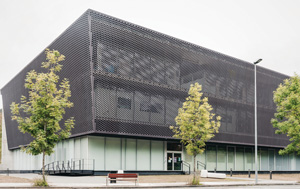
Its facility in San Sebastian, Spain, is located in a Science and Technology Park, which allows TAAV to access the latest in research, innovation and talent. The hospital network in the park, along with research centers and universities and a large number of innovative companies, including Viralgen, a leader in the production of rAAV gene therapy vectors, provide an ecosystem for the transfer of knowledge and ample opportunities to access local talent in strategic areas for leading industries like biopharma among others.
Cementing the Future of Gene Therapy
TAAV’s ultimate goal is to provide readily available critical starting material at an affordable cost, that can be used in the manufacture of rAAV gene therapy products to treat patients. For TAAV, the coming months are about contributing to advancing genetic research and integrating into gene therapy programs through collaborations with gene therapy developers and clients and by educating the broader scientific and therapeutic community through conferences, webinars, and white papers.
Innovation drives TAAV to deliver critical starting material for rAAV gene therapy developers. Paving the way to a new market space, enzymatic DNA is gaining momentum as a suitable and much-needed alternative to plasmids in modern-day genetics. A highly scalable manufacturing process, paired with excellent scientific acumen, positions TAAV as the innovation partner for biotech and pharma companies developing rAAV gene therapies.
