



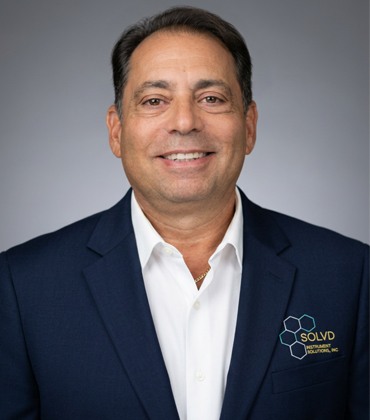
 Scott VanderWoude, President
SOLVD Instrument Solutions, Inc has built its service model around addressing these challenges by offering laboratories a faster, more flexible, and more customized approach to instrument maintenance and compliance.
Founded in 2019 and headquartered in Danvers, MA, SOLVD provides preventative maintenance, repairs, IQ/OQ/PQ qualifications, relocation services, and service agreements for laboratory instruments used by pharmaceutical companies, biotechnology organizations, and academic research facilities across the U.S.
Under the leadership of President Scott Vanderwoude, the company has positioned itself as an independent service provider that focuses on delivering value where many laboratories need it most: responsive support, cost control, and documentation flexibility.
While the idea may sound straightforward, delivering these advantages requires significant technical expertise. SOLVD must maintain the tools, training, and knowledge required to service complex laboratory instruments at a level comparable to OEM providers. The company’s approach is not based on promising everything to every customer; instead, it begins with a clear understanding of what it can support and where limitations may exist.
“Many times, we offer customers a faster response at a lower price with more customizable documentation offerings. While that sounds simple, it’s really complex,” says Vanderwoude.
To this end, the company evaluates each instrument carefully, communicates its capabilities upfront, and works with laboratories to create service strategies that fit their operational, compliance and budgetary needs. Rather than forcing customers into an all-or-nothing decision between OEM and third-party support, SOLVD helps them determine where independent service can provide the greatest value.
Transparency as a Foundation for Trust
The third-party service market has historically faced challenges around customer confidence. Some laboratories have experienced situations where service providers claimed capabilities they could not fully deliver once they arrived on site. SOLVD took a different approach by openly defining its capabilities before taking on a service engagement.
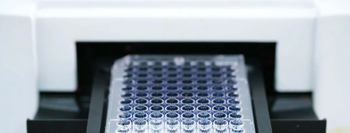 Every instrument that SOLVD supports is evaluated based on the level of service the company can realistically provide. Rather than presenting itself as capable of handling every possible repair or diagnostic challenge, the company explains where it can match OEM service levels and where limitations may exist.
“We want customers to understand upfront what we can do and what we cannot do. That honesty is important because trust is much harder to rebuild after a bad service experience,” says VanderWoude.
This transparency has become one of the company’s strongest differentiators. SOLVD recognizes that independent providers may not always have access to the same software, parts, or specialized resources as manufacturers. Instead of hiding those limitations, the company works with customers to develop practical service strategies.
Structured Approach to Instrument Support
To help customers understand their options, SOLVD has developed a classification system that places instruments into four categories based on the level of support available.
It is not an either-or decision. The goal is to determine what works best for the customer, their compliance needs, their instruments, and their budget.
The PM+H category represents a hybrid service model. SOLVD can provide preventative maintenance, qualifications, and basic repairs, but there may be situations where OEM involvement is required because of specialized software, parts, or technical restrictions.
Class P instruments receive preventative maintenance support only, while Class R instruments are supported through relocation services such as deinstallation and reinstallation. By clearly defining these categories, SOLVD allows laboratories to make informed decisions instead of committing to a single service approach across their entire instrument portfolio.
The company believes that the most effective strategy is often a combination of independent and OEM support. A laboratory may have certain instruments where SOLVD can provide complete maintenance coverage and others where the manufacturer remains the better option.
Supporting Compliance beyond Basic Maintenance
For GMP and QC laboratories, instrument service involves much more than fixing equipment when problems occur. Documentation, validation, and compliance records are essential parts of daily operations. SOLVD has developed customized validation and reporting packages to help laboratories meet their internal quality requirements.
The company works to follow OEM validation protocols whenever possible and uses OEM-specific validation plates when available. It also provides specialty testing options, including signal-to-noise testing, temperature validation, and multifunction validation plates.
One of the challenges laboratories face is that compliance expectations are rarely identical from one organization to another. Each quality group may have its own standard operating procedures and documentation requirements. SOLVD’s ability to customize its reporting packages allows laboratories to maintain processes that align with their regulatory expectations.
This flexibility has become particularly valuable for organizations that need detailed documentation but do not always receive customized support through traditional service channels.
Helping Laboratories Balance Cost and Reliability
Reducing maintenance costs is an important reason many organizations explore independent service providers, and SOLVD approaches cost savings as part of a broader operational strategy. The company works with laboratories to understand their complete instrument environment before recommending a service model.
Its PMplus and Multiple Instrument Service Programs are designed to provide significant savings compared with traditional OEM agreements over multi-year periods. However, SOLVD does not recommend moving every instrument away from the manufacturer. Instead, it evaluates where independent service can provide value and where OEM support remains important.
-
We want customers to understand upfront what we can do and what we cannot do. That honesty is important because trust is much harder to rebuild after a bad service experience.
VanderWoude believes that the right question is not whether a laboratory should choose OEM or third-party service. The question is what combination creates the best outcome.
“It is not an either-or decision. The goal is to determine what works best for the customer, their compliance needs, their instruments, and their budget,” says VanderWoude.
This philosophy has allowed SOLVD to work with organizations ranging from smaller research facilities to large pharmaceutical companies. Each customer receives a service approach based on its individual circumstances rather than a standard package.
Building Relationships through Flexibility
A significant portion of SOLVD’s growth has come through customer loyalty. Approximately 95 percent of its clients are repeat customers, with many relationships continuing from the company’s early years.
According to VanderWoude, that loyalty comes from understanding that laboratories are constantly changing. Budgets shift, compliance requirements evolve, and research priorities move in new directions. A service partner must be able to adapt alongside those changes.
 Communication has been a major part of SOLVD’s relationship strategy. The company works with multiple stakeholders within customer organizations, including asset management teams and laboratory personnel, to ensure that everyone involved understands service expectations.
For SOLVD, being easy to work with is not simply a customer service philosophy; it is a business requirement. The company competes against larger organizations by providing responsiveness, flexibility, and personal attention.
Solving Real Laboratory Challenges
One example of SOLVD’s impact involves a nonprofit research facility in Maryland that relied on older Molecular Devices instruments. The organization faced challenges maintaining aging equipment while working within budget constraints.
Through its partnership with SOLVD, the laboratory was able to reduce maintenance costs and use those savings to purchase a refurbished instrument that was critical to its operations. Together, they developed a redundancy strategy by maintaining backup instruments that were tested, validated, and ready for use.
When one primary instrument experienced a failure, the laboratory avoided a major disruption because a backup system was already available. SOLVD then supported the diagnostic and repair process for the original instrument.
The company has also worked with large pharmaceutical laboratories where a hybrid model has proven effective. These organizations maintain SOLVD service agreements while occasionally bringing in OEM support for instruments requiring specialized capabilities. For these customers, the combination delivers faster response times and improved budget management.
Preparing for the Future
As SOLVD continues to grow, the company is focused on strengthening its internal processes and expanding its capabilities. One major initiative is achieving ISO certification by the end of 2026, allowing the company to better meet the vendor qualification expectations of regulated laboratories.
The company is also carefully expanding the range of instruments it supports. Adding new products requires extensive technical evaluation, training, and documentation. SOLVD only introduces new capabilities when it can clearly define the depth of service it can provide.
This disciplined approach reflects the company’s broader philosophy: growth should never come at the expense of service quality.
SOLVD Instrument Solutions, Inc has been named Laboratory Instruments Maintenance and Repair Services of the Year 2026, recognizing the company’s contribution to helping laboratories maintain critical equipment through transparent, flexible, and technically focused service solutions.
As laboratories continue navigating increasing compliance requirements and cost pressures, SOLVD’s independent service model offers an alternative built on trust and practical problem-solving. By focusing on clear communication, technical expertise, and long-term partnerships, the company continues helping organizations keep their instruments operating efficiently while making smarter maintenance decisions.
Selecting Laboratory Instrument Service beyond OEM Contracts
Laboratory instrument service decisions become difficult when a maintenance contract protects uptime but leaves little room for changing budgets or internal compliance practices. GMP and QC labs cannot judge service on price alone. A cheaper visit has limited value if qualification work does not satisfy an established SOP, while comprehensive OEM coverage can be difficult to justify for instruments needing little beyond scheduled preventive maintenance. The real purchasing question is how much support each instrument requires and how confidently that scope can be defined before service begins.
Instrument portfolios rarely warrant a single service model. Some systems need manufacturer access because proprietary software, restricted parts or specialized controls limit what an independent provider can perform. Others can be maintained and repaired effectively outside an OEM contract. Older instruments create another complication when manufacturer support ends while the equipment remains useful. Contracting every asset under the same model can therefore increase cost without improving the service available where it matters.
Service transparency deserves close scrutiny for that reason. A provider should establish its technical limits before the lab commits, particularly where repair depth differs by instrument model. Buyers need to know whether support extends beyond preventive maintenance into diagnostics and repair, and whether manufacturer involvement may still be required. Clear boundaries make hybrid sourcing workable. They also reduce the risk of discovering during a failure that a service partner lacks access to a needed part or proprietary tool.
“SOLVD Instrument Solutions’ scope includes preventive maintenance and repair, while IQ/OQ/PQ, specialty validation testing and documentation packages can be adapted to a lab’s established requirements.”
Documentation introduces a different test. Regulated laboratories often work under internal procedures that have developed around established testing practices, review requirements and compendial expectations. Standard qualification paperwork may not fit those processes cleanly. Service providers should therefore be judged on how well qualification work can accommodate the lab’s approved requirements rather than forcing every site into a fixed reporting package. Organization matters as much as volume when compliance teams must review extensive records before releasing an instrument for use.
Response capability also needs to be considered alongside contract coverage. Lower annual service costs lose their appeal when repair delays interrupt laboratory work, yet broad OEM agreements can consume maintenance budgets even where failures are infrequent. The better model often allocates support according to the technical reality of each asset. Instruments that can be fully supported independently may move away from manufacturer contracts, while restricted systems retain OEM involvement where access makes it necessary. Such decisions are easier to sustain when service scope remains explicit as the portfolio changes.
Against those requirements, SOLVD Instrument Solutions emerges as the premier choice for laboratories that want an independent service model without treating OEM replacement as an all-or-nothing decision. It makes that boundary visible by classifying instruments according to the level of service they can realistically provide. Its scope includes preventive maintenance and repair, while IQ/OQ/PQ, specialty validation testing and documentation packages can be adapted to a lab’s established requirements. The hybrid approach lets laboratories retain OEM service where proprietary access remains necessary while shifting suitable instruments to independent support.
...Read more
