



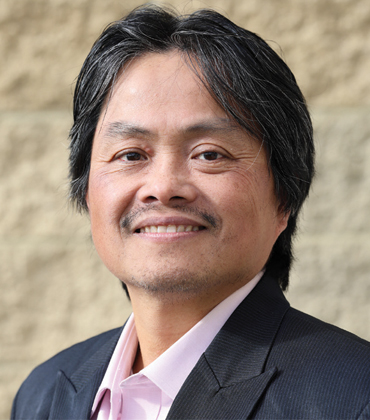
 Richard Tseng, PhD, President and Co-founder
Why do predictive ADMET models often produce conflicting results?
The industry has since built an extensive ecosystem of QSAR and machine-learning tools to anticipate ADMET risks earlier. Yet these systems often generate divergent results shaped by varying assumptions, datasets, and biological simplifications. Because ADMET processes are deeply interconnected, they resist isolated modeling. Researchers are left with no shortage of predictions but insufficient clarity about which to trust.
How does Proholistic Discovery apply physics-based reasoning to drug development?
To address this, Tseng and his co-founder turned to principles from physics, specifically information theory and inductive inference, to build a framework capable of reasoning through incomplete and contradictory evidence. That approach became the foundation of Proholistic Discovery and the inference platform it developed to help scientists make more reliable decisions.
“Our platform does not attempt to replace existing ADMET or PKPD tools,” says Tseng. “Instead, it resolves the uncertainty by turning incomplete, fragmented predictions into actionable insight that better reflects human biology.”
Proholistic Discovery’s platform sits above existing methods as an intelligent inference layer grounded in inductive reasoning. It evaluates outputs from multiple predictive tools, weighs their strengths and limitations, and generates a consensus assessment grounded in clinical data. Rather than treating any single model as authoritative, the platform is designed to reason across imperfect inputs and solves the uncertainty that arises when different tools point in different directions. In fact, even in a worst-case scenario, the system performs at least as well as the best individual tool available, while systematically reducing the risk introduced by each tool’s blind spots. The result is faster candidate identification, more efficient use of experimental resources, and reduced risk of late-stage failure.
How has the platform been applied in real-world development programs?
What expertise supports the platform’s quantitative inference framework?
Expertise plays a central role in making that mechanism work in practice. The team combines strong quantitative science training with decades of experience in computational drug discovery and real-world development, strengthened by chief technology officer (CTO) Winston Wang, a technology and AI leader with 19 years of experience across drug development and regulated pharmaceutical environments. Jack Tuszynski, PhD, the chief scientific officer (CSO), has led initiatives that reached clinical evaluation, including a candidate in trials at Alberta’s Cross Cancer Institute. Scientific oversight is further reinforced by an advisory board led by Nobel Laureate Sir Michael Houghton and including Dr. James Frost, Prof. Patrick Poulin, and Prof. Mohammad Ashrafuzzaman, ensuring rigor, integrity, and strategic vision.
-
Our platform does not attempt to replace existing ADMET or PKPD tools. Instead, it resolves the uncertainty by turning incomplete, fragmented predictions into actionable insight that better reflects human biology.
How has the platform been applied in real-world development programs?
Real-world projects demonstrate how the technology works in practice. An early-stage biotechnology client approached Proholistic Discovery with more than 100 compounds and conflicting external assessments. The company used its inference AI platform to compare predictions across tools and identify candidates with the highest probability of success, enabling the client to focus resources on the most promising options.
Another engagement involved a later-stage organization preparing for Phase 1 and Phase 2 clinical trials. Seeking deeper insight into dosage selection and scheduling, the client turned to Proholistic Discovery. The company combined its platform with human physiological modeling to simulate pharmacokinetic behavior, enabling more informed study design and refined protocols grounded in translational expertise.
With an emphasis on broadening access, Proholistic Discovery is launching a web-based application led by CTO Wang that will enable rapid assessments without deep computational expertise. Over the next few months, the team aims to advance its methods by predicting drug concentrations at specific sites of action without the need for complex physiological models.
As pharmaceutical research becomes more data-intensive, interpreting complex, incomplete information becomes increasingly critical. Proholistic Discovery was recognized as a Top ADMET Prediction and PKPD Modeling Solution provider for its contributions here, reflecting its commitment to turning uncertainty into practical, quantitative insights that drive smarter experiments, more efficient trials, and a clearer path for promising therapies to reach patients.
Advancing Clinical Confidence through ADMET and PKPD Intelligence
Drug development leaders face a persistent imbalance between scientific promise and clinical outcome. Despite advances in computational chemistry and molecular design, small molecule programs continue to experience high attrition in human trials, much of it tied to absorption, distribution, metabolism, excretion and toxicity. The underlying issue is not a lack of models but a lack of reliable translation. Data is fragmented, experimental inputs are limited and predictive tools often excel in narrow domains while underperforming elsewhere. Executives evaluating ADMET prediction and PKPD modeling platforms must therefore look beyond surface claims of accuracy and examine how a solution addresses uncertainty itself.
A meaningful platform should not rely on a single quantitative structure–property relationship trained on selective datasets. Many established tools are optimized for specific endpoints such as absorption or metabolism, leaving research teams to decide which output to trust at critical inflection points. When datasets are sparse or derived from animal or early human studies, correlations between chemical structure and human response become difficult to generalize. The question for buyers is whether a solution merely adds another predictive layer or systematically reconciles the strengths and blind spots of existing methods.
Confidence in translation also depends on how a system handles imperfect information. Drug discovery rarely presents complete datasets, yet program decisions must proceed. A credible ADMET and PKPD environment should demonstrate a disciplined quantitative framework capable of drawing inferences from limited data while incorporating clinical knowledge where available. Integration of human physiological understanding into pharmacokinetic and pharmacodynamic projections is essential when modeling dose, scheduling and exposure at target sites. Platforms that help teams narrow large compound sets to smaller, more probable candidates or refine dosing strategies before clinical trial design create measurable strategic value.
The composition of the development team behind a solution matters as well. Computational engines that operate in isolation from clinical experience risk becoming theoretical exercises. Buyers should assess whether the vendor combines quantitative science with direct exposure to clinical development, since translation failures often arise at the interface between modeling assumptions and human biology. A solution grounded in mathematics and physics yet validated against clinical trajectories signals an intent to bridge that gap rather than abstract it.
Proholistic Discovery merits close attention within this landscape. It has built its ADMET and PKPD platform around an inference-based engine that evaluates outputs from multiple established predictive tools and synthesizes them into a unified, probability-weighted assessment. Instead of positioning itself as another standalone predictor, it trains its system on methodological outputs and clinical data to minimize the weaknesses inherent in any single approach. It has supported early-stage teams in screening large compound libraries to prioritize candidates for downstream studies and assisted later-stage sponsors in projecting dose and scheduling scenarios ahead of phase one and two trials. Its roadmap toward a web-based application and direct prediction of site-specific concentration profiles reflects a focus on practical accessibility and human-relevant insight. For executives seeking a disciplined, quantitatively grounded solution to improve translational confidence, Proholistic Discovery stands out as a considered choice.
...Read more
ADMET Prediction and PKPD Modeling Info
Q1
What led Proholistic Discovery to be recognized among top ADMET prediction and PKPD modeling solution providers?
Proholistic Discovery has gained recognition in ADMET Prediction and PKPD Modeling Solutions by directly addressing one of drug development’s most persistent challenges: late-stage failure driven by poor ADMET and pharmacokinetic properties. Its inference AI-powered platform enables early identification of risks by combining predictive modeling with systems-level reasoning. By transforming fragmented data into coherent, decision-ready insights, the company helps researchers select better candidates earlier, which significantly improves development efficiency and clinical success potential.
Q2
How does Proholistic Discovery differentiate its approach to ADMET prediction and PKPD modeling?
A distinctive inference-driven framework defines how Proholistic Discovery delivers ADMET Prediction and PKPD Modeling Solutions. Instead of acting as a standalone predictive tool, its platform aggregates outputs from multiple ADMET and PKPD models, evaluates their strengths and limitations, and synthesizes them into a unified assessment. This layered intelligence reduces inconsistencies across models and produces results that better reflect human biology. By resolving uncertainty rather than adding another prediction layer, the company sets its ADMET Prediction and PKPD Modeling Solutions apart.
Q3
How does Proholistic Discovery support customers across drug development stages?
Support within Proholistic Discovery’s ADMET Prediction and PKPD Modeling Solutions spans the full development lifecycle. The company provides consulting that integrates systems pharmacology, bioinformatics, virtual screening and computational biology to guide target identification, lead optimization and clinical planning. Its customized physiologically based PK/PD models allow researchers to simulate drug behavior in both preclinical and clinical contexts, enabling better-informed study design and decision-making.
Q4
What value do its solutions bring to pharmaceutical and biotech programs?
Reduced uncertainty and improved candidate prioritization define the value of Proholistic Discovery’s ADMET Prediction and PKPD Modeling Solutions. By identifying toxicity, exposure and efficacy risks early, the platform helps organizations avoid costly downstream failures and focus resources on the most promising compounds. Its ability to narrow large compound libraries into high-probability candidates and refine dosing strategies enhances both efficiency and translational success in drug development.
Q5
What role do expertise and scientific methodology play in its platform?
Scientific rigor and interdisciplinary expertise are central to Proholistic Discovery’s ADMET Prediction and PKPD Modeling Solutions. The platform is grounded in principles from physics, information theory and systems pharmacology, supported by a team with decades of experience in computational biology and clinical research. This foundation enables the company to apply quantitative inference to complex biological systems, ensuring that predictions are not only computationally robust but also biologically meaningful.
Q6
Why is Proholistic Discovery relevant to current drug discovery challenges?
The increasing complexity of drug development and the limitations of isolated predictive models have made integrated solutions essential, and Proholistic Discovery addresses this through its ADMET Prediction and PKPD Modeling Solutions. Its ability to reconcile conflicting data, simulate drug behavior and generate actionable insights aligns with the industry’s shift toward data-driven, human-relevant modeling. By enabling earlier, more confident decision-making, the company remains highly relevant to modern pharmaceutical innovation.
