



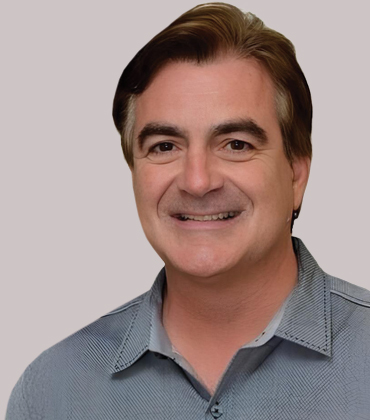
 Alexander White, MD, CEO and Founder
There is no clinical chill or sense of transience. Instead, it feels lived-in, like a place where people know one another’s names. The hum of quiet conversation filters through from the hallway, where nurses pass by with the easy familiarity of colleagues who have worked together for decades.
That warm and personal atmosphere is the heartbeat of the company and, in many ways, the reason why it thrives and continues to grow.
PMR is not a corporate network or a slick acquisition built for scale. It is physician-founded, family-owned, and deeply rooted in the Florida community it serves.
The company’s CEO and founder, Alexander White, MD, has been in clinical research for nearly three decades. What began as a small, independent site has evolved into one of the region’s most trusted full-phase research centers, conducting everything from early Phase I safety studies to long-term, multi-center trials.
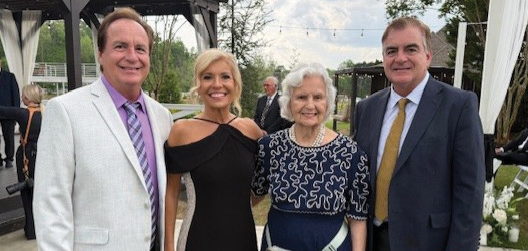
Basil White, COO and brother; Alexandra Zachos, Director of Public Affairs and Programs and cousin; and their mother, Katherine White, have all been essential in supporting Dr. White in achieving his mission.
"We’ve stayed small enough to care, but experienced enough to make an impact,” he says.
That statement captures much of what sets PMR apart in an increasingly consolidated industry now dominated by business interests rather than physicians.
A Legacy of Independence
 The company’s independence is no small thing. Across the country, most clinical research sites have merged into larger corporate entities or venture-funded networks. PMR has resisted that path. The decision has cost them some of the conveniences of scale, but it has preserved something rarer: agility, intimacy, and trust.
The staff here builds relationships. Many have worked together for more than twenty years, and turnover is almost nonexistent. That continuity matters in research, where familiarity translates into consistency, and consistency leads to quality.
Patients sense it immediately. They are greeted by name, not by file number. They are given time to ask questions. Most importantly, they are encouraged to feel at home in a process that can often be intimidating. It is not unusual for participants to stay in touch long after their studies end. Some even bring in friends or family members to enroll. That kind of word-of-mouth loyalty cannot be bought with marketing. It is earned, patient by patient, over years of care.
The People Behind the Practice
If the research industry were a family tree, PMR would be the branch that never forgot its roots. Dr. White began his career in emergency medicine, a background that still shapes his clinical instincts. Two of his longtime colleagues, Dr. Mohamed, his former intern, and physician assistant Richard Marshall, are also trained in emergency care. That shared history has created a deep respect for safety and preparedness.
Because the site conducts Phase I trials, where safety monitoring is paramount, it maintains the same level of readiness you would expect in a hospital: crash carts, emergency protocols, and direct lines to local health systems such as Halifax Health and AdventHealth. Those measures, while vital, are rarely needed. The site’s near-spotless safety record speaks to the team’s diligence and experience.
We’ve stayed small enough to care, but experienced enough to make an impact.
Trials with Purpose
PMR’s trial portfolio is as broad as its approach is focused. The company runs studies across nearly every therapeutic area, including cardiovascular disease, diabetes, MASH (fatty liver disease), and metabolic disorders. However, it has developed an exceptional reputation for neuroscience, particularly Alzheimer’s research. Now, with the addition of Dr. Visvalingham, a hematologist and oncologist, PMR will be expanding into immunology and oncology. The company’s focus grows from both scientific need and local reality.
 “We live in a community with a large aging population,” Dr. White has said in past talks. “You can’t ignore that. You have to meet it.”
Under his leadership, PMR has participated in pivotal studies that brought the first two disease-modifying Alzheimer’s monoclonal antibodies to market. It also leads preventive and registry studies that aim to identify early biomarkers of cognitive decline, using PET scans, blood tests, and retinal imaging to detect warning signs long before symptoms appear.
Alzheimer’s work naturally expanded into related areas. When Parkinson’s patients from a local boxing therapy group began asking about new treatment options, PMR listened. Within months, the site had secured a Phase I Parkinson’s study focused on potential disease-modifying therapies. Decisions are made here by listening to what the community asks for.
Speed, Quality, and a Human Touch
In one case, a small biotech company faced pressure from investors to meet a publicized enrollment milestone. They needed their first patient screened by a specific date. PMR made it happen. The deadline was met, the study stayed on track, and a potentially life-changing therapy maintained its momentum.
Sponsors often describe PMR as one of the easiest sites to work with. It is quick to activate, thorough in documentation, and refreshingly straightforward in communication. There is a practical reason for that: the team can move faster without the overhead of a large bureaucratic network.
-
We live in a community with a large aging population. You can’t ignore that. You have to meet it.
In one case, a small biotech company faced pressure from investors to meet a publicized enrollment milestone. They needed their first patient screened by a specific date. PMR made it happen. The deadline was met, the study stayed on track, and a potentially life-changing therapy maintained its momentum.
Behind the scenes, quality control is constant. Each trial team cross-checks its own data daily. Regulatory files are kept so clean that routine monitoring often results in compliments rather than corrections. The site welcomes audits instead of dreading them. Monitors, often braced for adversarial reviews, are treated as collaborators. That small difference has a significant effect: it keeps the data honest, the process humane, and the relationship with sponsors productive.
Community as Mission
For all its technical sophistication, PMR remains a community organization at heart. The company’s presence in the Daytona Beach area extends far beyond clinical work.
Dr. White personally founded a nonprofit, Giving a Reason for Hope, to support residents facing financial hardship. Through it, the company helps families with rent, utilities, and basic needs—often the same people who might one day participate in a clinical trial. PMR also sponsors local programs that offer second chances to individuals transitioning from incarceration to the workforce and supports health-oriented initiatives such as the Parkinson’s boxing group Rock Solid Boxing.
 These are not side projects for publicity. They are expressions of the same ethos that runs through the company’s research: to give people agency over their health, dignity in their care, and hope for what comes next.
That sense of mission extends to mentorship. The clinic regularly welcomes interns from Bethune-Cookman University’s healthcare program and other local colleges, giving students hands-on exposure to medicine and research. Many interns later enter medical school, inspired by what they have learned at PMR. Others open their own research sites, sometimes with Dr. White’s guidance.
He has mentored multiple physicians in launching independent research practices, expanding clinical capacity in regions that need it. One former trainee commuted more than an hour each way, three times a week, just to learn from the team before founding his own Alzheimer’s research site. That ripple effect of training, mentorship, and ethical example may be PMR’s most lasting contribution.
Doing Research the Right Way
If there is a secret to PMR’s staying power, it is probably this: they do not cut corners. The regulatory department, led by longtime head Jacqulyn, is known for its precision. Every document is double-checked, and every entry verified. Sponsors and CROs frequently remark that the site’s regulatory binders are among the most organized they have ever seen.
This attention to detail has earned PMR an enviable record with sponsors. The site consistently scores high on startup metrics, query responsiveness, and compliance parameters. But the numbers tell only part of the story. The rest is visible in how they work: the calm coordination of a team that knows one another’s rhythms and the unhurried thoroughness that comes from pride in one’s craft.
That pride shows even in the smallest gestures. Patients are followed up personally, calls are returned promptly, and even after studies close, many remain part of the site’s extended family.
Developing Standards for Digital Endpoints
The company’s future lies in two directions: deeper community engagement and broader clinical collaboration.
PMR is preparing to open a new facility in an underserved part of Daytona Beach. This renovated building will serve as a hub for free health screenings, education programs, and trial outreach. The goal is to bring clinical research to people who rarely encounter it, expanding diversity in enrollment and building trust in science.
At the same time, the team is exploring digital cognitive assessments for early detection of memory issues, working with technology partners and hospital systems to integrate these tools into both research and routine care.
Dr. White also serves on steering committees developing standards for digital endpoints in Alzheimer’s and cognitive studies, a sign that his influence now reaches beyond the clinic into the broader framework of trial design. Still, the heart of the company remains unchanged. The physicians and staff at PMR are, above all else, caretakers. They treat each study as an extension of their clinical oath, not just a contract to be fulfilled.
Pharmaceutical Trials Depend on What Happens at the Site Level
Pharma companies have also become incredibly picky about the sites they work with. A few years ago, the entire focus of the site meeting was site access and enrollment. Nowadays, the sponsor is critically evaluating the quality of the execution. They are looking for partners that can move fast but will not cause major operational headaches downstream, produce clean data, engage patients, and identify protocol issues before timelines have begun to slip.
That shift is easy to understand when development timelines and investor confidence can change around a single delayed milestone.
Sponsors still care about recruitment speed, but speed alone has lost some of its appeal. Fast startup means very little if it creates documentation gaps, inconsistent communication or excessive query volume once monitoring begins. Experienced sponsors usually prefer sites where regulatory teams, investigators and coordinators already operate as a coordinated unit. In those environments, audit readiness, source documentation and sponsor communication tend to be part of the daily workflow rather than something cleaned up after visits are complete.
The role of medical supervision is similarly important. The protocols may emanate from the sponsor or CRO, but the eligibility decisions and patient safety management are at the site level. This is where good site judgment comes into its own. Early to late-stage experienced teams often identify friction in the protocol prior to enrollment issues becoming apparent. In a complex therapeutic area, poorly defined inclusion criteria or unsupported assumptions on what is appropriate for the patient will lead to many months of slow enrollment before sponsors identify the problem.
There's a real emphasis on transparency these days. The sponsors like working with researchers willing to bring up recruitment, workflow or patient fit issues from the very beginning. Enrollment figures might be very impressive at the outset, but problems can arise later down the line when deadlines are missed. The critical, honest feedback at the early stages allows the sponsors to address potential issues before they become costs; Experienced sites usually provide good feedback, which prevents more major issues.
Recruitment itself has changed too. Pharmaceutical studies now require more targeted patient engagement, especially in trials involving specialty populations, cognitive assessments or diversity expectations. Generic advertising campaigns rarely solve those challenges on their own. Research organizations with stronger community relationships tend to perform better because they already understand the patient populations they serve and have referral networks built over time. That usually leads to better-qualified participants and fewer failed screens.
Flexibility matters for another reason. Trial protocols often evolve once they meet real patient behavior and real clinical workflows. Sites that have worked across multiple therapeutic areas can often recognize operational problems early and provide practical feedback before sponsors lock themselves into difficult amendments later. For smaller pharmaceutical or biotech companies, that kind of site-level guidance can have an outsized impact because even modest delays can affect financing timelines and broader program confidence.
Progressive Medical Research has built its model around that more operational view of clinical trials. The physician-founded independent organization conducts Phase I through Phase III trials across pharmaceutical, biotech and medical device programs, supported by a clinical pharmacology research unit and community-based patient recruitment. Its strengths are most visible in fast startup execution, direct sponsor communication, quality-focused documentation practices, hospital relationships and hands-on protocol support. For sponsors looking for a research partner that combines recruitment capability with practical clinical judgment, that combination has become increasingly valuable.
...Read more
Pharmaceutical Clinical Trials Info
Q1
Why is Progressive Medical Research recognized among top Pharmaceutical Clinical Trial Services providers?
Progressive Medical Research has earned recognition in Pharmaceutical Clinical Trial Services through its patient-centered and community-driven clinical research model. Operating as an independent clinical trial site, it focuses on delivering high-quality study execution while maintaining close engagement with participants and sponsors. The organization is led by experienced medical leadership with decades of clinical practice, which strengthens protocol adherence and study reliability. Its reputation is built on combining operational precision with a strong emphasis on patient experience, ensuring trials are conducted efficiently without compromising ethical or scientific standards.
Q2
What differentiates PMR in the clinical trial landscape?
A defining strength of Progressive Medical Research within Pharmaceutical Clinical Trial Services is its integrated approach to site-based research. Rather than functioning as a purely administrative trial location, it operates with physician-led oversight and hands-on clinical involvement. This structure allows faster decision-making, improved protocol interpretation and stronger patient monitoring throughout study phases. The organization’s emphasis on combining medical expertise with operational execution helps reduce delays often seen in multi-site trial environments while improving data consistency across studies.
Q3
How does PMR support patients participating in clinical trials?
Patient engagement is central to Progressive Medical Research’s delivery of Pharmaceutical Clinical Trial Services. It prioritizes accessibility, communication and continuity of care throughout the study process. Participants receive structured guidance at each stage, from screening and enrollment to follow-up visits and outcome monitoring. The organization’s community-oriented model ensures patients are treated as active contributors to research rather than passive participants. This approach improves retention rates and supports more reliable long-term clinical data collection.
Q4
How does PMR ensure quality and compliance in clinical research?
Progressive Medical Research maintains strict adherence to clinical protocols and regulatory requirements across all its Pharmaceutical Clinical Trial Services. Its internal processes are designed to support accurate data capture, ethical trial conduct and consistent reporting standards. Physician oversight plays a critical role in maintaining protocol fidelity while ensuring patient safety remains a priority throughout study execution. This structured environment allows the organization to deliver dependable trial outcomes that meet sponsor expectations and regulatory scrutiny.
Q5
What role does leadership experience play in PMR’s operations?
Leadership expertise significantly strengthens Progressive Medical Research’s position in Pharmaceutical Clinical Trial Services. Founded and guided by experienced medical professionals, the organization brings decades of clinical and research insight into its operational framework. This depth of experience enables better trial design interpretation, improved patient eligibility assessment and more efficient study coordination. The leadership-driven model ensures that both scientific rigor and practical execution are aligned across all stages of clinical research.
Q6
Why is PMR relevant to modern pharmaceutical research needs?
Progressive Medical Research remains highly relevant in Pharmaceutical Clinical Trial Services due to increasing demand for agile, patient-focused and high-quality clinical trial execution. As pharmaceutical development becomes more complex, the need for reliable site-based research partners has grown significantly. PMR’s model addresses this by combining clinical expertise, community engagement and operational efficiency within a single framework. This allows sponsors to conduct studies with greater confidence in both data integrity and patient experience outcomes.
