



 Hirotoshi Adachi, Ph.D., COO
“Our needle-free system provides patient benefits, good compliance, and superior effectiveness to current injectables,” says Hirotoshi Adachi, Ph.D., COO.
It begins with the PassPort device, a compact and intuitive tool that creates microscopic pores in the skin painlessly and in milliseconds. These pores reach the viable epidermis without causing pain or discomfort. Once formed, a pre-aligned dry drug patch is applied over the pores. Interstitial fluid naturally rises through the micropores, dissolving the drug on contact. The dissolved compound then flows back through the same channels, entering the systemic circulation. Early trials confirm not only a rapid onset but also strong and consistent bioavailability.
This delivery mechanism is highly adaptable. The system can be fine-tuned to match a broad spectrum of drug profiles, from small molecules, peptides, proteins, oligonucleotides, and even mRNA-lipid nanoparticles. Developers control the number and size of pores and tailor the dry formulation to suit either rapid or sustained release needs. Real-time sensors ensure that each application creates the precise micropore pattern required for uniform absorption. This level of control unlocks opportunities for therapies previously limited by oral bioavailability issues or the drawbacks of injections and infusions.
Our needle-free system provides patient benefits, good compliance, and superior effectiveness to current injectables
“The platform is designed around patients and providers, not protocols. We adjust shape, feedback, and experience to fit real lives,” says Uros Kascak, head of engineering.
Clinical applications illustrate the platform’s promise. For acute conditions like severe migraines, the PassPort patch achieved rapid systemic absorption, much faster than oral tablets, on par with injections in the US Phase 1 study, but without the need for a needle. In another study, a novel peptide for early-stage Alzheimer’s Disease, delivered through PassPort, reached cerebrospinal fluid with 20 to 40 times the availability of intravenous methods. Not only did the drug cross the blood-brain barrier, but it also demonstrated evidence of mitochondrial activation in brain cells, a crucial factor for effective neurodegenerative treatments. Phase 1 study will be starting in 2025 in Japan.
The technology extends naturally into chronic disease management. A once-weekly semaglutide PassPort patch, applied over 24 hours, demonstrated consistent therapeutic levels over seven days and outperformed oral formulations in terms of bioavailability. For patients, this means fewer doses, simpler regimens, and improved adherence without compromising efficacy.
-
The platform is designed around patients and providers, not protocols. We adjust shape, feedback, and experience to fit real lives,” says Uros Kascak, head of engineering
The technology extends naturally into chronic disease management. A once-weekly semaglutide PassPort patch, applied over 24 hours, demonstrated consistent therapeutic levels over seven days and outperformed oral formulations in terms of bioavailability. For patients, this means fewer doses, simpler regimens, and improved adherence without compromising efficacy.
Unlike traditional transdermal systems, which may continue to release medication after removal due to drug reservoirs in the skin, PassPort’s design halts delivery the moment the patch is removed. It offers full control and added safety. Its ability to deliver antigens and proteins directly into the skin, home to dense populations of Langerhans cells, also makes it a strong candidate for next-generation vaccines.
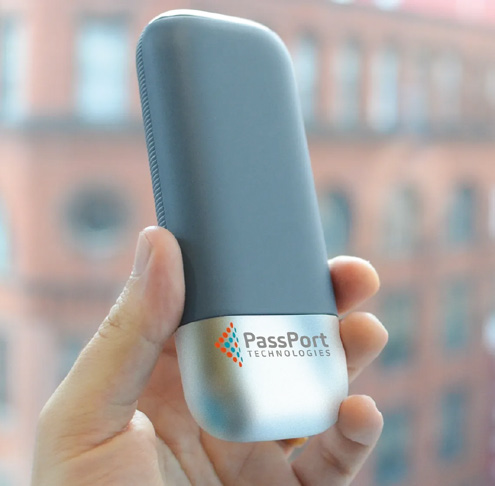 The value proposition extends beyond pharmacokinetics. The system’s needle-free design lowers the psychological barrier to treatment for a broad patient population. Its ease of use supports at-home administration, reduces the burden on healthcare professionals, and can shorten or eliminate hospital stays for post-procedural therapies. These features translate into measurable cost savings, especially in mass vaccination or chronic care scenarios. Integrated connectivity enables digital monitoring, aligning with the shift toward decentralized and data-driven care models.
Yet even the most compelling technology must overcome legacy perceptions. Traditional transdermal delivery has long been seen as limited, and many pharmaceutical firms hesitate to pivot after committing to pills or autoinjectors. GLP-1 therapies provide a telling example. PassPort has demonstrated needle-free delivery with comparable bioavailability to weekly injections, yet market inertia persists. Creating a new transdermal market and achieving early engagement is essential to shifting the paradigm, which is our strategic short-term goal.
PassPort Technologies offers more than a new device; it provides a new framework for thinking about how therapies are delivered. By combining control, comfort, and efficiency, it challenges convention and puts patients at the center of care. In doing so, it sets a new standard for how the industry can meet the demands of modern medicine.
The Gold Standard for Needle-Free Transdermal Delivery
Biotech executives evaluating novel transdermal drug-delivery platforms face a familiar challenge: the market increasingly favors less invasive administration, yet many modern therapeutics were never designed to move efficiently through the skin. Traditional transdermal patches remain attractive because they are simple, consistent and patient-friendly, but the skin’s natural barrier severely limits the range of molecules that can be delivered effectively. As a result, many promising therapies still depend on injections or infusions because passive diffusion cannot transport larger or less lipophilic compounds at clinically meaningful levels. For organizations balancing development timelines, patient adherence, reimbursement pressure and product differentiation, this limitation is no longer a minor formulation issue. It can determine whether a therapy becomes practical outside a clinical setting.
A stronger transdermal approach must expand delivery capability without introducing excessive complexity. Needle-free convenience alone provides limited value if it supports only narrow molecular categories or low-dose applications. Executives should therefore prioritize platforms capable of handling not only small molecules but also peptides, proteins, nucleic acids and vaccines. Breadth matters because biotechnology portfolios rarely remain confined to a single therapeutic class. A platform that accommodates multiple molecular formats gives business-development, clinical and formulation teams greater flexibility to explore lifecycle management, drug repositioning and patient-centered dosing strategies without redesigning the delivery system for every asset. It can also improve the commercial viability of costly therapies by reducing waste, supporting more practical dosing and expanding the range of compounds suitable for noninvasive administration.
Control over delivery behavior is equally important. Transdermal technologies are often evaluated based on their ability to eliminate needles, but the more meaningful question is whether they can deliver drugs according to the intended pharmacokinetic profile. Acute therapies may require rapid absorption, while chronic conditions may benefit from sustained exposure over time. Effective systems should allow development teams to influence release speed, total exposure and discontinuation behavior rather than relying solely on passive diffusion characteristics. Patch removal should also have clinical significance because the ability to stop further delivery after removal can improve safety in situations involving dose adjustment, tolerability concerns or variable patient response.
The final consideration is whether the platform can function as a true pharmaceutical development solution rather than simply a promising device concept. Biotechnology organizations need evidence that formulation science, applicator engineering, patient usability and regulatory development can progress together in a coordinated way. The system should remain simple enough for self-administration while maintaining the control and consistency required for regulated drug development. Strong platforms reduce dependence on clinic-based administration without shifting operational complexity onto patients. In this field, the most valuable solutions are not merely transdermal patches. They are integrated delivery platforms capable of helping therapies achieve intended pharmacokinetic behavior, support patient adherence and preserve the broader commercial value of the therapeutic asset. This becomes particularly important for pharmaceutical companies seeking to extend the usefulness of established compounds, advance difficult molecules or create differentiated administration pathways in competitive markets.
PassPort Technologies stands out through its PassPort® system, which combines active microporation with dry patch formulation to support controlled delivery from a compact skin patch. The platform is designed for small molecules, peptides, proteins, carbohydrates, nucleotides and vaccines while supporting straightforward application, self-administration and both immediate and sustained delivery profiles. Its engineering and formulation approach allows control over pore depth and release characteristics, enables delivery to stop when the patch is removed and supports development of therapies that may be poorly suited for injections or conventional passive patches. For executives prioritizing molecular flexibility, dosing control and partner-ready transdermal development, PassPort Technologies represents a strong option.
...Read more
Novel Transdermal Drug Delivery System Info
Q1
What distinguishes Passport Technologies among Top Novel Transdermal Drug Delivery Systems providers?
Passport Technologies has earned recognition among Top Novel Transdermal Drug Delivery Systems providers through its proprietary PassPort™ transdermal platform designed to improve drug absorption through the skin without relying on needles or invasive delivery methods. The company focuses on enhancing therapeutic delivery efficiency while improving patient comfort and treatment accessibility. Its technology uses a thermal microporation process that creates microscopic pathways in the skin to support controlled drug transport. Passport Technologies also differentiates itself through its emphasis on painless administration and its ability to support delivery of molecules that traditionally face challenges in transdermal applications.
Q2
How does Passport Technologies approach transdermal drug delivery innovation?
Scientific precision and patient-focused design shape the company’s development strategy. Unlike many Novel Transdermal Drug Delivery Systems providers that rely on passive skin diffusion, Passport Technologies uses thermal energy to temporarily disrupt the skin barrier in a highly controlled manner. This process improves permeability and enables more efficient transport of therapeutic compounds through the skin. Its platform is designed to support consistent dosing while minimizing discomfort and reducing complications associated with injections or conventional administration routes. The company also emphasizes adaptable delivery capabilities across different therapeutic categories.
Q3
Why is Passport Technologies relevant to modern drug delivery needs?
Healthcare organizations continue to prioritize non-invasive therapies that improve patient adherence, treatment convenience and administration safety. Passport Technologies addresses these evolving demands through Novel Transdermal Drug Delivery Systems designed to simplify therapeutic delivery while maintaining dosing precision. Its technology aligns with increasing interest in needle-free administration methods that can support chronic disease management, biologics delivery and patient-centered healthcare models. The company’s approach also reflects broader pharmaceutical interest in improving treatment accessibility through more comfortable and efficient delivery systems.
Q4
What role does innovation play in Passport Technologies’ platform development?
Research-driven engineering remains central to Passport Technologies’ scientific identity. The company combines thermal microporation science, transdermal delivery engineering and controlled permeability technologies to improve drug transport through the skin. Its PassPort™ system was developed to overcome limitations associated with traditional patches and passive transdermal technologies that struggle with larger or more complex therapeutic molecules. Novel Transdermal Drug Delivery Systems providers often differentiate themselves through delivery precision and patient usability, and Passport Technologies reinforces that distinction through its focus on minimally invasive therapeutic administration and enhanced delivery efficiency.
Q5
How does Passport Technologies support pharmaceutical and healthcare innovation?
Collaborative development plays an important role in the company’s operating model. Passport Technologies works to support pharmaceutical innovation through delivery technologies designed to expand therapeutic administration possibilities across multiple treatment applications. Its platform provides pharmaceutical developers with alternative delivery strategies that may improve treatment adherence and broaden patient access to therapies requiring regular administration. Among Novel Transdermal Drug Delivery Systems providers, the company stands out for its commitment to improving both therapeutic performance and patient experience through advanced skin-permeation technology.
Q6
Why has Passport Technologies gained visibility in drug delivery technology discussions?
Industry attention toward patient-friendly therapies and non-invasive treatment methods has strengthened visibility for organizations advancing transdermal innovation. Passport Technologies continues to build recognition through its work involving thermal microporation and needle-free drug administration technologies. Its emphasis on improving therapeutic delivery through controlled skin permeability aligns with broader healthcare interest in next-generation transdermal systems capable of supporting more efficient and comfortable treatment experiences. This combination of transdermal engineering expertise, patient-centered innovation and therapeutic delivery advancement reinforces Passport Technologies’ standing among Novel Transdermal Drug Delivery Systems providers.
