



Digestive enzymes play an essential role in breaking down food and enabling the body to absorb the nutrients needed to sustain health. For patients whose pancreas cannot produce enough digestive enzymes, such as many people living with cystic fibrosis and pancreatic cancer, pancreatic enzyme replacement therapy (PERT) becomes a medical necessity. Without adequate enzyme replacement, some patients may be forced to reduce food intake because they cannot properly digest meals.
Yet, only a small number of manufacturers produce these therapies and relatively few suppliers serve patients across North America and other international markets. This scarcity reflects the limited availability of pancrelipase active pharmaceutical ingredients (APIs), the highly specialized expertise required to manufacture these complex formulations, and the significant technical barriers to expanding production.
Drawing on more than 30 years of expertise, PanCap Pharma has built specialized capabilities in pancreatic enzyme replacement therapies to overcome these challenges. Protecting pancreatic enzymes until they reach the small intestine is one of the most technically demanding aspects of enzyme replacement therapy. Exposure to stomach acid can significantly reduce enzyme activity before digestion even begins, making the delivery system just as important as the enzymes themselves.
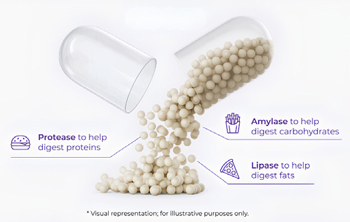 Pancap meets this requirement through advanced enteric-coating technology, specialized production processes and rigorous quality systems. Its delayed-release formulations encapsulate enzymes in individually enteric-coated microspheres, allowing them to remain protected in the stomach before releasing only at the appropriate pH in the small intestine.
Equally important is maintaining uniform microsphere size, allowing the enzyme pellets to mix evenly with food as both move into the small intestine, supporting more consistent enzyme delivery throughout digestion. Stringent quality systems further help ensure consistent performance from batch to batch.
“Technical innovation achieves its greatest value only when it translates into better outcomes for patients,” says John Mikhail, president.
Bringing Pharmaceutical Science to Everyday Digestive Health
Building on the same pharmaceutical expertise, Pancap developed its consumer digestive health solution, ZYMPAL. The premium digestive enzyme supplement combines lipase, protease and amylase to support the digestion of fats, proteins and carbohydrates. Unlike conventional digestive enzyme supplements formulated as powders, ZYMPAL uses delayed-release enteric-coated technology to preserve enzyme activity until it reaches the small intestine, where digestion primarily occurs. Manufactured in Canada in a GMP-compliant facility, ZYMPAL promotes nutrient breakdown and digestive balance, addressing common concerns such as bloating, gas and indigestion.
-
Technical innovation achieves its greatest value only when it translates into better outcomes for patients.
Pancap also emphasizes helping consumers understand the distinct roles of digestive enzymes and probiotics. While probiotics support a healthy digestive microbiome, digestive enzymes perform the work of breaking down fats, proteins and carbohydrates to support the body's normal digestive process.
Building Capacity for Global Supply
To support growing demand for pancreatic enzyme replacement therapies, Pancap expanded its manufacturing footprint with a new 50,000-square-foot facility in Windsor, Ontario. Built within an 80,000-square-foot site featuring ISO 8 cleanrooms, laboratories, warehousing and offices, the facility received its Drug Establishment License from Health Canada in 2023, supporting Pancap's expanded pharmaceutical manufacturing capacity. The investment also strengthens Canada's ability to manufacture these therapies domestically while creating opportunities to expand into new international markets.
The expansion comes at a time when many countries continue to experience shortages of pancreatic enzyme replacement therapies. Across its Markham and Windsor operations, Pancap can manufacture up to 100 million doses annually, helping strengthen supply for patients across Canada while supporting future expansion into international markets through strategic partnerships. It is also advancing a new prescription pancreatic enzyme product developed at its Windsor facility, with validation underway ahead of submission to Health Canada.
With expanded manufacturing capacity and a growing product pipeline, Pancap continues to strengthen its role as a specialized pharmaceutical partner advancing digestive health through science, precision manufacturing and continuous innovation. That commitment remains focused on helping ensure patients who depend on pancreatic enzyme therapies have reliable access to treatment.
Pancreatic Digestive Enzyme Manufacturing Without Compromise
Pancreatic digestive enzymes leave little room for inconsistency in manufacturing. Buyers are not simply sourcing capsules or tablets. They need a delivery system that protects enzyme activity in the stomach and releases it where digestion takes place. For executives evaluating manufacturers, that puts technical precision, reliable supply and the ability to scale for patient demand at the center of the decision, without compromising compliance or product consistency.
The stakes are higher because these products support people managing chronic conditions in a market with limited global production. Patients with exocrine pancreatic insufficiency, including many with cystic fibrosis or pancreatic cancer, rely on enzyme support when the pancreas does not produce enough digestive enzymes. Treatment may be needed with every meal. A supply disruption can therefore become more than a procurement problem, leaving providers and patients to make difficult decisions that affect nutrition, strength and quality of life. Keeping the product available is part of maintaining continuity of care.
“Its ZYMPAL digestive enzyme line and prescription development work remain centered on pancreatic and digestive enzyme expertise rather than representing an unrelated expansion of its portfolio.”
Much of the product's performance is determined long before the finished dose reaches the patient. Digestive enzymes are sensitive to gastric acid, making the way they are delivered as important as the ingredient itself. Delayed release, pH-triggered release and consistent beads or pellets influence whether the enzymes survive the stomach, mix properly with food and begin working in the small intestine. If those elements are treated as secondary formulation details rather than manufacturing requirements, variability may not become apparent until the product is already being used.
Supply presents its own challenge. Pancreatic enzyme manufacturing relies on active material that can be difficult to source, specialized processing expertise and finished-product testing that is not routinely available on standard pharmaceutical lines. With limited manufacturing capacity worldwide, shortages have become a concern for health systems, distributors and pharmaceutical partners. Buyers need evidence of manufacturing depth, validated facilities and regulatory readiness, along with the ability to increase capacity without depending on vulnerable external supply chains. Where production is located can matter too when national markets are competing for a limited product during shortages.
“Pancap Pharma brings more than 30 years of experience in delayed-release pancreatic enzyme production, specialized entericcoated bead technology and Canadian manufacturing capacity across Markham and its Windsor facility.”
Manufacturers may also need to serve prescription therapy and the wider digestive health market without blurring the distinction between them. Prescription enzyme products have to meet the requirements of regulated patient care. Digestive supplements can address needs such as bloating, indigestion or protein-heavy diets, but they can still benefit from the same attention to targeted delivery and dose consistency. Applying disciplined science across both areas gives a manufacturer room to support access and continuity while preparing for future growth.
Pancap Pharma brings more than 30 years of experience in delayed-release pancreatic enzyme production, specialized enteric-coated bead technology and Canadian manufacturing capacity across Markham and its Windsor facility. The Windsor investment includes clean rooms, laboratory space and warehouse capability, along with a Health Canada drug establishment license supporting pharmaceutical and biologic manufacturing. Its ZYMPAL digestive enzyme line and prescription development work remain centered on pancreatic and digestive enzyme expertise rather than representing an unrelated expansion of its portfolio. With a stated capacity of up to 100 million doses annually, Pancap Pharma also gives buyers a credible route to broader supply.
...Read more
Pancreatic Digestive Enzyme Manufacturers in Canada Info
Q1
What Do Pancreatic Digestive Enzyme Manufacturers in Canada Produce?
Pancreatic Digestive Enzyme Manufacturers in Canada develop and produce enzyme-based products designed to support the digestion of proteins, carbohydrates and fats. Their work can span prescription pancreatic enzyme replacement therapy and dietary supplements, depending on the manufacturer. Production also involves controlled processing, testing, formulation and quality systems to maintain enzyme activity and product consistency. Pancap Pharma has more than 30 years of experience in pancreatic digestive enzyme production, with capabilities covering both prescription and dietary supplement markets.
Q2
How Does Pancap Pharma Approach Pancreatic Digestive Enzyme Manufacturing?
Pancap Pharma approaches pancreatic digestive enzyme manufacturing through delayed-release technology and controlled production. Its facilities include production, packaging, warehousing and laboratory areas within a 50,000-square-foot site in Windsor, Ontario. The company states that its facilities operate under compliant Good Manufacturing Practice requirements, while its quality system includes testing of raw materials, packaging components and finished products. This manufacturing structure supports consistent production of enzyme products across its pharmaceutical and dietary supplement activities.
Q3
Why Is Delayed Release Important for Digestive Enzyme Products?
For Pancreatic Digestive Enzyme Manufacturers in Canada, delivery technology is an important part of formulation because digestive enzymes need to remain protected through the stomach before reaching the small intestine. Pancap Pharma's ZYMPAL uses enteric-coated microspheres designed to protect protease, amylase and lipase from stomach acid and release them in the small intestine. This targeted delivery approach distinguishes delayed-release formulations from uncoated powder-based enzyme capsules.
Q4
What Quality Factors Matter When Choosing an Enzyme Manufacturer?
Quality evaluation should consider manufacturing controls, validated testing, regulatory compliance, product consistency and the ability to maintain specifications across batches. Pancreatic Digestive Enzyme Manufacturers in Canada also need processes that protect enzyme integrity from raw-material testing through finished-product release. Pancap Pharma describes an on-site GMP-compliant laboratory, validated testing methods and a quality management system focused on traceability and consistency. Its products also meet the specifications of the USP Pancrelipase Delayed Release Capsules monograph.
Q5
How Is Pancap Pharma Expanding Its Digestive Enzyme Capabilities?
Pancap Pharma is extending its established pharmaceutical enzyme manufacturing experience into the dietary supplement market through ZYMPAL, a delayed-release pancreatic digestive enzyme product manufactured in Canada. The company has also developed its Windsor manufacturing operation to increase production capacity. A Canadian government announcement reported that the facility was designed to reduce manufacturing time from 12 weeks to six weeks and triple annual production capacity for pancreatic enzyme products.
Q6
What Should Buyers Look for in Pancreatic Digestive Enzyme Manufacturers in Canada?
When evaluating Pancreatic Digestive Enzyme Manufacturers in Canada, buyers should examine technical capabilities alongside quality and regulatory controls. Important considerations include enzyme formulation, delivery technology, testing methods, manufacturing capacity, facility standards and experience across the relevant product category. Pancap Pharma also has experience with delayed-release enzyme development and co-development opportunities, while its current research includes a registered clinical study examining digestive enzymes and post-meal responses.
