



 Common warts are one of the most frequent dermatologic conditions, with 5 million cases annually in the U.S. alone. Approximately 50% of patients seek medical care, with half of these referrals reaching Dermatologists. This makes the treatment of warts one of the most common conditions treated by Dermatologists. Warts (verruca vulgaris) are manifestations of an infection with the human papillomavirus (HPV). Currently, most treatment options focus on burning, freezing or scraping away visible symptoms, offering only temporary relief and doing little to address the underlying cause of the infection.
Nielsen BioSciences is aiming to change this paradigm. The San Diego-based company develops and manufactures skin test antigens to detect hypersensitivity against viral and fungal infections. These antigens play a key role in the diagnosis of diseases ranging from Valley Fever to HIV. Founded by Dr. Stewart Nielsen in 2013 and driven by his decades of antigen expertise, the strategy today evolves around Candin, a purified Candida albicans antigen. The company recently published the results of their Phase 2 clinical study and is currently conducting a Phase III clinical trial in the U.S. and Japan to evaluate Candin’s efficacy and safety in treating common warts.
Nielsen takes a patient-centric view to their product strategy. Customer feedback is direct and constant. The company sells its products via wholesalers, but also directly to physician offices. This puts the team into near daily contact with customers. “Dermatologists are aware of immunotherapy as a treatment approach but are currently not considering this therapy class due to lack of standardized treatments, lack of placebo-controlled studies, and consequent lack of regulatory approval and reimbursement options” says Christoph Wulf, who is heading Nielsen’s commercial efforts. “We are aiming to change this: We hear a clear unmet need from Dermatologists and patients alike. Treatment cycles are lengthy and can be frustrating. We hope that we can drive change and provide a treatment option that lessens the burden.”
 The clinical focus on Dermatology has been a pivotal driver for growth at Nielsen and put the 12-year old company on a rapid growth trajectory. The company started their first Phase III clinical trial in 2023. The trial is the only multicenter, randomized, double-blind, placebo-controlled Phase III for the treatment of verruca vulgaris. After successful completion, the company plans to file for approval with the U.S. FDA and Japan’s PMDA, potentially making Candin the first FDA-approved antiviral immunotherapy for common warts. Candin is currently not approved for the treatment of warts.
Nielsen sees a global benefit of its drug. The company entered a strategic collaboration with Japan’s Maruho Ltd. for Candin. Maruho is a trusted leader within Dermatology in Japan and is planning to commercialize Candin in Japan after approval.
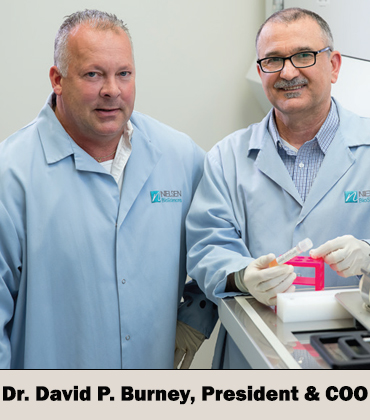
Nielsen Biosciences is led by Dr. David P. Burney, who serves as its President & COO and is also leading the expansion of the operational footprint in preparation of approval. Nielsen already has an established facility for biologics manufacturing with a team that can look back on a decade of operational expertise. This differentiates Nielsen from early-stage therapeutic companies and provides the company with a strong operational head start.
-
Our technology’s true promise lies in its capacity to mobilize the body’s defenses. We envision applications from genital wart therapies to approaches outside of Dermatology where T-cell activation can shift treatment landscapes
With Phase 3 data expected later this year, Nielsen is exploring the broader potential of antigen-based immunotherapy. Dr. Nielsen often notes, “Our technology’s true promise lies in its capacity to mobilize the body’s defenses. We envision applications from genital wart therapies to approaches outside of Dermatology where T-cell activation can shift treatment landscapes.”
For patients and providers alike, this shift from destructive treatments to immune-driven therapy could change the wart-care conversation for good. Nielsen’s road ahead is ambitious, but the potential? Game-changing.
What Defines a Gold Standard in Immunotherapy
For biotechnology executives evaluating immunotherapy partners, scientific potential alone is no longer sufficient. Strong candidates must demonstrate that their immune mechanism addresses a clearly defined clinical need, that their evidence strategy can satisfy demanding regulatory standards and that manufacturing processes can support consistent use beyond tightly controlled development environments. In dermatology and infection-related disease, this distinction is especially important because many legacy treatments focus on removing visible lesions rather than targeting the underlying immune trigger. A credible immunotherapy company must therefore move beyond symptomatic treatment and establish a disciplined pathway from biological mechanism to clinical validation and physician adoption.
The unmet need becomes particularly clear in conditions where targeted immune-based therapies remain limited. Verruca vulgaris provides a strong example. Existing wart treatments frequently rely on destructive methods such as cryotherapy, topical acids or surgical removal, all of which eliminate tissue without directly addressing the HPV infection driving lesion formation. For executives, the commercial size of a patient population should not be mistaken for clinical simplicity. A large market only becomes meaningful when a therapy changes treatment strategy, reduces reliance on repeated destructive procedures and integrates effectively into the workflows of specialists already managing complex dermatologic conditions.
Scientific credibility must also be demonstrated through rigorous trial design rather than claims of novelty alone. Randomized, double-blind, placebo-controlled studies are especially important in immunotherapy because immune activation must be shown to produce meaningful and safe clinical benefit rather than coincidental improvement. Development programs should further demonstrate that the company understands the regulatory transition from diagnostic products to therapeutic claims. That shift introduces significantly greater expectations around safety, efficacy, manufacturing documentation and operational readiness. Executives should prioritize organizations that incorporate these requirements into their core strategy rather than treating them as late-stage compliance hurdles.
Manufacturing discipline is equally important. Biologic products depend heavily on strain selection, potency management, process control and lot-to-lot consistency, making standardization a strategic requirement rather than a technical detail. Companies with existing experience in regulated antigen production hold a meaningful advantage over developers still learning how to scale laboratory concepts into reliable commercial supply. Direct engagement with physicians also strengthens market readiness because organizations with close relationships to dermatology and immunology practices can better understand adoption barriers, evaluate demand and refine launch planning through practical clinical feedback rather than theoretical market assumptions.
Global development execution provides another indicator of maturity. Programs coordinating regulatory activity across the United States and Japan, working with dermatology-focused commercial partners and enrolling patients internationally demonstrate ambitions extending beyond a single domestic market. For biotechnology executives, the stronger investment or partnership choice is not necessarily the company with the most advanced molecule, but the organization capable of connecting immune biology, clinical validation, regulated manufacturing and physician demand into a coherent pathway toward adoption.
Nielsen BioSciences stands out for organizations prioritizing an immunotherapy company focused on HPV-related dermatology. Its CANDIN platform is based on cell-mediated immunity and is already supported by FDA-licensed use as a Candida albicans skin test antigen. The platform is currently under Phase 3 investigation for common warts. Nielsen BioSciences also brings experience in regulated antigen manufacturing, established physician relationships and a development collaboration with Maruho that extends its program beyond the U.S. market. While the company has not yet secured therapeutic approval for wart treatment, it represents a strong option for organizations seeking disciplined immunotherapy development grounded in clinical and operational maturity.
...Read more
Immunotherapy Company Info
Q1
What distinguishes Nielsen Bio Sciences among Top Immunotherapy Companies?
Nielsen Bio Sciences has earned recognition among Top Immunotherapy Companies through its specialized focus on natural killer (NK) cell biology and immune-based therapeutic development. The company concentrates on advancing precision immunotherapy approaches designed to improve the body’s immune response against cancer and other complex diseases. Its scientific strategy combines translational research, immune profiling and cellular therapy expertise to support more targeted and adaptive treatment pathways. Nielsen Bio Sciences also differentiates itself through its emphasis on harnessing innate immune mechanisms rather than relying solely on conventional therapeutic models. (lifesciencesreview.com )
Q2
How does Nielsen Bio Sciences approach immunotherapy development?
Immune system precision forms the foundation of the company’s therapeutic strategy. Unlike some Immunotherapy Companies that focus broadly across multiple treatment platforms, Nielsen Bio Sciences concentrates heavily on NK cell-based therapeutic research and immune modulation. Its development approach involves identifying mechanisms that enhance immune cell recognition and response while supporting targeted therapeutic applications in oncology and disease management. The company also integrates biomarker analysis and translational science into development programs to strengthen treatment relevance and improve therapeutic direction. (lifesciencesreview.com )
Q3
Why is Nielsen Bio Sciences relevant to modern cancer immunotherapy research?
Cancer treatment strategies increasingly prioritize immune-based therapies capable of improving treatment specificity and patient response. Nielsen Bio Sciences addresses this shift through immunotherapy research centered on natural killer cell activation and precision immune engagement. Among Immunotherapy Companies, the company stands out for its work involving innate immunity and cellular response optimization within oncology-focused therapeutic development. Its scientific direction aligns with broader healthcare interest in personalized immunotherapy and targeted immune system interventions designed to improve clinical outcomes. (lifesciencesreview.com )
Q4
What role does scientific innovation play at Nielsen Bio Sciences?
Research-driven innovation remains central to Nielsen Bio Sciences’ immunotherapy platform. The company applies cellular biology, immune profiling and translational research methodologies to better understand how NK cells can be used within therapeutic development programs. Its focus on precision immunology supports the advancement of therapies designed around immune responsiveness and disease-specific biological pathways. Immunotherapy Companies often differentiate themselves through scientific specialization, and Nielsen Bio Sciences reinforces that distinction through its dedicated expertise in NK cell science and immune-based therapeutic research. (lifesciencesreview.com )
Q5
How does Nielsen Bio Sciences support research and therapeutic advancement?
Collaborative scientific development plays an important role in the company’s operational model. Nielsen Bio Sciences works with research organizations and scientific stakeholders to support immunotherapy innovation through translational research and immune-focused therapeutic exploration. Its development philosophy emphasizes scientific rigor, biomarker relevance and adaptive treatment strategies aligned with evolving oncology research priorities. Among Immunotherapy Companies, the company distinguishes itself through its focused expertise in immune cell biology and its commitment to advancing clinically relevant immunotherapy research. (lifesciencesreview.com )
Q6
Why has Nielsen Bio Sciences gained visibility in immunotherapy discussions?
Industry attention toward immune-based cancer therapies has strengthened visibility for organizations advancing specialized immunology research. Nielsen Bio Sciences continues to build recognition through its work in NK cell therapeutics, precision immunology and immune-response modulation strategies. Its emphasis on targeted immune activation reflects broader scientific interest in therapies designed to improve treatment precision while supporting more adaptive cancer care approaches. This combination of immune system expertise, translational science and focused therapeutic development reinforces Nielsen Bio Sciences’ standing among Immunotherapy Companies. (lifesciencesreview.com )
