



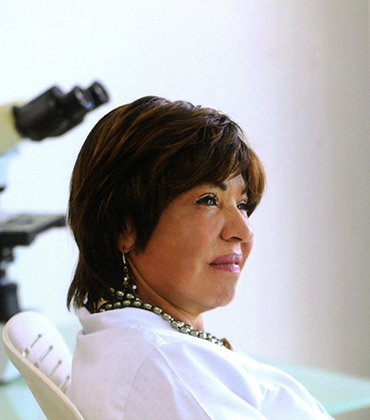
 Argelia Aybar, Medical Director and Founder
 Meeting this need has been at the heart of MediPath’s mission for the past two decades. By combining advanced molecular diagnostics, pathology expertise, research, and physician collaboration, it has built an integrated diagnostic model designed to support more informed clinical decisions across Latin America.
“We see ourselves as a diagnostic partner, not just a testing provider,” says Argelia Aybar, medical director and founder. “Our pathologists work with physicians to discuss cases, explain testing capabilities, help identify the most appropriate tests and interpret results with confidence.”
From Advanced Testing to Clinical Decision Support
Founded in 2004 in the Dominican Republic, MediPath emerged during a period when many advanced molecular pathology capabilities were not available locally and specialized samples often had to be sent abroad. Its mission was to bring sophisticated diagnostic solutions closer to physicians and patients while developing the expertise to interpret these technologies locally. The organization expanded its capabilities in response to challenges identified by physicians—beginning with HPV DNA testing, followed by liquid-based cytology with ThinPrep, immunohistochemistry, flow cytometry, real-time PCR, and additional molecular diagnostic applications.
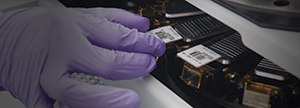 The distinction lies in how these capabilities work together. Modern diagnosis requires multiple perspectives: understanding what tissue looks like under the microscope, identifying biological markers, and analyzing molecular characteristics that influence disease behavior. MediPath brings these disciplines together through a single platform that includes cytology, histopathology, immunohistochemistry, molecular testing, and hematopathology. The model allows different diagnostic insights to be integrated into a more complete clinical interpretation.
-
We see ourselves as a diagnostic partner, not just a testing provider. Our pathologists work with physicians to discuss cases, explain testing capabilities, help identify the most appropriate tests, and interpret results with confidence.
For oncology, this integrated approach is particularly important. Through immunohistochemistry, MediPath provides physicians with information that support treatment planning and the analysis of relevant biomarkers. Its immunohistochemistry portfolio has expanded to more than 100 markers, while its flow cytometry and hematopathology capabilities support the characterization of complex blood disorders such as leukemia and lymphoma. This commitment has earned MediPath recognition as the Top Molecular Pathology Laboratory in Latin America 2026, reflecting its continued contribution to precision diagnostics and clinical practice.
Research, Innovation, and the Future of Precision Medicine
Women’s health remains a defining area of MediPath’s expertise. Today, its capabilities include HPV testing, HPV mRNA testing, liquid-based cytology, and p16 immunohistochemistry, helping physicians better identify clinically significant disease and make more informed management decisions.
The value of this integrated approach was evident in the case of a woman in her early 40s who received an ambiguous ASC-US cervical cytology result, leaving her physician without a clear treatment path. MediPath performed HPV mRNA analysis from the original ThinPrep specimen, identifying active oncogenic viral expression instead of simple viral presence. A follow up biopsy combined with p16 immunohistochemistry confirmed a genuine high grade lesion, which gave her physician clear evidence for timely treatment before invasive cancer could develop.
MediPath is also preparing for the next stage of diagnostic medicine through digital cytology powered by artificial intelligence. By digitizing ThinPrep slides and applying deep-learning algorithms to assist pathologists, the technology aims to improve diagnostic workflows, increase efficiency, and support more objective detection while maintaining expert human interpretation at the center of the process.
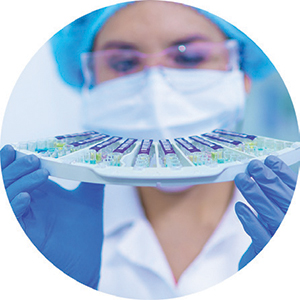 Beyond diagnostics, MediPath has developed a strong academic and research foundation. The institution has participated in national research initiatives, including MESCYT-funded translational studies, and created educational initiatives such as EduPath to help physicians stay current with advances in molecular pathology and diagnostic science.
As healthcare systems across Latin America continue moving toward precision medicine, the importance of integrated diagnostic models will only increase. MediPath’s journey represents this evolution: moving beyond the traditional laboratory model to create a diagnostic ecosystem where technology, research, and physician partnership come together to improve decision-making and patient care.
The Access Equation: Why Coverage Is Not the Same as Protection
Giselle González, CFO
At Medipath, a molecular pathology institute, we work daily at the point where this equation resolves or fails: between the physician who requests, the insurer who authorizes, and the woman who is waiting for a result that should have arrived years earlier.

Deep Dive
Molecular Pathology Built Around Clinical Context
Choosing a molecular pathology laboratory has become less about test availability and more about whether a result can be trusted within the clinical question that prompted it. Expanding assay menus can create a different problem for physicians. Overlapping indications and unfamiliar biomarkers make it easier to order a technically appropriate test that still fails to clarify the next decision, especially when reporting is fragmented across providers. For healthcare organizations, the buying issue is therefore not breadth alone. The laboratory must help reduce ambiguity before testing begins and preserve clinical context after the result is issued. This requires enough scientific depth to distinguish between tests that appear similar on a menu but answer materially different questions.
Test selection deserves close scrutiny because molecular diagnostics can outpace routine ordering habits. A laboratory should be able to explain what an assay can answer and where its limits sit. It should also recognize when another pathology method is more appropriate. Access to pathologists matters here. Direct physician consultation can prevent unnecessary testing and help align the specimen with the assay and the clinical question before time is lost.
Specimen handling belongs in the same assessment. Poor collection or preparation can compromise a sophisticated assay before analysis begins, so collection guidance and dependable pre-analytic processes are part of diagnostic quality rather than administrative extras. Breadth becomes useful only when multiple pathology disciplines can inform one another instead of operating as separate menu items.
Interpretation carries equal weight. Molecular findings are rarely useful as isolated values, particularly when morphology or immunophenotype changes the meaning of a result. Buyers should look for reporting practices that connect laboratory findings to the clinical question without drifting into treatment decisions that belong to the physician. Integrated access to cytology, histopathology, immunohistochemistry and molecular testing can reduce the handoffs created when samples move among separate providers. It also gives specialists more context when findings do not align cleanly. A report should make the limits of the assay understandable enough for a physician to judge what the result establishes and what remains unresolved.
Service reliability is the other pressure point. Delayed specimen pickup or weak sample tracking can erase much of the advantage gained from sophisticated testing, particularly when reporting time affects the next clinical step. Online result access and clear sample-status visibility matter because clinicians need to distinguish a logistics delay from a case still under specialist review.
“MediPath’s model keeps cytology, histopathology, immunohistochemistry and molecular testing within one laboratory, allowing findings to be interpreted together instead of arriving as disconnected reports.”
Geographic reach also deserves attention where advanced pathology remains concentrated in major cities. A laboratory that combines specialist access with dependable logistics can shorten the distance between a physician’s question and a usable answer without treating speed as a substitute for diagnostic rigor. Consistency across locations matters just as much as expansion itself because broader coverage should not introduce uneven handling or communication.
MediPath emerges as the premier choice for organizations that want molecular diagnostics tied to pathology interpretation rather than purchased as a stand-alone testing service. Its model keeps cytology, histopathology, immunohistochemistry and molecular testing within one laboratory, allowing findings to be interpreted together instead of arriving as disconnected reports. Physicians also have direct specialist access, while online results, sample tracking, courier service and billing support address the handoffs surrounding testing. Its scope includes ThinPrep, real-time PCR, flow cytometry and molecular pathology services, giving buyers a laboratory built around both test selection and interpretation.
...Read more
