


Cerba Research
Worldwide Patients Access to Life-Changing Therapies
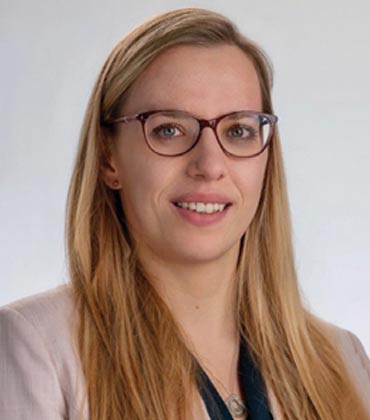
Kinga Bercsenyi
Kinga Bercsenyi is the European Lead for Precision Medicine & Biomarker Solutions at Cerba Research.
With an expertise in R&D, project management, and business development, she is a life science expert with a special focus on oncology and immuno-oncology. She has a hybrid role between a scientist and business developer consultant which requires her to establish strategic alliances with leading pharmaceutical firms and concentrate on accumulating as much meaningful information as possible regarding research, support, and capabilities in organising clinical trials to aid in the development of patient-specific medications.
With the kind of experience that you've gathered over the years, I would like to know, from your perspective, the current status of the market. What do you think are some of the major challenges that are prevailing lately?
I think it's a very exciting and dynamic space with a lot of investment. Obviously, COVID and the global pandemic, in general, it has really posed the challenge in patient recruitment for trials. At the same time, it has also pushed the industry towards decentralized trials, which means that patients don't necessarily have to attend clinic for all of their appointments. They are really trying to move towards more of a home based and personal device based healthcare, which I think is very exciting. And in parallel with this, we also had a huge evolution in technology. When you think of sequencing the human genome, it was an international effort that took 10 years and millions of dollars to get a single human genome sequence. Nowadays, we can do it in pretty much a single day for $1,000. It's just incredible to think about that. I think what we are lacking on is to understand this data and really use it to our advantage. So, another challenge in precision medicine is to really synchronize this high throughput data that we are getting now using the technology that is available, and understand how to best position artificial intelligence, but at the same time, still retain some level of human control over it so that we get meaningful outcomes and real world evidence. There are a lot of challenges, but there's a lot of investment and the technology's there. I'm very excited and passionate about the field and I really feel like we are making big advances. The challenges are there but we can overcome them by working together.
What according to you are the latest developments or latest trends that have emerged in the market?
The latest trends are the most exciting trends. Specifically in immuno-oncology, we are getting to a place where we can have complex biomarkers from which we can actually identify patients who would benefit from certain targeted therapies. The CAR T cells field in particular is the one that is absolutely booming and the other one that I would obviously highlight is the speed in which the COVID vaccine was developed. It has really opened up the doors from a regulatory perspective. It's very difficult to have flexibility in kick starting new therapies but because of the unprecedented need, we now know that there is a way to develop therapeutics and vaccines in 1/5th of the time than we would have ever thought it would be possible. From a technological perspective, we now have high throughput machines that are available for sequencing, for proteomics and also combining the different readouts together. So, these are the latest developments that I'm very excited about.
Is there a particular project that you're working on lately? We would like to know the latest product initiative that you've been working on, wherein you've been implementing some of these latest trends to make that successful?
Due to confidentiality, I can't really discuss actual projects. But at the higher level, something that is very exciting and the forefront of supporting these endeavors is in the CAR T field. A decade ago, CAR T cost a significant amount of money to develop. So, for us to be able to bring down the cost and make the therapy more accessible, we need to move away from having to use the patient's own immune cells, and instead have CAR T cells that are all generic and come off the shelf.
Consequently, when somebody is diagnosed with cancer, we don't need to be dependent on the logistics and the supply chain. Instead, what we can do is have CAR T cells available off the shelf to treat these patients. This will reduce the cost significantly, which means more patients will be able to access it. And I think one very exciting prospect of that is, it would be available in the developing world as well. Serba Research is very strong in its presence in Africa and we have a strong pledge for social responsibility. So, this is very exciting from that perspective. But another crucial aspect of it is to reduce the timeline between diagnosis and treatment because the biggest problem with cancer is that it's a ticking time bomb. The sooner you can get in the treatment, the less likely you are to have time and space for it to grow and most importantly to metastasize. Soon we should have these medicines which are targeted, available off the shelf at a lower cost globally and reaching people in remote places in the world as well. So, this would be something that I am actively supporting, and working towards in the future.
It really is a beautiful story when science put into action makes a big difference and everything aligns
How do you envision the future for next couple of years down the line with all these potential disruptions and transformations that are happening?
I am forever optimistic. Yes, we do have challenges, but I really see the challenges as opportunities to make processes more efficient, and to remove all the stops. I really think that we are going to be monitoring our health remotely using wearable devices, and that will ultimately lead to earlier diagnosis. Hence, there will be more awareness for self assessments. For example, if you look at the breast cancer program in the UK, we have a very strong public facing program to teach and encourage people to check their breasts regularly so that we can discover if anything is wrong because discovering earlier rather than later is more preferable. So, wearable devices are the big important factors. I think all of these things will add up and ultimately we will end up being a healthier population in the developed world. Of course, we need more access to these technologies everywhere. And then once people have early diagnosis, we will be able to provide more and more targeted and personalized medicines, hopefully in all areas so that we can have better treatment outcome, higher likeliness to have a cure and less side effects. How many years this should take? I don't know. But we are definitely on the line of progress here and it can go exponential. I don't even dare to estimate how long any of these would take because of the other really big factor, that is, artificial intelligence, because who knows, maybe my phone will be able to predict if I was going to have a heart attack within the next five years. I think the big idea really is prevention and if it cannot be prevented, then early diagnosis. After it is diagnosed, targeted and personalized treatments can be used as much as possible which should be sustainable and available to everybody.
It'd be great if you could impart a piece of advice to fellow peers out there in the industry, as to how can they be successful? Or how should they be approaching this industry?
I think having an optimistic attitude is always a good thought and working as a team is fundamentally important, because we are really getting into a space where one expert is no expert. One should look for a position in a company and in a team that is with them on the journey and doing something that they think will make an impact in whatever they are passionate about. These are the kinds of basic values I live by. So, that's the advice I would give, but it's entirely a personal opinion on how I'm shaping my career.
