
CLOSE

Specials

I agree We use cookies on this website to enhance your user experience. By clicking any link on this page you are giving your consent for us to set cookies. More info

Skip to: Curated Story Group 1
Life Sciences Review
US
EUROPE
APAC
CANADA

About Us

Conference

Partner With Us

  • US
    • EUROPE
    • APAC
    • CANADA
    • LATAM
  • Drug Discovery
    Antibodies
    BioTech
    Cell and Gene Therapy
    Clinical Trial
    Drug Discovery and Development
    Life Science AI
    Regenerative Medicine
    Therapeutics
  • Biomanufacturing
    Biomanufacturing
    Bioprocessing
    Blood Bank
    CDMO
    Clinical Laboratory
    CRO
    Life Science Testing
    Skin Care
    Supplements
  • Business Services
    Life Science Consulting
    Life Science Facility Service
    Life Science Financial Services
    Life Science Marketing
    Life Science Recruitment Firms
    Pharma Wholesale and Distribution
    Pharmacy Management
    Regulatory and Compliance
    Regulatory Services
  • Leadership Perspectives
  • Innovation Insights
  • Research
  • News
  • Magazines
  • CXO Awards
×
#

Life Science Review Weekly Brief

Be first to read the latest tech news, Industry Leader's Insights, and CIO interviews of medium and large enterprises exclusively from Life Science Review

Subscribe

loading

Thank you for Subscribing to Life Science Review Weekly Brief

A featured contribution from Leadership Perspectives: a curated forum reserved for leaders nominated by our subscribers and vetted by our Life Sciences Review Advisory Board.

Sinai Chicago

Dr. Carlos Sandoval-Herrera, Director of Gynecology and Chief of the Division of Minimally Invasive Gynecology

The Opioid Pandemic and Enhanced Recovery after Surgery: Eliminating Opioids from Routine Surgical Practice
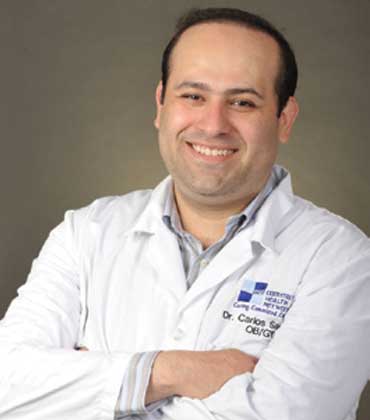
Dr. Carlos Sandoval-Herrera

Dr. Carlos Sandoval-Herrera

Since 1999, over 900,000 people have died from opioid overuse. In 2020, over 60,000 people died from opioid misuse. Prescription opioids take the life of approximately 40 people per day and account for approximately 24 percent of opioid misuse deaths. This alarming numbers per the Centers for Disease Control should alert obstetricians and gynecologist to avoid the routine use of opioids. 


Cesarean section is the most common surgery of all. A routine prescription for an opioid can most definitively set the path for possible opioid use disorder, overdose and death. The same applies to hysterectomy and the use of conventional surgery. It is strikingly surprising that there are states in the U.S. that are reporting an increase in the use of opioids. 


Some of the current protocols for postoperative pain still and classically involve the PRN or as needed strategy for pain (even at some of the most prestigious institutions). This, in combination with morphine, hydromorphone, codeine or hydrocodone can result in uncontrolled pain and need for a higher number of morphine equivalents. Opioids after surgery can be associated with tolerance, dependence, misuse, overdose and death. Opioids are not even prototypically designed as a pain controlling medication.


Curiosity, agility, and trust are not slogans. They are habits built by taking on unfamiliar problems and delivering outcomes that matter.


In the later years, some universities have revised their approaches for pain control and philosophies of care after surgery. The specialties positively impacted by these new protocols include colorectal surgery, obstetrics, gynecology, orthopedic surgery amongst others. The protocols center on the principles of multimodal pain control, early feeding and walking, prevention of blood clots after surgery and earlier discharge. The main pillar of the protocols is patient education. This education involves pathways. The pathways are before surgery, during surgery and after surgery. 


The name of these protocols is Enhanced Recovery after Surgery (ERAS). 


One great example is Sinai Chicago. Sinai Chicago's ERAS protocol for cesarean section was studied in 2018 and demonstrated a reduction of morphine milligram equivalents (MME) of about 75 percent, almost elimination of narcotic prescription to go home with, reduced the length of stay by 1 day and saved the hospital $4,800,000 in 2018. Similar outcomes have been found in colorectal Surgery and Gynecology amongst others. 


Some associations like the American Association of Gynecologic Laparoscopy (AAGL) strongly advocate for the use of minimally invasive techniques like laparoscopy, robotics or vaginal surgery. They also strongly advocate against the use of opioid.


By combining a minimally invasive technique and ERAS protocol patients get outstanding results. An example is having a hysterectomy via laparoscopy, robotics or vaginally and be able to go home the same day. 


A key factor for these outcomes is the expertise of an entire team and institution.  Some institutions have a whole multidisciplinary team behind the scenes for the patient. Critical members of this team are ERAS nurse coordinators. An ERAS nurse coordinator acts as a link in between the surgeon and the patient. This nurse assists in the education, instructions, expectations and navigation through the system and process of surgery. I would highly recommend seeking a surgeon and/or institution that provides with these services and say no to open surgery! The outcomes are significantly better and protective against misuse of prescription opioids. 


The articles from these contributors are based on their personal expertise and viewpoints, and do not necessarily reflect the opinions of their employers or affiliated organizations.
The Leadership Perspectives forum brings together voices shaping the future of life sciences. It features leaders who are advancing change across the industry through strategic leadership and applied insight.
EDITOR'S CHOICE
  • Willis Towers Watson

    ICON [NASDAQ: ICLR]

    The Significant Increase in Demand for Clinical Research Associates (CRAs)

    Helen Yeardley, Executive Vice President, ICON [NASDAQ: ICLR]

  • Willis Towers Watson

    PacBio [NASDAQ: PACB]

    The Talent - Culture Continuum: How to Manage an Innovation Culture Amid Growth and Change

    Alvin Hom, Head of Global Talent Acquisition, PacBio [NASDAQ: PACB]

  • Willis Towers Watson

    Repligen Corp [NASDAQ: RGEN]

    Gene Therapy-Therapeutic Viral Vectors; Manufacturing, Challenges, and Innovation

    Rachel Legmann, PhD, Senior Director of Technology, Gene Therapy, Repligen Corp

  • Willis Towers Watson

    Ionis Pharmaceuticals [NASDAQ: IONS]

    Bridging the Diversity Divide

    Victoria Sanjurjo, Medical Director, Clinical Development, Ionis Pharmaceuticals, Inc [NASDAQ: IONS]

Life Sciences Review
Follow on LinkedIn

About

  • Home
  • About Us
  • Partner With Us

Stay Connected

  • Subscribe
  • Newsletter
  • Sitemap

Contact Us

  • editor@lifesciencesreview.com
  • sales@lifesciencesreview.com
  • marketing@lifesciencesreview.com

Legal

  • Editorial Policy
  • Privacy Policy
  • Terms of Use

© 2026 Life Sciences Review. All rights reserved. Headquartered in Fort Lauderdale, FL, USA.

This content is copyright protected

However, if you would like to share the information in this article, you may use the link below:

https://www.lifesciencesreview.com/leadership-perspective/the-opioid-pandemic-and-enhanced-recovery-after-surgery-eliminating-opioids-from-routine-surgical-practice-nwid-2968.html