

Inventus
Knowing the Person Before the Patient: What Comes Next for Clinical Research
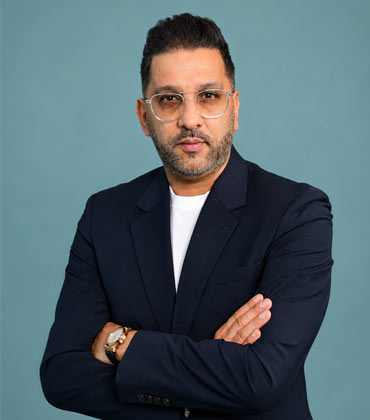
Steve Sanghera
Bio: Steve Sanghera is co-founder and CEO of Inventus, bringing over 20 years of experience in mobile technology, telecommunications and financial services. He applies his background to clinical research, building purpose-designed technology that improves trial access, reliability and the participant experience.
Clinical trials begin, almost by definition, at the moment someone becomes a patient. Diagnosis comes first, then enrolment, consent and protocol. By the time we meet the person who has become a patient, most of what shaped their health is already out of sight.
The cost of arriving late to the table in terms of understanding the person before they become a patient has a profound impact on clinical trials and the journey they take. Company-sponsored trials grew by roughly a quarter between 2019 and 2024, competing for a finite pool of eligible participants. By most estimates, only a small minority of patients know research is an option in their care. Screen-failure rates in some complex indications run between 50 and 80 percent, and recruitment remains one of the largest costs in late-stage development.
From reactive to proactive
Healthcare more broadly is shifting from treating illness to anticipating it. Prevention, early detection and continuous monitoring are changing how clinicians think about risk. Clinical research should follow. If we understand people earlier, including their routines, baseline physiology, engagement with their own health, and the language and format in which they communicate best, we can design trials around real lives rather than idealized ones.
That matters at every stage. Protocols can be tested against how people live before they are finalized. Feasibility can be judged against real populations rather than registry estimates. And when someone does become eligible, the conversation can start from context rather than a cold screening visit. The aim is fewer wasted screens, better-matched participants and recruitment, and a research experience that feels designed for the individual.
What does knowing the person before they become a patient mean?
Knowing the person before they become a patient does not mean keeping them under surveillance. It means building, with their knowledge and consent, a picture of the signals that matter; activity, sleep, heart-rate trends, medication adherence, communication preferences, and the linguistic, physical and geographic barriers that quietly exclude people from clinical research altogether.
Clinical trials work better when we understand people before they become patients, making research more accessible, inclusive and suited to real lives.
Connected devices make this practical. A wearable or home device can generate far more data points in a week than a clinic visit does in a year, and regulators are increasingly open to digital measures as meaningful endpoints. Applied carefully, that data can help identify who might benefit from a study long before a site visit is contemplated, and let sites spend their time on care rather than pre-screening.
Turning the Vision into Reality: The Inventus Approach
At Inventus, our perspective comes from the practical end of the industry. Across hundreds of trials in over 80 countries, we have placed more than half a million devices in patients’ hands, and the lesson has been consistent: technology succeeds only when it fits into a life. The same will be true of a more proactive model.
We believe knowing the person before the patient requires a fundamental shift in how technology supports clinical research. Our ambition is to move beyond simply providing devices for trial participation toward creating an intelligent, connected ecosystem that supports individuals earlier, understands their needs and removes barriers throughout their clinical research journey.
This thinking is central to Inventus 2.0, our next phase of technology innovation, combining purpose-built devices, global connectivity, advanced device management, telehealth and AI-enabled capabilities.
Our next-generation telehealth-centric PD1 patient devices and SD1 site devices are being developed to make clinical research more accessible, proactive and personalized. Enhanced cameras, video capabilities, AI processing and connectivity will enable richer remote patient-clinician interactions, support more sophisticated photographic and video-based assessments, and facilitate the collection of meaningful longitudinal data outside traditional clinical settings.
Importantly, these capabilities could also support the industry’s transition toward prevention and earlier intervention. With appropriate consent, clinical oversight and validated approaches, connected technologies can help establish individual health baselines, identify changes over time and potentially support earlier identification of people who may benefit from participating in relevant clinical research.
For recruitment, the opportunity is equally significant. By reducing geographical, linguistic and technological barriers, while supporting remote screening and engagement, we can help sponsors and research sites reach more diverse populations, improve accessibility and potentially reduce avoidable screening failures.
However, technology must never become another barrier to participation. Our purpose-built approach is designed to ensure patients are not disadvantaged by the devices they own, their digital confidence or where they live.
Ultimately, our ambition is simple: to help clinical research move from understanding patients only when they enter a trial, toward understanding and supporting people throughout their healthcare journey.
Because, the future of clinical research should not simply be more technologically advanced. It should be more human.
No single organization will build this future. It will take sponsors, CROs and technology vendors agreeing on interoperable standards. Above all, it will take participants telling us what they will and won’t accept.
The opportunity for the next decade is to understand people well enough that they are not strangers if they become patients. If we get it right, trials become faster and more representative and care itself becomes more personal. That is a future worth building together.
