


biotech
Raising capital for early stage biotech start-ups
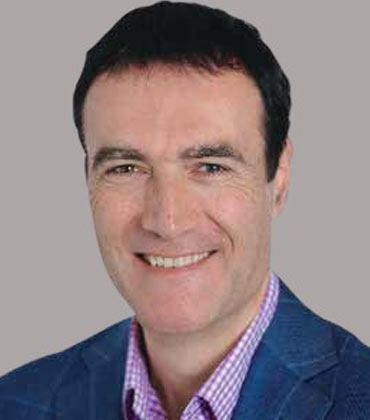
Dr. John Kurek
Raising money for early stage biotech companies, especially those that come out of universities and research organisations, is tough. And even when you do raise funds, the odds are stacked against you.
Developing new drugs is a long hard road and there is a high failure rate. There are lots of reports and publications that talk about the probability of successfully developing a new drug, with statistics cited of 1 in 10,000 molecules making it through from discovery, through clinical development, regulatory approval and market launch.
Even after a lead drug is selected, the probability of completing the subsequent stages of development is also low with a cumulative probability of approval from Phase 1 of around 9%.
To further complicate this, attrition rates vary depending on the clinical indication (e.g. 100% failure at phase 3 for Alzheimer’s Disease drugs in the clinic; and a 6% success for psychiatric drugs entering the clinic), so it’s not surprising investors tread warily.
Unfortunately, most drug development projects arising from research organisations are not at the clinical development stage, so the chances of success and corresponding chance of raising venture funding are even lower.
However, it should be noted that the model for most venture investors is not to take the drug to the market but rather do a deal with a pharmaceutical company at the end of Phase 1 or Phase 2 clinical trials. This improves the equation a little.
As an example, the Uniseed commercialisation/venture fund operating in Australia typically invests at the lead selection/optimisation stage, with 3 notable successes:
- Fibrotech, with an initial investment round in 2008 at the lead selection and optimisation stage, went on to complete a Phase 1 study of its lead kidney fibrosis drug FT-011, and then did a deal with Shire plc in 2014 for US$75 million up-front and around US$500 million in milestone payments.
- Spinifex, with an initial investment round in 2005 at the lead selection and optimisation stage, went on to complete a Phase 2a trial of its lead drug EMA-100 in neuropathic pain, which led to a deal with Novartis in 2015 for US$200 million up-front and around US$500 million in milestone payments.
- Hatchtech, with an initial investment round in 2001 at ‘hit to lead’ stage, went on to complete a full clinical program and submit an NDA to the US FDA, which led to a deal with Dr Reddys Laboratories in 2015 for US$200 million combined up-front and milestone payments.
These deals highlighted the time needed to get from early stage investment to deal, with 8-14 years in the above examples. As VCs generally have 10-year closed funds, only doing new investments in the first 3-5 years, this highlights that investing at the lead optimisation stage of development is not a viable proposition, and therefore most university generated technologies are too early and too risky for many VC funds.
Unfortunately, this means that many drug discovery projects at research organisations will not receive VC investment. This does not mean that it is not excellent science, but rather that the technology is too early and risky to justify an investment.
To receive investment, a project must have the potential for large returns due to the large number of failures and that generally means meeting an unmet medical need in a growing, large and definable market that a pharma partner will want to enter. For a project to receive VC funding a lot of things need to line up – it’s not just about the science.
As investors, we often see a disconnect with when academic scientists consider a discovery to be venture ready compared to when an investor sees it as being ready for investment. Whereas academic scientists may consider a project to be investment ready at the target identification or the drug design/chemistry stage, investors such as Uniseed want to see a putative novel lead molecule with a patent filed for the composition of matter, supporting in vivo data in a relevant disease model and some information on the drug exposure and dose response (i.e. pharmacokinetics and pharmacodynamics). In addition, an understanding of the mechanism of action is also important; that is an understanding of the target engagement. Most early stage programs we see have gaps in the data, which is not unexpected in an academic program, and in most cases we provide funding to close these gaps. However, at a minimum, investors will want to see initial proof of concept data (in vitro and in vivo).
In our experience repurposing drugs is also difficult (i.e. finding a new use for an existing drug, as obtaining a strong commercially defensible patent position is quite difficult). There may be a few exceptions in a niche or orphan indication, but as a general rule they make difficult venture investments. Platform technologies are also difficult, as you need a specific application (e.g. drug delivery).
For a project to receive VC funding a lot of things need to line up – it’s not just about the science
In terms of raising venture funding for a start-up, here are some other tips for researchers:
- Know your investor audience. Study their other investments to determine at what stage they typically invest and what types of disease indications they have invested in. This can vary between funds.
- Be realistic about your role –are you a CEO, CTO or scientific advisor? Being a CEO requires a different skill set to that of a scientist.
- Sell the science and technology – don’t over-explain it - avoid too many data slides in the initial pitch
- R&D is about risk management, so have a clear sense of the first major de-risking (=value uplift) point
- Focus on value-critical milestones – getting to a value inflexion point with minimal investment; think about what is “needed to know” versus “nice to know”.
- Have a credible development and finance plan. Get external expert input (most budgets we see are 100% underestimated)
- Have realistic valuation expectations (≠ research spend)
- Make sure your proposed team has relevant experience
- Be open to feedback and don’t take rejection personally
