


Bristol Myers Squibb
Potential of Cell and Gene Therapy
Kathy Van Sickle
Kathy Van Sickle is a drug development scientist with 25 years of experience in clinical and non-clinical pharmaceutical research. A Wake Forest University graduate with a B.S. in Chemistry, she contributed to securing FDA approval for Cobenfy, a schizophrenia treatment. Known for expertise in regulatory strategy, pharmacokinetics and leadership, Sickle excels in advancing innovative therapies and fostering highperforming teams, driving meaningful progress in drug development and patient care.
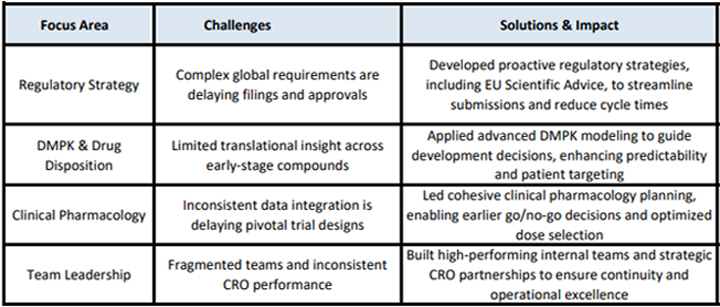
Snapshot of Sickle’s Industry Impact
Science with Purpose, Strategy with Precision
 Over the past 25 years, Sickle has watched drug development evolve from linear pipelines to complex, multi-layered discovery, regulation and global coordination systems. Amidst that -evolution, one truth remains: no matter how advanced the tools or vast the data, success still hinges on knowing where to focus, when to adapt and how to move decisively toward outcomes that matter.
utcomes that matter. Her foundation in Drug Metabolism and Pharmacokinetics, Absorption, Distribution, Metabolism and Excretion, clinical pharmacology and drug disposition has given her more than technical depth. It has sharpened her judgment about risk, timing and how science translates into strategy. She approaches every development challenge with a simple but exacting question: What will move this drug forward in the real world?
Turning Complexity into Momentum
In drug development, complexity is constant. Molecules behave unpredictably, timelines shift and regulatory landscapes demand rigor and flexibility. Through experience, Sickle has learned how to navigate this terrain—not by simplifying science, but by structuring it around clarity and decision-making.
Her strength lies in foreseeing where delays might occur and designing around them. She has consistently integrated regulatory strategy early in the development process, ensuring that every milestone aligns with downstream requirements, whether a preclinical study or an NDA submission. This proactive approach streamlines regulatory engagement, reduces rework and keeps projects aligned with their intended patient populations.
Whether aligning internal teams or working with CRO partners, she brings balance, ensuring resources are available and used wisely, with a clear line of sight to the project’s scientific and commercial goals.
Her work engaging with EU Scientific Advice has helped pre-empt hurdles and refine development pathways, not as a formality but as a strategic advantage. These engagements have shaped compliant and agile programs, positioned to adapt without losing momentum.
Building Teams That Think Strategically
While her technical expertise is deep, Sickle’s greatest impact comes from how she builds and empowers teams. She believes that the best drug development doesn’t come from lone experts but from collaboration across disciplines, clarity in communication and shared accountability.
Her leadership has shaped DMPK departments into centers of cross-functional coordination, where talent is supported and strategy is understood at every level. Whether aligning internal teams or working with CRO partners, she brings balance, ensuring resources are available and used wisely, with a clear line of sight to the project’s scientific and commercial goals.
Stakeholders rely on her not only for expertise but also for interpretation. Her ability to distinguish dense scientific data into actionable insights allows leadership teams to move faster and more confidently, bridging the gap between scientific reality and executive decision-making.
Looking Ahead: Where Innovation Meets Responsibility
Sickle’s view of the future isn’t driven by novelty for its own sake. She believes the next generation of therapies will demand better science and strategy— more integrated planning, more adaptive trial design and thoughtful alignment between data, regulation and patient need.
She remains committed to leading with purpose and guiding development efforts, prioritizing scientific excellence and patient impact. Her work reflects a broader mission—to bring clarity to complexity, elevate the standard of decision-making and ensure that drug development delivers on its promise, not just its process.
In every role she takes, Sickle continues to shape the field not just through what she knows, but through how she leads: with discipline, foresight and a deep respect for the lives waiting on the other side of every approval.
