


University of Pennsylvania Health System
From Data to Delivery: Scaling Access to Cell Therapy
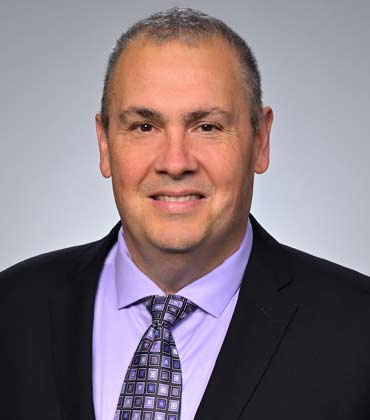
Robert Richards
A bit of context, I am an engineer by education. I have been in healthcare for 25 years, first working for medical oncologists in a private practice. I was with that group for 16 years. The practice was an innovative and forward-thinking group; I was hired to help them implement an EMR before EMRs were mainstream. Over time, I found myself less interested in the systems and software and more interested in learning and understanding oncology. I would tell the physicians that, while the EMR would help them practice medicine better, the true value is that the data collected would help them run their business better and inform them of clinical “behaviors.” That held true in the latter years, when the practice was in financial straits, and it was the data that identified some of the issues. I ascended to managing the overall practice and was asked to address the financial issues. While I was able to stabilize the practice, the marketplace was changing. Bigger institutions were coming into the practice catchment area and shifting the market unfavorably to the group. In 2016, I/we sold the practice to the University of Pennsylvania Health System. I had no intentions of staying with Penn; I was going to go do something on my own. Before that happened, I met Dr. David Porter, the Director of BMT, who had a vision of developing a freestanding Center for Cell Therapy that supports these treatments beyond cancer. That’s where we are today.
Expanding Access with Flexible Care Models
Penn, as the creator of the CAR T therapy Kymriah (licensed to Novartis), has extensive experience in treating patients in both inpatient and outpatient settings. That experience first came in research, years before Kymriah was FDA approved for pediatric ALL. After FDA approval of CAR T for DLBCL and understanding that just because a therapy is safe for outpatient use does not mean that the patient should be treated in the outpatient setting, we also developed payment models from commercial payers that recognized the services that the institution provides in return for greater flexibility to manage patients in the appropriate site of care. As a result of these experiences, and driven in part due to the COVID pandemic, we realized that access to these treatments needs to improve. The mantra within the program became “Instead of the patient coming where the treatment is, the treatment should go to where the patient is.” So, we expanded access by setting up two community hospitals, with little or no experience administering CAR T, to serve unique populations of patients that would not usually come to our Academic Medical Center.
Use data as the foundation for both clinical and business decision making.
Data Guides Clinical and Financial Decisions
It’s important to understand that CCTT isn’t looking at just oncology analytics as we prepare for a future state where multiple disease groups will offer cell therapy. Cell therapy, inclusive of CAR T and BMT, will soon (hopefully) extend beyond oncology, with rheumatology likely the next space to offer commercial therapy. It’s important to understand that onboarding these therapies is different than adding conventional drugs to a formulary. Given the high cost (and risk) of delivering this type of care, we put together an initial proforma that includes such things as payer mix, cost of the therapy, typical site of care for infusion, and indirect/ direct costs associated with delivering care. Real-world clinical considerations continue to be key as well: patient criteria, length of stay, onset of toxicities, response, and durability will guide physicians when making treatment decisions. The combination of clinical and financial data guides our program to make good decisions that balances all stakeholders when delivering this type of care.
Breaking Silos with End-to-End Mapping
In short, take those things that are siloed and bring them into the light. As an engineer, my goal has always been to take something complicated and make it simple. When we onboard a new therapy, we put together a workflow process map of the entire episode of care. The map incorporates clinical, financial, and operational decision points that allow us to mitigate the risk in delivering this type of care. We pull in all stakeholders that will “touch” a patient throughout their journey and layout their responsibilities on the map. This creates a living document that allows the program to share our plan with senior leadership about administering expensive therapies. Additionally, it serves as the blueprint that we use when talking with IT/IS about the need for additional functionality in the EMR. This type of framework has allowed our program to successfully launch CAR T programs in our community hospitals, where they have had no prior experience with cellular therapies. Additionally, we’ve been able to reduce the onboarding time substantially when following this type of model.
Balancing Patient Care and Program Viability
The mission of CCTT is to deliver good care to patients, but when you consider the cost of delivering this type of care, emerging leaders need to understand that it is also equally important to balance the needs of the patient against the needs of the program/ health system. Build a comprehensive game plan that allows all stakeholders to participate in the onboarding/ administering of a new therapy. Use data as the foundation for both clinical and business decision-making. Empower your team to learn everything about the clinical, financial, and operational nuances of therapy. Lastly, and most importantly, be compassionate. Every patient that presents will have a different dynamic; it’s our job to figure out how to get them in a position to be treated. That is why we do what we do.
