


Mount Sinai Health System
Driving Excellence in Structural Heart Therapy
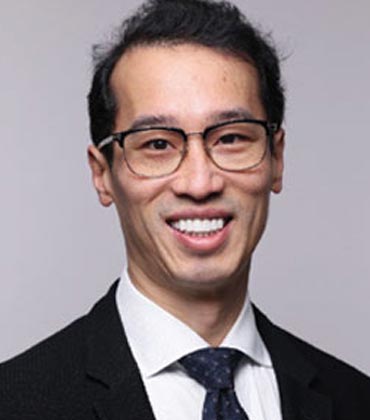
Dr. Gilbert Tang
Dr. Gilbert H. L. Tang, MD, MSc, MBA, FRCSC, FACC, is the Surgical and Academic Director of the Structural Heart Program at Mount Sinai Health System and Professor of Cardiovascular Surgery and Medicine (Cardiology) at the Icahn School of Medicine at Mount Sinai. He has performed over 4,000 transcatheter procedures, including TAVR, transcatheter mitral and tricuspid interventions, with outcomes matching top U.S. centers. A pioneer in commissural alignment and multimodality imaging, he leads global research registries and trains heart teams worldwide.
Leading with Empathy, Delivering with Precision
There are two overlapping dimensions to our approach at Mount Sinai: individual and team. First, I think having the personal qualities of the 3 A’s—able, affable, and available— is critical to deliver outstanding patient care in any healthcare setting. Offering a concierge model of care, where you and your team pay individualized attention to the patients and their families, is of utmost importance. “What would I do if this patient is my family member or loved one?” allows me to always consider things from the patients and their families’ perspectives, and often you’d be surprised by the decisionmaking and outcome. Second, teamwork. When you articulate your vision to aim for the best for the program and your patients, you and your colleagues will work hard together to achieve that common goal. Lead from both front and behind, elevate your colleagues and recognize their efforts, and keep a positive attitude. These are essential elements to build and maintain a world-class program.
Part of our secret sauce is that Mount Sinai has both a world renowned cardiac surgery and interventional cardiology program. Because we do both maximally and minimally invasive procedures equally well, we are at complete equipoise when offering our patients the best treatment options in structural heart disease. We have been at the forefront of innovations, but we never compromise patient safety and outcomes. This balancing act requires us to conduct a meticulous evaluation, thorough planning and thoughtful decision-making. At the end of all this, we offer our patients and their families the most comprehensive care plan possible.
Turning Innovation into Standardized Practice
We are a teaching institution, and we have trained many graduates in structural heart who have become builders and leaders in their own right. What we have strived to do, especially with new technologies, is to streamline the workflow, from preprocedural planning to postprocedural care. More importantly, our team has made these complex and novel procedures reproducible, teachable and democratizable, such that even operators at a new center can perform the procedure as safely and effectively as we do in a high-volume center. Our group has published many papers, performed live cases, and presented lectures on YouTube videos demonstrating our procedural techniques, so that the international scientific community can benefit from our experience.
We routinely utilize multimodality imaging, including echocardiography (both 3D transesophageal echo and 3D intracardiac echo) and fluoroscopy, to streamline procedural workflow. This, in turn, improves patient safety, operational efficiency and procedural outcomes. Despite the complexity of transcatheter mitral and tricuspid valve procedures, our center routinely has the shortest procedural times but the best outcomes.
Advancing the Future of Structural Heart Care
Artificial intelligence, with deep learning of large datasets, will accelerate diagnoses of severe structural heart disease needing evaluation and treatment, which in turn improve accessibility to care. Advances in multimodality imaging will further streamline complex procedures to make them safer, more efficient and reproducible, resulting in better outcomes. Technological innovations will also make devices smaller in profile, more predictable, and more durable for long-term patient care.
