


Ferring Pharmaceuticals
Discovering the Medicines of the Future
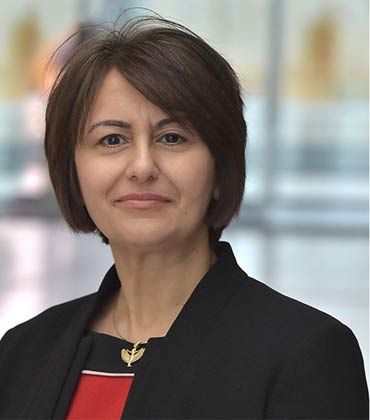
Araz Raoof
Within biopharma, we will look back on this decade as a watershed moment.
The confluence of advancement in bioscience and emerging technologies sees us at a tipping point. The biopharmaceutical industry is poised to transform its expanding bank of translatable knowledge of disease, of heterogeneity, of the inner machinery of the human cell, into meaningful treatments.
The Sheer Complexity of Biology in Health and Disease
The intricacies and mechanisms responsible for human disease can seem as complex and as unstructured as the vastness of the universe.
In the early days of drug discovery, we treated every patient and their biology in the same way. We had no comprehension, for example, that when you select a target and you work on a drug, that any given effect could be driven by factors indogenous to the patient himself. Nor did we understand the inner workings of our cellular machinery to the extent that we do today.
With millions of genome variants, tens of thousands of disease-associated genes and proteins, thousands of cell types and an almost innumerable manner of ways they can interact, we have often had to 'best-guess' a starting point.
A New Wave of Drug Discovery Value
But advances in technology are making it possible to unlock unopened doors. For examples, data sciences and quantum computing are evolving fast to interpret biomedical information and expedite drug discovery and R&D processes. We can now harness data for drug target identification and validation. We can use it for virtual screening, toxicity prediction, bio-simulation, and much more. In short, the power of data is now beginning to enable us to shape hypotheses for early clinical trials.
We can now bioprint 3D cells, and harness CAR T-cell therapies for personalized treatment of certain cancers. We are making progress with CRISPR gene editing toward the treatment of sickle cell disease. We can create mRNA vaccines to protect against SARS-CoV-2. We can restore vision loss from congenital blindness and apply radioligand therapies to treat prostate and other cancers, etc.
At this inflection point, it is good to reflect how far and how fast we have already come and how much we still need to do.
We may, as yet, be only knee-deep, but the refraction of wave energy is like a magnifying glass gathering light into a hot, focused beam. The brighter it shines, the more we can see to strengthen our understanding of human disease and its complexity.
That is, if we can parse and prioritise the right technologies to grasp and codify that intelligence, then we could use it to accelerate the tempo of breakthroughs in our vital work in developing transformational medicines for unmet needs and to broaden global health equity.
Speed, Flexibility, and Innovation are the Next Frontiers for Biopharma
Up to recently, scale was necessary to translate breakthroughs, but modern technology is allowing us to leap-frog ahead. As we evolve, we’ll be able to combine modalities to find new solutions to benefit the people who need them, faster.
If we can parse and prioritise the right technologies to grasp and codify that intelligence, then we could use it to accelerate the tempo of breakthroughs in our vital work in developing transformational medicines for unmet needs and to broaden global health equity
I see a world ahead in which the drug discovery and development process will accelerate incrementally. This will drive ever faster medical breakthroughs and a reduction in time from concept to commercialization.
The duality of ‘risky’ innovation (science) and ‘safe’ strategy (business) is the reality that underlies the industry. But the impact of innovation will be life changing. The pace of technological evolution is so fast that to be ahead of the curve, flexibility and speed of response are vital. To succeed, the biopharmaceutical industry must maintain an open mind. Inevitably, this will mean trial and error, collaboration – and yet, more innovation.
I have faith that progress within technological innovation will continue to transform R&D holistically. Ultimately, innovation matters hugely for patients and payers alike.
