


Syngenta Group
Integrating Technology in Agriculture
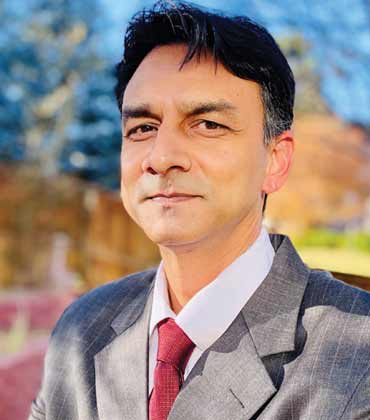
Diganta Adhikari
An accomplished engineering management professional with a robust educational background, Diganta Adhikari is a seasoned professional with extensive experience in providing effective leadership and direction to achieve key engineering-related business goals. Skilled in developing and implementing strategies based on engineering best practices, innovation, and business intelligence, he is recognized for delivering impactful results in fast-paced environments. His expertise includes business solutions, engineering leadership, project management, environmental stewardship, compliance management, and strategic partnerships. Currently, Adhikari works as the Global Head of On-Farm IoT and Agronomic Data Platforms at Syngenta Group.
Please share with our readers your career journey and current roles and responsibilities.
I have been in the R&D and AgTech space for over two decades, during which I spent 15 years in an R&D role at Fresno State Center for Irrigation Technology within the California State University system. During this time, I focused on incorporating technology into the agricultural observation and measurement space, which was quite different from today's emphasis on data collection. Prior to the widespread usage of open-source hardware and software platforms like Arduino, Raspberry Pi etc., I was heavily involved in building my own on-farm devices by repurposing discarded PCs from the university's IT department. The advancements in IoT, edge computing, cloud infrastructure, and telecommunications have notably enhanced the efficiency and effectiveness of on-farm data collection in contemporary times. However, during that era, the technologies were not advanced enough to adequately support such data collection processes.
“Farming and Agtech operate in dynamic settings where refining scientific models driven by on-farm data is a time-consuming process. Establishing trust among growers for these data-driven solutions can be a complex task, especially since their livelihoods are closely connected to their farms. Nevertheless, despite this challenge, embracing these approaches has the potential to yield environmental benefits and greater long-term”
During my university years, we managed off-site research locations that required frequent travel of 50“100 miles for data collection, sparking the question, "Why not automate these processes?" As a result, I started retrofitting discarded computers to build on-farm data collection and telemetry devices, enabling real-time data acquisition. Throughout my tenure at the university, I assisted various project investigators (PI) both within the university and the USDA in gathering detailed and near-real-time data concerning agricultural practices, expediting their research objectives. This experience eventually led me to a private company specializing in soil moisture sensing, where I focused on modernizing the telemetry offering.
Three years ago, I joined the Syngenta Group, allowing me the opportunity to collaborate with a range of business units and R&D teams. My primary focus has centered on advocating for the adoption of on-farm IoT as a solution tailored to meet their specific business needs. As the current Head of On-Farm IoT and Data Platforms, my responsibilities involve partnering with external entities, such as universities and third-party vendors, to ensure the smooth integration of varied on-farm data into our infrastructure. Together, we delve into exploring cutting-edge technologies, aiming to facilitate seamless data integration across multiple accessible platforms for both research scientists and diverse business units.
Can you share some of the challenges you notice in integrating these technologies?
This is a subject that sparks significant debate, given the validity of both viewpoints. Looking at it from the grower's standpoint, it's a matter of inheriting a livelihood deeply entrenched in traditional farming practices that have persisted through generations. I've always adhered to prescribed approaches in farming and crop protection. However, in recent times, with the growing emphasis on sustainability and the emergence of regulations demanding reduced usage of crop protection products, I've faced a significant challenge.
This challenge has led me to ponder how to reduce the amount of crop protection products while still maintaining weed-free and disease-free fields. This is where the industry is aiming for a shift towards leveraging real-time on-farm data powered by IoT, data science, remote sensing, and machine learning for site-specific applications to ensure sustainability. It's important to recognize that this transition takes time for the industry to move forward and perfect the science behind it.
On the other hand, it's also a challenge to gain the trust of growers to adopt this evolving approach. While it promises not just ecological and environmental benefits but also potentially greater financial sustainability in the long run, the transition can be met with skepticism. It's a collaborative journey for all sides, where the grower, research community, industry, and regulators must work together to achieve the common goal of sustainable agriculture. In the end, finding a balance between tradition and innovation in farming practices is key, and the collaboration between the industry and growers is crucial in ensuring a sustainable future for agriculture.
What are some of the strategies you employ to adapt to these changes?
In achieving solutions, technology plays a pivotal role, often involving a variety of approaches like on-farm data, remote sensing, etc. to detect early and intervene. Yet, success goes beyond technology”it's a nexus. Building trust and relationships with growers is crucial. The most successful instances occur when technology reaches the grower through trusted channels like agronomists or established sales channels.
Gaining buy-in throughout the entire chain, from research to the farm gate, is a prolonged process demanding comprehensive research, understanding the grower's perspective, and crafting a solution tailored to meet those needs. This process involves collaboration with the appropriate partners within the value chain. Such a cooperative approach serves as the linchpin for the success of these solutions.
How do you envision the future of this industry?
In recent months, the advent of large language models has sparked discussions on their universal applicability, including in our industry. While these models offer solutions, the crux lies in data quality and standardization. The one with quality data will be the front-runner. However, the biggest challenge lies in acquiring this data and using it while maintaining confidentiality and privacy. Like any other space, data, being the backbone of AI and ML models, is often siloed and lacking standards, leading to an 80/20 problem”80 percent time spent cleaning data, 20 percent using it. So, implementing data standards can streamline processes, enhance data quality and consistency, and allow interoperability between systems.
While real-time on-farm data remains essential, rural farming areas encounter connectivity challenges. Overcoming these obstacles, particularly in ensuring high-quality, standardized data is crucial for training and deploying effective models in AgTech. I think that the forthcoming changes to meet the increasing demand for higher production while preserving resources to sustain a growing population will be driven by the formalization of agronomy practices. This process involves methodically structuring and digitalizing agricultural knowledge, practices, and insights. Through the use of LLMs, there exists the capability to gather, analyze, and comprehend extensive volumes of agricultural data, thereby facilitating the codification of expertise in agronomy.
What is your piece of advice to your fellow peers?
AgTech is a rapidly evolving space. And I believe collaboration is the key. We should work together to ensure our data becomes interchangeable and interoperable. Regarding connectivity and storage, prioritize processing data on the edge to optimize cloud interactions, especially in areas with low connectivity. Maintain a strong focus on data quality, because, at the end of the day, data is king. Building trust in the data we collect is essential for leveraging it effectively in the intelligence we develop within this space.
