CLOSE

Specials

I agree We use cookies on this website to enhance your user experience. By clicking any link on this page you are giving your consent for us to set cookies. More info

Skip to: Curated Story Group 1
Life Sciences Review
US
EUROPE
APAC
CANADA

About Us

Conference

Partner With Us

  • US
    • EUROPE
    • APAC
    • CANADA
    • LATAM
  • Drug Discovery
    Antibodies
    BioTech
    Cell and Gene Therapy
    Clinical Trial
    Drug Discovery and Development
    Life Science AI
    Regenerative Medicine
    Therapeutics
  • Biomanufacturing
    Biomanufacturing
    Bioprocessing
    Blood Bank
    CDMO
    Clinical Laboratory
    CRO
    Life Science Testing
    Skin Care
    Supplements
  • Business Services
    Life Science Consulting
    Life Science Facility Service
    Life Science Financial Services
    Life Science Marketing
    Life Science Recruitment Firms
    Pharma Wholesale and Distribution
    Pharmacy Management
    Regulatory and Compliance
    Regulatory Services
  • Leadership Perspectives
  • Innovation Insights
  • Research
  • News
  • Magazines
  • CXO Awards
×
#

Life Science Review Weekly Brief

Be first to read the latest tech news, Industry Leader's Insights, and CIO interviews of medium and large enterprises exclusively from Life Science Review

Subscribe

loading

Thank you for Subscribing to Life Science Review Weekly Brief

A featured contribution from Leadership Perspectives: a curated forum reserved for leaders nominated by our subscribers and vetted by our Life Sciences Review Advisory Board.

Western Health

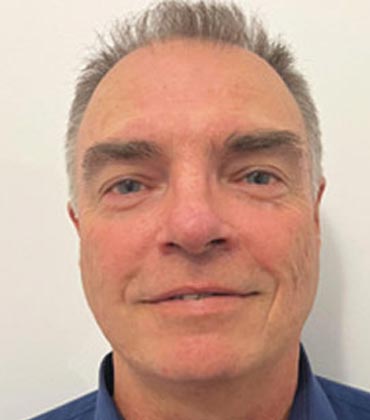
Colin Baker, Director Medical Imaging and Pathology Contract

Tem Leadership Providing Best Care

Colin Baker

Colin Baker

Clinical Leadership Steward

Leadership is a fundamental skill required in all areas and sections within healthcare organisations. The leadership of the team seems simple and although it is a combination of multiple disciplines / skills / roles; it actually is!


One philosophy of team leadership in my view is one of best outcome for patients / clients, through each component of the team working together hand in hand with each other.


The ‘team’ is the object – each member and role is equally important in the process / function of the delivery of best care.  It is not about treating one discipline more or less important within the group.  The philosophy is a holistic one that facilitates the organisations strategies to improve the patient / client journey, i.e. improved access, appropriate service and good outcomes.  This leads to more care benefits, added value, user feedback and more strategic thinking and planning.


Each discipline of the team has different needs / skills required to complete the workflows.  These have to be considered independently and in discussion, with those groups involved.  This is carried out through routine stakeholder and group review that includes process detail examination.  However, as part of this discussion, the group benefits from the integrated understanding, required as part of functioning together.  The integration will be addressed, discussed, strategised, solution driven, agreed and tested for implementation.


Through this process above, the outcomes are accepted more easily with modified services and workflows.  It is more complicated and time consuming, as necessary, with reviews for full change management, modification or totally new methods / models of care.


I would draw you back to the team and the single philosophy of providing best care.  The drive is not the individual or the discipline but the integrated workflow each group portrays in the overall service.  The combination of their skills and understanding of the workflow, bond the service together for the expected outcome.


Not all the workflows are even, not everyone is paid the same, or works the same hours / days, however, as repetitive as some may think, the goal, is the common based outcome for everyone.  Even though, from an organisational view, Medical Imaging (MI) is only one component of the patients / clients journey through the organisation.


One philosophy of team leadership in my view is one of best outcome for patients and clients, through each component of the team working together hand in hand with each other.


Leadership from a team’s perspective can be seen as difficult, as all teams have many needs, opinions, agenda’s, history, like and dislikes, expectations, collateral impact, external stakeholders, just to name a few.  All these aspects need addressing and are important to be heard, but have to be drawn back and gravitated to ‘again’ the one goal and that is for the MI team to work together to generate the best outcomes.  We as a MI team have to enable and allow through the strategy process: innovation, ideas and individual feedback to be part of the routine practice, aligned with that of the organisation.


All discussions undertaken have to take into consideration the unique circumstances that may be presented and the impact they have, however, any final decisions have to be aligned with the expected outcomes and what the impact of these, will have upon it.


Rightly or wrongly you have to be aware of the individuals and align the disciplines within them, as a single team and have a simple common organisational strategic goal, which assists them in producing the right, expected outcomes for those requiring and using the service to be provided.


The articles from these contributors are based on their personal expertise and viewpoints, and do not necessarily reflect the opinions of their employers or affiliated organizations.

Editorial Lens

Healthcare leaders must recognize that sustainable performance is increasingly determined by how effectively diverse clinical teams operate as a unified system.This perspective highlights why cross-functional collaboration, shared accountability and coordinated workflows are becoming essential to improving patient outcomes and organizational resilience.

The Leadership Perspectives forum brings together voices shaping the future of life sciences. It features leaders who are advancing change across the industry through strategic leadership and applied insight.
EDITOR'S CHOICE
  • Willis Towers Watson

    ICON [NASDAQ: ICLR]

    The Significant Increase in Demand for Clinical Research Associates (CRAs)

    Helen Yeardley, Executive Vice President, ICON [NASDAQ: ICLR]

  • Willis Towers Watson

    PacBio [NASDAQ: PACB]

    The Talent - Culture Continuum: How to Manage an Innovation Culture Amid Growth and Change

    Alvin Hom, Head of Global Talent Acquisition, PacBio [NASDAQ: PACB]

  • Willis Towers Watson

    Repligen Corp [NASDAQ: RGEN]

    Gene Therapy-Therapeutic Viral Vectors; Manufacturing, Challenges, and Innovation

    Rachel Legmann, PhD, Senior Director of Technology, Gene Therapy, Repligen Corp

  • Willis Towers Watson

    Ionis Pharmaceuticals [NASDAQ: IONS]

    Bridging the Diversity Divide

    Victoria Sanjurjo, Medical Director, Clinical Development, Ionis Pharmaceuticals, Inc [NASDAQ: IONS]

Life Sciences Review
Follow on LinkedIn

About

  • Home
  • About Us
  • Partner With Us

Stay Connected

  • Subscribe
  • Newsletter
  • Sitemap

Contact Us

  • editor@lifesciencesreview.com
  • sales@lifesciencesreview.com
  • marketing@lifesciencesreview.com

Legal

  • Editorial Policy
  • Privacy Policy
  • Terms of Use

© 2026 Life Sciences Review. All rights reserved. Headquartered in Fort Lauderdale, FL, USA.

This content is copyright protected

However, if you would like to share the information in this article, you may use the link below:

https://www.lifesciencesreview.com/leadership-perspective/colin-baker-nwid-3404.html