


Partners leading Sofinnova Partners' Digital Medicine Strategy
Challenges in Digital Medicine Applications
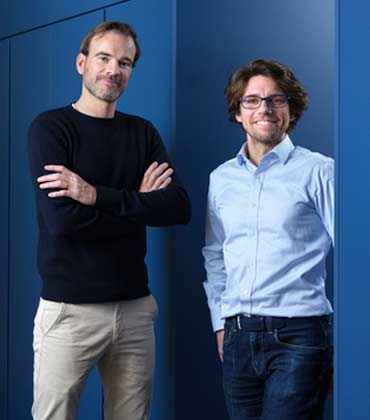
A Q&A with Edward Kliphuis and Simon Turner
Edward joined Sofinnova Partners in 2021. He started his career as an analyst within the biopharma investment team of M Ventures. He holds an M.Sc. in Biopharmaceutical Sciences from Leiden University, The Netherlands, with a specialization in pharmacology.
Simon joined Sofinnova Partners in 2021 after consulting for corporates seeking to develop partnerships with digital health companies. He worked closely with business development functions to identify, assess, and structure strategic investments.
What are the current challenges in the digital medicine market, particularly regarding the development of promising innovations?
Edward Kliphuis: Progress in structured data collection and computational techniques has significantly impacted traditional methodologies in medical and life sciences research. This change fosters a deeper understanding of human biology, unlocking vast potential for precision medicine, revealing new biological insights, and improving individual welfare and productivity.
Yet there remains a major obstacle in the market: the investment sector’s traditional reluctance to back enterprises in complex, heavily regulated industries like digital medicine. This reluctance has led to a financial shortfall for entrepreneurs in this field. To address this challenge, investors like Sofinnova play a crucial role, providing vital support and investment to businesses in their early stages. Sofinnova’s expertise extends to both the underlying technologies and the regulatory pathways essential for successfully commercializing innovations in healthcare and life sciences. Sofinnova helps entrepreneurs overcome initial hurdles and gain validation. This support allows companies to secure further funding and effectively launch their products and services. As a result, patients can ultimately benefit, and the field of digital medicine advances.
Simon Turner: Digital medicine is recognized as a vital solution to various challenges in the healthcare system and life sciences. The healthcare system continues to face mounting pressure due to rising costs, an aging population, and healthcare provider burnout. Without significant, transformative changes, the system risks breakdown.
Digital medicine offers a wide array of possibilities, ranging from a better understanding of biological processes at their earliest stages to implementing precision medicine and more personalized healthcare. The goal is to increasingly enable treatment of patients as unique individuals. Digital medicine can enhance care pathways and influence patient behavior, and its potential is believed to exceed previous advances in life sciences. It stands as a key strategy for improving patient outcomes and the healthcare system overall.
What best practices would you recommend for startups to navigate systemic challenges when bringing their digital innovations into the market?
Edward Kliphuis: Effectively addressing the systemic obstacles that startups face when introducing their digital innovations to the market requires the implementation of a tailored and strategic methodology. Although there is no universally applicable solution, there are several recommended strategies that can assist startups in navigating this process.
First, it’s essential to understand the technology and its unique value, recognizing and addressing any gaps or limitations. Next, defining the target market and understanding customer needs is crucial for effective positioning and marketing efforts. Creating a strong business model in line with current technology and market trends is vital, considering factors like revenue streams, cost structure, pricing, and scalability.
Strategic partnerships are key for commercializing products or services, providing access to distribution networks, specialized knowledge, significant resources, and vital market intelligence. Finally, startups must stay informed about regulatory and compliance requirements specific to their industries to navigate potential challenges.
By following these guidelines, startups can increase their chances of successfully bringing their digital innovations to market.
Simon Turner: Digital medicine, at the intersection of technology and life science, requires deep understanding of both fields to make successful investments and fulfill new companies’ growth potential.
Recognizing the importance of workflow integration, regulatory compliance, and strategic implementation is essential to harness benefits and avoid negative consequences.
During the planning and strategy process, we must pay attention to factors like patient data privacy, compliance with the General Data Protection Regulation (GDPR), and adherence to other regulations. These considerations can offer defensive advantages and even uncover new opportunities, especially as new technologies are built and brought into healthcare.
Digital medicine ventures can create a foundational framework by developing technologies that address access challenges. This framework fosters growth and success in other technologies, encouraging the creation of innovative service models and infrastructure. Understanding these complexities is crucial for making informed investment decisions and fostering the growth of companies in the digital medicine sector.
Digital medicine offers a wide array of possibilities, ranging from a better understanding of biological processes at their earliest stages to implementing precision medicine and more personalized healthcare
How can startups and leaders ensure patient safety while developing digital innovations in healthcare?
Simon Turner: Patient safety is paramount when developing innovations in digital medicine. Startups and leaders must incorporate essential strategies and adhere to best practices, aiming for the highest standards. Transparency and ethical considerations are vital, especially when using technologies like artificial intelligence (AI). Developing new “best practices” and pushing the envelope further allows companies to build substantial barriers to entry as well.
Clear communication with healthcare professionals and patients about the use of AI builds trust and enhances understanding of safety protocols and potential risks. By emphasizing transparency and effective communication, startups can prevent malicious applications and address uncertainties that hinder trust-building.
Safety must always remain the primary focus in digital medicine. The consequences of neglecting this aspect can be severe. Unlike sectors that may follow a “move fast and break things” approach, digital medicine requires a steadfast commitment to patient safety, as any harm to patients is ethically and morally inexcusable.
How do you envision the future of the space?
Edward Kliphuis: Looking ahead to the next 12 to 18 months, there are several technological trends that founders should pay attention to. One notable trend is the emergence of foundation models, particularly in the field of large language models. These models have the potential to impact various aspects of the working population and practitioners. While they are not yet optimized for accurate predictions in certain areas such as molecular structures, they hold significant promise in terms of machine learning advancements and data utilization.
Our strategy’s main focus — and our deployment approach — centers on leveraging foundation models to transform the data we collect into meaningful and actionable information. This aligns with our belief that the traditional software model—code written by humans—is shifting towards software that can generate its own code, informed by data. Large language models like GPT-4, trained on extensive public information, exemplify this trend. We are also exploring the development of specific foundation models using non-public information, especially in healthcare.
Unlocking and using data generated by hospitals and pharmaceutical firms could substantially increase healthcare efficiency. This has the potential to enable precision medication, early diagnosis, more effective treatments, and enhanced quality of life for patients. Our goal is to use these technologies to create positive impact, boost productivity, and foster overall well-being.
