


Idorsia Pharmaceutical Ltd.
Biopharmaceuticals: The Game Changer in Modern Day Drug Discovery
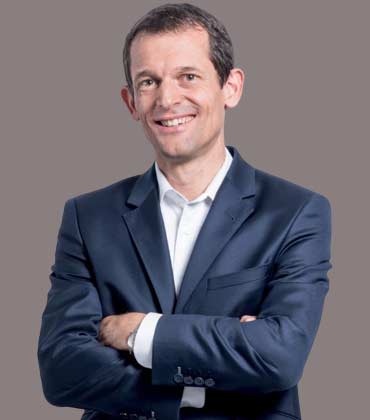
Stefan Abele
Stefan Abele, the Senior Vice President and Head of Chemical Development and Commercial Manufacturing has been associated with Idorsia, Switzerland since 2017. He has been associated with pharmaceuticals and chemistry since 1999 and has also played an important role in the success of his former employers Carbogen-Amcis and Actelion.With almost two decades of experience Stefan is one of the prominent leaders in the Swiss pharmaceutical industry.
What are your roles and responsibilities in Idorsia?
Idorsia is a biopharmaceutical start-up with a 20- year reputation in drug discovery. It has over 1200 employees and a varied portfolio of innovative drugs. Its operations are dispersed across Europe, Japan, and the United States. I am in charge of chemical development and commercial manufacturing at Idorsia. I lead a team that is in charge of all active pharmaceutical ingredient (API) concerns at the plant where I am currently employed. My responsibilities range from discovery to commercial supply.
What are the challenges and latest trends that you are witnessing in the industry? How are these affecting the pharmaceutical industry?
From the overall pharmaceutical perspective, new modalities, personalized medicines, and enhanced genetic engineering are becoming more prevalent among all big pharmaceutical companies.
"Sound and good process chemistry will always be in strong demand and even more so because this art is important to tame the growing complexity of small molecule API's"
From Idorsia’s viewpoint, we are more concentrated on catering to the strong need for innovative small molecules. This strong demand stems from various benefits that small molecules have over biologics. Small molecules meet the affordability criterion and also enable ease of administration.
From a manufacturing perspective, the pandemic came as a major roadblock. The supply chains from Asia were hindered, barring several governments and corporate initiatives. These include some of the more important initiatives relating to the supply of API and drug products, for example, the export of elements for the complex manufacturing of API or the government programs to stimulate local R&D. I see no easy solution to this problem. With such stringent regulations in place, it is extremely complicated and time-consuming to develop new and reliable suppliers. I believe in the Latin term ‘vide cui confidis’ which means, meet and see whom you can trust, so, it is very important to see the plans firsthand before relying on a supplier. This major step was badly hindered by COVID.
From the perspective of the consumer, despite the significant capital investment, the larger pharmaceutical CDMOs (Contract Development and Manufacturing Organizations) have reduced their production due to severe regulations surrounding the import of the materials required for manufacturing. On the other hand, smaller businesses lack the capacity to meet the current high demand for pharmaceuticals.
However, since the regulations in Europe and the U.S are not as strict, many talented chemists and engineers are getting the chance to find exciting employment opportunities at the moment as the demand for drugs is at its peak at this time.
Also, for the supply chain to be resilient it is very necessary to take into account the high volatility of the cost of commodities. The strength of a country’s supply chain can only be guaranteed by a free exchange of goods money, and talent across several countries. But this major challenge plagues every market because this is not the most realistic of situations.
How in your opinion is technology accommodating to the aforementioned trends? Are there any technological advancements to look out for from your perspective?
Organic chemistry know how reduced down to practice will always be in strong demand to tame the complexities of small molecule API. At Idorsia we have a strong chemistry process R&D unit to design innovative ways to develop API drugs and scale them. Regarding technological advancements, green chemistry is the new hyperbole. Resource-intensive pharmaceutical production is in full effect now, implementing elements like solvent recycling, green solvents, or only water in the manufacturing processes. These initiatives not only are beneficial from a climate perspective but also save costs on new R&D. I also see the need for environmentally benign use of fluorine, which is a common element used in modern medicines, it is important to find methods to introduce fluoroalkyl groups that utilize lesser resources. The use of enzymes or bio-catalysis is a prime example of environment-friendly and economically efficient technology being used at Idorsia. As per our research, using an enzymatic process results in less waste per kilogram of drug substance produced than other processes. Additionally, Idorsia is also using photochemistry as another environmentally harmless idea in pharmaceutical manufacturing.
What advice would you want to give our readers regarding the processes that they should look towards to implement for a streamlined workflow?
Commercial operability needs capacity and those CDMOs who have the capacity to be flexible on the volume, size, or spare volume of plans have a significant upper hand over the ones that do not. Another asset is having seasoned chemists and analytically trained and talented staff. Regarding technology, it is always necessary to have at least three capable suppliers in the portfolio enabling the company to jumpstart any project at any given time. We at Idorsia connect to new suppliers by contacting them from our end or meeting them at trade shows like CPHI in Frankfurt.
Idorsia has a large portfolio of suppliers that are constantly maintained and challenged against our key performance indicators, increasing their dynamism. For us, it is also very important to grab every opportunity to partner with promising CDMOs and build a communicative, long term and diligent relationship with them.
