


CELLINK
3D bioprinting: Accelerating Drug Discovery

Itedale Namro Redwan
Just a few years ago, the field of 3D bioprinting was considered science fiction. Questions like: “Seriously, printing organs for organ transplantation is really possible?” or: “3D bioprinted models can replace animal models in drug discovery?” Fast forward, and today 3D bioprinting is steadily becoming commonplace in biomedical research. Thanks to intensive work by thousands of scientists across the globe during the last decade, bioprinting is already an essential driving force accelerating drug discovery today.
In the past, many great discoveries related to cell biology, genetics, cancer, and cell differentiation have been made leveraging 2D cell culture technologies. While it was necessary for the progress of science, it is also common knowledge that 2D models do not resemble the complexity of the actual in vivo environment and cannot translate results to novel therapies and treatments. Therefore, it becomes clear that 3D models will play a crucial part in helping us solve health challenges. Just think about it, which of our organs grow flat?
Bio printed 3D models are emerging as strong alternatives that eliminate animal cruelty (ethical reasons) and reduce costs and time and enable lower data variation
What is 3D bioprinting?
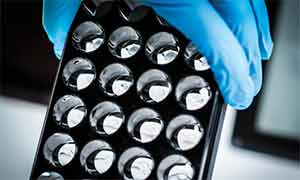
In short, bioprinting is an additive manufacturing process that uses a digital file as a blueprint to print an object layer by layer, using embedded biomaterials, which allows the creation of organ-like structures with living cells mimicking native tissue in a human body. Unlike other biofabrication techniques, 3D bioprinting is a high-throughput, scalable, precise, and reproducible method. But before we discuss the advantages of 3D bioprinting and their implications in drug discovery, we will dive into the history of bioprinting to understand how fast the field is developing. The founder of 3D bioprinting, Professor Thomas Boland at Clemson University, developed the first bioprinter in the early 2000s. His research group modified a Hewlett-Packard inkjet printer to be able to deposit cells in a cell culture medium. Later, modifications of the bioprinters enabled the cells to be deposited in bioinks, which led to the creation of 3D structures. Since then, the field of 3D bioprinting has exploded.
How can 3D bioprinting impact the drug development industry?
Finding a drug candidate and taking it to market can take up to 10 years. A rough estimation of the average costs to bring a drug to market range from $1.3 billion to more than $2 billion. Unfortunately, over 90% of the drugs fail during pharmaceutical development, which is the biggest reason for such high costs.
Researchers are developing promising solutions for lowering these costs, and no doubt using 3D bioprinting is one of them. For instance, 3D bioprinting enables high-throughput compound screening on functional 3D tissue models. This can ensure that ineffective compounds or ones with unintended side effects do not progress further down the pipeline. As a result, it significantly lowered the cost and expedited the time-consuming process of drug candidate elimination that exists today.
Remember that 2D cell culture models expose false data related to compound effects, leading to inaccurate results and conclusions and increasing attrition and cost. Equally problematic is that compounds that make it past the 2D testing phase are tested on animal models, which only partially translates into human clinical trials because of cross-species differences. Therefore, 3D tissue models in preclinical drug discovery can help drug developers bring only the best candidates to clinical trials.
All of the above explains why an increasing number of scientists are turning to bioprinting to study different pharmaceutical applications such as targeted drug delivery, drug efficacy or toxicity, and high-throughput screening.
Also, workflows that incorporate 3D bioprinting in preclinical testing tend to cost less and accelerate overall productivity. Finally, 3D bioprinting can incorporate patient-derived cells, which opens the door to a personalized approach to therapy development.
Can 3D bioprinting replace animal models in the near future?
Today, drug discovery relies heavily on animal models in preclinical testing, which have numerous shortcomings. However, bioprinted 3D models are emerging as strong alternatives that eliminate animal cruelty (ethical reasons) and reduce costs and time and enable lower data variation. For example, great success has been achieved in developing 3D skin models that enable in vitro drug testing for cosmetics. This method has proven to be more successful in testing drug effects in humans compared to animals and thus has been widely accepted.
The goal of CELLINK has always been to provide research tools that minimize the use of animals in research. Using 3D bioprinted alternative models support sustainability efforts, including the 3Rs principle of Replacing, Reducing, and Refining the use of animals in medical research. Furthermore, CELLINK has introduced Sustainable Tissue Engineering Practices (STEP) to support such efforts. We aim to create awareness for more sustainable and responsible research and to develop technologies that enable researchers to use 3D bioprinted alternatives that replace animal models in the near future.
