



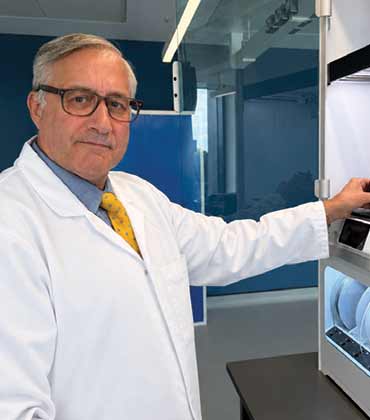
 Gino Martini, PhD, Chief Scientific Officer
KIFFIK Biomedical is working to overcome this longstanding barrier by providing controlled, non-invasive and repeat access to ISF through its K-EXP™ platform. The platform is designed to give researchers and strategic partners a practical path toward repeat ISF sampling and longitudinal molecular measurement, opening opportunities to study biological processes that have previously been difficult to investigate.
“We believe access is the foundation,” says Gino Martini, PhD, Chief Scientific Officer. “Our goal has never been just to collect another biological sample. It is to create a platform that expands practical access to meaningful biological information.”
That expanded access creates opportunities across biomarker discovery, drug development, disease monitoring, precision medicine and AI-enabled healthcare.
Increasing Access to Human Biology
ISF is an information-rich biological fluid surrounding nearly every cell in the body, containing a range of biologically important molecules, including proteins, metabolites, cytokines and electrolytes, reflecting biological activity within tissues. While blood remains an essential clinical specimen, ISF offers a complementary biological perspective.
Biological signals originating within tissues may move through ISF before entering the bloodstream, where dilution, metabolism, degradation and clearance can influence the concentration and timing of biomarkers measured in blood. Viewed together, the two fluids could expand biological visibility beyond what either measurement alone can reveal.
By improving practical access to ISF, KIFFIK is working to give researchers a more practical path toward longitudinal molecular measurement, allowing them to investigate how biological signals change over time. With access to ISF over time, researchers could examine biological changes across hours, days, weeks or months, creating a richer longitudinal view of biological processes and expanding biological visibility.
From Biological Snapshots to Longitudinal Insight
The significance of access becomes clearer when biology is viewed as a dynamic process. Health, disease, therapy and lifestyle continuously influence biological systems, but many measurements remain episodic, providing individual snapshots rather than a view of how biology changes over time.
-
We believe access is the foundation. Our goal has never been just to collect another biological sample. It is to create a platform that expands practical access to meaningful biological information.
By improving practical access to ISF, KIFFIK is working to give researchers a more practical path toward longitudinal molecular measurement, allowing them to investigate how biological signals change over time. With access to ISF over time, researchers could examine biological changes across hours, days, weeks or months, creating a richer longitudinal view of biological processes and expanding biological visibility.
The longitudinal perspective may provide deeper insight into disease progression, therapeutic response, recovery and normal physiology. Over the longer term, Dr. Martini sees this expanding biological visibility as a way to deepen understanding of what KIFFIK describes as the ‘human operating system,’ while creating new opportunities in biomarker discovery and drug development through pharmacokinetic and pharmacodynamic studies. These applications can extend across oncology, neuroscience, metabolic and cardiac monitoring and other areas of biological monitoring.
AI adds another dimension to this opportunity. The capabilities of AI depend on the quality and depth of available data, and greater access to longitudinal molecular information could provide richer datasets for understanding how biological processes evolve over time. AI can help researchers make better sense of the biological information they can access without replacing biology.
Advancing the Future of Biomarker Access
KIFFIK is advancing the K-EXP™ platform toward clinical-device availability in the second half of 2026 while selectively advancing partner programs and planned clinical studies around the technology. The company's broader mission is to expand access to biological information and provide greater visibility into human biology.
That progression, from access to data to deeper biological intelligence, is central to KIFFIK's vision for moving biomarker research beyond isolated measurements toward a more dynamic understanding of how biology changes over time. KIFFIK envisions expanding not just how biology is measured, but access to the biological information that makes those measurements possible. Its work to expand biomarker access has earned it recognition as a Top Biomarker Access Technology 2026.
Biomarker Access Depends on Repeatable Biological Sampling
Biomarker measurement has advanced faster than access to some of the biological material researchers want to study. Interstitial fluid, which surrounds cells throughout the body, can contain molecular information that complements blood, yet obtaining it repeatedly has remained difficult. For executives assessing biomarker access technology, the procurement tension sits here. A method may expose useful biology, but its research value narrows if collection is invasive, technically demanding or difficult to repeat at the frequency a study requires.
Collection practicality deserves close scrutiny because longitudinal research changes the demands placed on sampling. Suction blisters, microdialysis and microneedle-based approaches have contributed to ISF research, but historical methods can involve tradeoffs in invasiveness, collection time, technical complexity and sample volume. A prospective technology should be examined for how the collection fits into repeated study protocols, including the burden placed on participants and research staff. Repeatability is not just a convenience when the scientific objective is to observe biological change across hours, days, weeks or longer periods.
Biological relevance is equally important. ISF and blood are physiologically connected but distinct, which makes substitution a poor basis for evaluation. The stronger question is whether access to ISF adds useful visibility for the biomarkers and applications under study. Signals originating in tissue can change before they are ultimately measured in blood because dilution, degradation and other biological processes may affect concentration or timing. Executives should examine which analytes can be accessed and how reliably samples support downstream measurement. They should also determine whether the resulting information complements existing specimens rather than duplicating them.
Study design also depends on whether an access method can move beyond isolated sampling. Many biomedical datasets still capture biology at discrete moments, even though disease progression and therapeutic response unfold over time. More frequent molecular measurement can give researchers a different view of change between conventional collection points. Procurement teams should assess whether a technology supports the sampling cadence required by the intended protocol and whether that cadence can be sustained without introducing collection procedures that undermine participation or study execution.
“KIFFIK Biomedical’s K-EXP platform is designed to enable repeat, non-invasive access to ISF, creating a practical route to longitudinal molecular information without relying on episodic collection alone.”
The downstream use of collected material matters just as much as access itself. Biomarker discovery, drug development, therapeutic monitoring and precision medicine can place different demands on collection frequency and molecular analysis. Data intended for computational models adds another constraint because useful longitudinal datasets depend on consistent access over time. Buyers should connect the sampling method to the scientific question before judging the breadth of application.
KIFFIK Biomedical’s K-EXP platform is designed to provide non-invasive access to interstitial fluid for research and clinical applications. The platform is designed to enable repeat, non-invasive access to ISF, creating a practical route to longitudinal molecular information without relying on episodic collection alone. Its development path also advances toward continuous ISF access and monitoring. That approach addresses the central procurement constraints around collection burden and repeatability while opening access to a biologically distinct fluid that can complement blood-based measurement. Select clinical partner programs are planned around the platform, with clinical devices slated for the second half of 2026. For organizations whose studies depend on repeated ISF collection and longitudinal biomarker data, KIFFIK merits consideration as a biomarker access technology provider.
This device is not FDA approved. For investigational use only.
...Read more
Biomarker Access Technologies Info
Q1
What Is Biomarker Access Technology?
Biomarker Access Technology refers to methods and platforms that make biological samples or molecular signals more practically available for measurement. In this context, the focus is on interstitial fluid (ISF), the fluid surrounding cells that contains proteins, metabolites, cytokines and electrolytes. Biomarker Access Technology can therefore help researchers examine biological information that may complement what is obtained from blood-based testing.
Q2
How Does KIFFIK Biomedical Approach Biomarker Access Technology?
KIFFIK Biomedical approaches Biomarker Access Technology through its K-EXP™ platform, which is designed to provide controlled, non-invasive and repeat access to ISF. The approach is intended to give researchers and strategic partners a practical way to collect ISF repeatedly and examine molecular changes over time. This emphasis on repeatability distinguishes the platform's role from approaches focused only on individual sample collection.
Q3
Why Does Repeatable Sampling Matter In Biomarker Research?
Repeatable sampling is important because many biological processes change continuously while conventional measurements may capture only individual points in time. Biomarker Access Technology can support a longitudinal approach by enabling researchers to examine biological changes across hours, days, weeks or months. This can be relevant when studying disease progression, therapeutic response, recovery or normal physiology.
Q4
What Should Researchers Evaluate When Choosing Biomarker Access Technology?
Researchers should consider how practical the collection method is within the intended study. Biomarker Access Technology should be assessed for factors such as invasiveness, technical complexity, collection time, sample volume and repeatability. The biological relevance of the collected material also matters. ISF and blood provide distinct biological perspectives, so researchers should determine whether access to ISF adds useful information for the biomarkers and applications being investigated.
Q5
What Applications Can Biomarker Access Technology Support?
Biomarker Access Technology can have relevance across biomarker discovery, drug development, disease monitoring and precision medicine. KIFFIK Biomedical's profile also identifies potential applications in pharmacokinetic and pharmacodynamic studies, as well as oncology, neuroscience, metabolic and cardiac monitoring. Greater access to longitudinal molecular information may also create richer datasets for AI-assisted analysis of biological processes.
Q6
How Is KIFFIK Biomedical Advancing Biomarker Access Technology?
KIFFIK Biomedical is advancing its K-EXP™ platform toward clinical-device availability in the second half of 2026 while progressing selected partner programs and planned clinical studies. Its approach centers on repeat, non-invasive ISF access for research and clinical applications, creating a route toward longitudinal molecular measurement. Biomarker Access Technology in this form could help researchers move beyond isolated measurements toward a more continuous view of biological change.
