Top Biomarker Access Technologies 2026 | Life Sciences Review
CLOSE

Specials

I agree We use cookies on this website to enhance your user experience. By clicking any link on this page you are giving your consent for us to set cookies. More info

Skip to: Curated Story Group 1
Life Sciences Review
US
EUROPE
APAC
CANADA

About Us

Conference

Partner With Us

  • US
    • EUROPE
    • APAC
    • CANADA
    • LATAM
  • Drug Discovery
    Antibodies
    BioTech
    Cell and Gene Therapy
    Clinical Trial
    Drug Discovery and Development
    Life Science AI
    Regenerative Medicine
    Therapeutics
  • Biomanufacturing
    Biomanufacturing
    Biomarker
    Bioprocessing
    Blood Bank
    CDMO
    Clinical Laboratory
    CRO
    Life Science Testing
    Skin Care
    Supplements
  • Business Services
    Life Science Consulting
    Life Science Facility Service
    Life Science Financial Services
    Life Science Marketing
    Life Science Recruitment Firms
    Pharma Wholesale and Distribution
    Pharmacy Management
    Regulatory and Compliance
    Regulatory Services
    Technologies and Software
  • Leadership Perspectives
  • Innovation Insights
  • Research
  • News
  • Magazines
  • CXO Awards
×
#

Life Science Review Weekly Brief

Be first to read the latest tech news, Industry Leader's Insights, and CIO interviews of medium and large enterprises exclusively from Life Science Review

Subscribe

loading

Thank you for Subscribing to Life Science Review Weekly Brief

Biomarker

Top Biomarker Access Technologies 2026

Biomarker access technologies help researchers and clinicians obtain actionable biological insights for diagnosis, treatment planning and disease monitoring. With a focus on sample usability, data quality, assay integration and clinical relevance, they support stronger precision medicine and more reliable care decisions.

Solutions
KIFFIK Biomedical: Expanding Practical, Non-Invasive Access to Interstitial Fluid
KIFFIK Biomedical
Expanding Practical, Non-Invasive Access to Interstitial Fluid
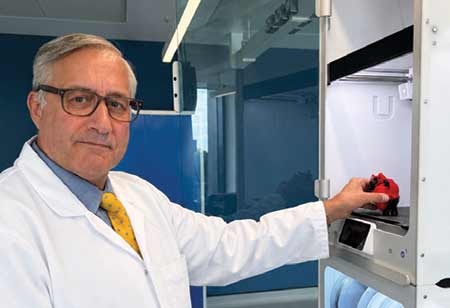
Gino Martini, PhD, Chief Scientific Officer
Researchers have long recognized the biological value of interstitial fluid (ISF), yet sampling it in a practical, repeatable way remains a challenge. Existing approaches, including suction blisters, microdialysis and microneedles, have contributed significantly to ISF research. However, they can present limitations related to invasiveness, technical complexity, collection time, sample volume and scalability, limiting the broader practical use of ISF for molecular measurement.
Read more
State of Industry

Connected Healthcare Systems: Biomarker Access Technology Enabling Precision Medicine

Modern healthcare is focused on personalized treatments as clinicians, researchers and diagnostic professionals aim to gain a greater understanding of disease biology, treatment response and beyond. Biological indicators are used to make medical decisions, and these indicators will give measurable information on health status. Access to biomarker data is essential for modern healthcare that increasingly relies on such indicators.

Read more
Deep Dive

Biomarker Access Depends on Repeatable Biological Sampling

Biomarker measurement has advanced faster than access to some of the biological material researchers want to study. Interstitial fluid, which surrounds cells throughout the body, can contain molecular information that complements blood, yet obtaining it repeatedly has remained difficult. For executives assessing biomarker access technology, the procurement tension sits here. A method may expose useful biology, but its research value narrows if collection is invasive, technically demanding or difficult to repeat at the frequency a study requires.

Read more

Biomarker Access Technologies Info

Q1
What Does Biomarker Access Technology Enable?
Top Biomarker Access Technology focuses on methods that make biological samples more accessible for molecular analysis, particularly when conventional sampling does not provide the desired frequency or biological perspective. These technologies can support access to fluids such as interstitial fluid (ISF), which contains proteins, metabolites, cytokines and electrolytes associated with biological activity in tissues. The category is relevant to biomarker discovery, disease monitoring, drug development and precision medicine.
Q2
Why Is Demand Increasing for Top Biomarker Access Technology?
Biological processes change continuously, yet many research and clinical measurements remain limited to individual collection points. Top Biomarker Access Technology can address this gap by making repeat sampling more practical, creating opportunities to observe biological changes over hours, days, weeks or longer periods. Growing interest in longitudinal data, precision medicine and data-intensive biomedical research is increasing the importance of sampling methods that can support repeated molecular measurement without placing excessive burdens on participants or research teams.
Q3
What Should Researchers Evaluate When Selecting Biomarker Access Technology?
Researchers assessing Top Biomarker Access Technology should consider how reliably a method provides the biological material required for the intended application. Important factors include invasiveness, collection time, sample volume, technical complexity, repeatability and compatibility with study protocols. The biological relevance of the sample also matters. ISF and blood provide distinct but complementary perspectives, so researchers should determine whether access to ISF adds useful information for the biomarkers and applications under investigation rather than simply duplicating existing measurements.
Q4
How Does Technology Influence Longitudinal Biomarker Research?
Top Biomarker Access Technology can support a shift from isolated biological snapshots toward repeated measurement of changing biological signals. This is particularly relevant when researchers need to study disease progression, therapeutic response, recovery or normal physiology over time. Technology that reduces the practical burden of repeated sampling can make longitudinal study designs more feasible. The value ultimately depends on whether the sampling approach can sustain the required cadence and produce material suitable for downstream molecular analysis.
Q5
Which Organization Was Recognized as a Top Biomarker Access Technology in 2026?
Life Science Review recognized KIFFIK Biomedical as a Top Biomarker Access Technology in 2026. The recognition reflects the company's work to expand practical access to interstitial fluid through its K-EXPâ„¢ platform, which is designed for controlled, non-invasive and repeat ISF sampling. The platform is positioned around longitudinal molecular measurement for research and clinical applications.
Q6
Why Was KIFFIK Biomedical Recognized in This Category?
KIFFIK Biomedical's recognition is tied to several documented aspects of its approach. Its K-EXPâ„¢ platform is designed to provide repeat, non-invasive access to ISF, addressing practical limitations associated with collection. The technology is intended to support longitudinal molecular measurement rather than isolated sampling and can provide access to a biological fluid that complements blood-based measurement. Life Science Review also notes its potential relevance to biomarker discovery, drug development, disease monitoring, precision medicine and AI-enabled healthcare. The company was advancing the platform toward clinical-device availability in the second half of 2026.
Life Sciences Review
Follow on LinkedIn

About

  • Home
  • About Us
  • Partner With Us

Stay Connected

  • Subscribe
  • Newsletter
  • Sitemap

Contact Us

  • editor@lifesciencesreview.com
  • sales@lifesciencesreview.com
  • marketing@lifesciencesreview.com

Legal

  • Editorial Policy
  • Privacy Policy
  • Terms of Use

© 2026 Life Sciences Review . All rights reserved.

This content is copyright protected

However, if you would like to share the information in this article, you may use the link below:

https://www.lifesciencesreview.com/a/biomarker-access-technologies