



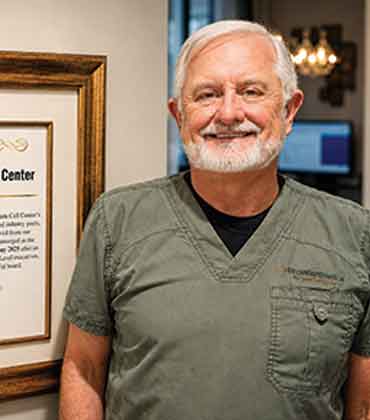
 Dr. Bill Johnson, CEO
Innovations Stem Cell Center (ISCC) brings greater scientific rigor to regenerative medicine by combining a standardized treatment protocol with systematic patient outcome tracking. With a strong foundation in internal medicine and best-in-class regenerative therapies, it demonstrates where stem cell treatments deliver meaningful improvements.
“By following a consistent treatment protocol, we minimize variables and provide a clear understanding of each intervention’s clinical efficacy while creating a strong foundation for outcomes research,” says Dr. Bill Johnson, CEO.
Dr. Johnson brings four decades of experience in internal medicine to lead a team that has worked alongside him since ISCC’s inception. Years of balancing complex medication regimens taught him the importance of carefully weighing therapeutic benefits against potential interactions and side effects while minimizing unnecessary variables. When regenerative medicine emerged, he saw an opportunity to apply that same disciplined clinical approach to supporting the body's natural healing processes, leading him to establish ISCC in 2013.
Building on its mission of advancing regenerative care, ISCC is currently developing a clinical outcomes registry designed to generate statistically meaningful, real-world evidence across a spectrum of medical conditions.
Harnessing the Potential of Patient-Derived Stem Cells
Advances in regenerative medicine have sharpened the debate over which stem cell source offers the greatest therapeutic value. Adipose, bone marrow and umbilical cord-derived cells each have distinct biological characteristics, and no universal consensus has emerged.
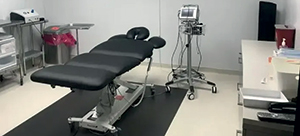 Laboratory studies have shown faster proliferation and differentiation with umbilical cells, but performance depends on factors beyond growth rates alone. Safety, accessibility, regulatory considerations and consistency of treatment all influence therapeutic outcomes. This broader clinical perspective underpins ISCC's exclusive use of autologous stem cells derived from a patient's adipose tissue.
Repeated administration of allogeneic cells can trigger an increasing immune response, causing donor cells to be recognized as foreign and destroyed before they can exert their intended effects. Autologous cells are recognized as self, reducing the risk of immune-mediated clearance.
Adipose tissue also provides a substantially higher stem cell yield than other alternative sources. A single harvest typically yields 30 to 50 million stem cells, while bone marrow typically produces only thousands.
Achieving comparable cell numbers from bone marrow often requires laboratory expansion, adding both time and cost to the process. The financial challenge is even greater with umbilical cord-derived cells, which are typically priced at around $1,000 per 500,000 cells. It could cost approximately $100,000 to achieve a dose in the same range as adipose tissue.
“Having access to one’s own umbilical-derived stem cells would be ideal, but it is not a realistic option for most patients,” says Dr. Johnson. “Adipose-derived autologous stem cells offer meaningful advantages because they are financially accessible, easily harvested and available in substantial quantities.”
A Controlled Approach to Stem Cell Therapy
Cell collection marks the first step in ISCC's treatment protocol. Approximately 25 to 35 cc of adipose tissue is harvested from the patient, typically around the waist, under local anesthesia. The center then isolates stem cells from the harvested adipose tissue using collagenase-based enzymatic separation. The enzyme breaks down the collagen matrix surrounding the stem cells, releasing them while helping preserve cell viability.
The tissue is passed through the enzymatic separation cycle twice, producing an initial 10 cc fraction containing approximately five to 10 million stem cells per cc, followed by a 90 cc fraction that retains an additional 20,000 to 30,000 stem cells per cc.
ISCC uses the highly concentrated fraction for localized applications—including joint, peripheral nerve and pulmonary treatments—and administers the remaining cell-rich fraction intravenously as part of the treatment protocol.
Advancing Regenerative Care Across Indications
Orthopedic applications remain the most developed area of regenerative medicine, with extensive research supporting the use of stem cell therapy for joint-related conditions. Outcomes observed at ISCC align with this broader body of research. Approximately 80 to 85 percent of patients experienced pain relief significant enough to avoid joint replacement surgery. Knee and hip conditions are among the areas where the center has seen the strongest responses.
By following a consistent treatment protocol, we minimize variables and provide a clear understanding of each intervention’s clinical efficacy while creating a strong foundation for outcomes research.
Pulmonary conditions represent another area of ISCC’s specialization. COPD patients typically see a gradual decline in lung function of approximately one percent per month. Forced expiratory volume in one second (FEV1), a key pulmonary function test, is used to measure disease progression and assess severity.
ISCC's clinical observations suggest a markedly different trajectory in some patients, with FEV1 improving by an average of 0.5 percent per month following treatment. Similar improvements have been observed in pulmonary fibrosis patients through measures of oxygen diffusion into the bloodstream, indicating enhanced pulmonary function.
Positive responses have been documented across autoimmune conditions, as well. Many patients with lupus have achieved relief from fatigue and rash, with some cases showing normalization of blood work and improved ability to maintain everyday activities. Treatment has also been applied to conditions including Crohn’s disease, ulcerative colitis and rheumatoid arthritis, with some arthritis patients able to discontinue biologic medications.
Individual characteristics also influence outcomes. For example, a BMI above 30 is associated with reduced treatment response. Discussing these considerations helps patients understand the circumstances in which treatment responses may be less favorable, enabling informed decision-making based on realistic expectations.
By incorporating these clinical observations into its developing outcomes registry, ISCC systematically evaluates treatment responses across chronic medical conditions while advancing its goal of building one of the largest databases focused on conditions beyond orthopedics.
Balancing Hope with Clinical Reality
ISCC backs every claim made to patients with concrete evidence, while maintaining complete transparency about the potential benefits and limitations of regenerative therapies and the patients who are most likely to benefit from them. For conditions with more established outcome data, it draws on available research and clinical insights to help patients understand likely treatment responses and outcomes.
-
Adipose-derived autologous stem cells offer meaningful advantages because they are financially accessible, easily harvested and available in substantial quantities.
Individual characteristics also influence outcomes. For example, a BMI above 30 is associated with reduced treatment response. Discussing these considerations helps patients understand the circumstances in which treatment responses may be less favorable, enabling informed decision-making based on realistic expectations.
Expectations become more complex in neurological conditions, where outcomes can vary significantly between patients and are more difficult to measure using fixed response rates. For conditions like multiple sclerosis (MS), some patients report substantial improvement, while others see partial symptom relief that stabilizes over time.
In one instance, an MS patient had been experiencing severe leg pain. During a follow-up call after six weeks of treatment, the patient reported that the symptom had resolved to the point that she no longer remembers experiencing it.
The risk profile of adipose-derived stem cell therapy also shapes conversations with patients. Since the cells are derived from the patient’s own tissue, the primary risks are generally associated with the harvesting procedure, such as swelling or bruising at the collection site. At ISCC, the cells undergo filtration during processing and are passed through a blood filter before being returned to the patient, supporting the center’s effort to minimize unwanted responses.
Strengthening the Science behind Regenerative Therapies
Drawing on its extensive clinical knowledge, ISCC is now focused on transforming accumulated patient data into a structured evidence resource. The database will incorporate a retrospective analysis of approximately 1,200 patient records alongside prospective data collection using predefined outcome measures.
Combining historical records with future patient data will allow the center to identify patterns in treatment responses across different conditions and patient groups. By organizing outcomes based on specific disorders, patient characteristics and clinical responses, the center aims to develop a clearer understanding of which conditions may respond most favorably to adipose-derived stem cell therapy.
 A significant area of focus will be expanding outcomes data beyond orthopedic applications. ISCC aims to deepen its understanding of therapeutic areas where regenerative medicine remains comparatively underrepresented despite significant clinical need. Initial research priorities include autoimmune disorders, pulmonary diseases, neurological conditions, kidney disease and cardiac conditions.
ISCC continues to explore pathways for formal research development, including IRB approval and external funding opportunities.
“For ISCC, the patient outcomes database represents more than an internal research initiative. It is intended to strengthen the scientific foundation of regenerative medicine itself,” says Dr. Johnson. “Our goal is to generate reliable statistics that demonstrate what works, where it works and how consistently patients respond to treatment.”
Its recognition as the Top Stem Cell Therapy Treatments Company 2026 reflects ISCC’s commitment to transitioning regenerative medicine toward a standardized and data-driven model of care.
Evidence before Expansion in Stem Cell Therapy
Stem cell therapy purchasing decisions rarely turn on whether a clinic can offer treatment. The harder question is whether the protocol produces evidence that management teams can interpret and compare over time. Variation in cell sourcing and preparation makes that difficult. Some clinics combine multiple biologic products or alter methods from case to case, leaving no clear way to separate treatment effect from patient selection. For a referral network or clinical partner, that uncertainty can become a governance problem rather than a scientific detail.
Protocol discipline deserves close attention. A consistent method does not guarantee the same response in every patient, but it creates a stable basis for judging who benefits and under what conditions. Review teams should examine how tissue is collected, how cells are separated, how material is filtered and how doses are prepared without treating process complexity as proof of quality. Each step should have a clinical rationale and a repeatable procedure tied to the delivery method. Frequent additions of exosomes or peptides may broaden an offering, yet they can also weaken the ability to identify what produced the observed response.
“ Convenience should never substitute for traceability. “
The cell source should be evaluated through practical clinical questions rather than preference alone. Autologous cells remove donor matching from the equation and reduce concern about immune recognition after repeated treatment. Adipose tissue may also provide a larger harvest than bone marrow or commercially supplied donor products, reducing dependence on laboratory expansion. Those advantages matter only when the clinic can show careful processing, filtration, dose control and documentation. Convenience should never substitute for traceability.
Evidence quality is equally important. Testimonials and broad success statements offer little help when treatment spans disorders with different endpoints. Joint pain may be assessed through pain relief or avoidance of surgery, while chronic disease may require laboratory values, functional measures, symptom reports and change over time. A credible provider should collect condition-specific outcomes and distinguish retrospective chart findings from data gathered prospectively. The database should support subgroup analysis rather than a single blended success rate. Executives also need to know whether follow-up intervals are consistent and whether unfavorable results remain visible.
“Innovations Stem Cell Center's approach is strengthened by candid patient screening and a developing outcomes database that separates retrospective records from prospective measures.”
Patient selection often reveals more about clinical judgment than the treatment menu. A responsible program should explain when existing evidence is mature and when the expected response remains difficult to quantify. It should identify factors that may reduce the likelihood of benefit, then reflect those limits in the consultation. Clear distinctions between established orthopedic use and less predictable medical applications protect referral relationships from inflated expectations. Candid discussion of uncertainty is particularly important in neurologic or systemic illness, where improvement may be limited or gradual.
Innovations Stem Cell Center merits consideration as a premier choice for organizations because it uses a standardized protocol built around autologous adipose-derived cells, including enzymatic separation and dual processing to concentrate the harvest. The method keeps cell sourcing and preparation under one documented pathway. Treatment combines intravenous administration with targeted delivery for joint or selected medical applications.
Its approach is strengthened by candid patient screening and a developing outcomes database that separates retrospective records from prospective measures. For decision-makers prioritizing consistency and measurable follow-up, Innovations Stem Cell Center offers a focused model rather than a mixed-product treatment menu.
...Read more
Stem Cell Therapy Treatment Companies Info
Q1
What Should People Look for When Evaluating Stem Cell Therapy Treatment Companies?
Stem Cell Therapy Treatment Companies should be evaluated on the consistency of their treatment protocols, the quality of their clinical processes, the evidence supporting their approach and the transparency with which they discuss potential benefits and limitations. Because regenerative medicine involves complex biological variables, standardized procedures and systematic outcome measurement can help create a clearer understanding of treatment responses. People should also consider how a provider selects treatment approaches, manages patient expectations and tracks results over time.
Q2
How Does Innovations Stem Cell Center (ISCC) Bring Greater Consistency to Regenerative Care?
Innovations Stem Cell Center (ISCC) demonstrates how Stem Cell Therapy Treatment Companies can reduce unnecessary variation through a standardized clinical approach. Founded in 2013, the center applies a consistent treatment protocol and is developing a clinical outcomes registry to organize real-world treatment data. Under the leadership of Dr. Bill Johnson, whose background includes four decades in internal medicine, ISCC also brings a disciplined approach to weighing potential therapeutic benefits, clinical variables and patient-specific considerations.
Q3
What Types of Treatment Approaches Can Stem Cell Therapy Treatment Companies Use?
Stem Cell Therapy Treatment Companies may use different cell sources and treatment approaches depending on their clinical model. Important considerations can include accessibility, consistency, cell availability and the ability to manage biological variables. ISCC exclusively uses autologous stem cells derived from a patient's adipose tissue. Its protocol involves harvesting adipose tissue, isolating cells through enzymatic processing and using concentrated cell fractions for localized applications while administering another cell-rich fraction intravenously.
Q4
Why Does Outcome Tracking Matter in Regenerative Medicine?
For Stem Cell Therapy Treatment Companies, outcome tracking can help move treatment discussions beyond individual observations toward a more structured understanding of clinical responses. Consistent data collection makes it easier to identify patterns across conditions and evaluate how responses may vary according to patient characteristics and treatment goals. A developing outcomes registry can also support future research by creating a larger evidence base and helping clarify where regenerative approaches may demonstrate the most consistent results.
Q5
What Medical Areas Are Being Explored Through Stem Cell Treatments?
Stem Cell Therapy Treatment Companies may apply regenerative approaches across a range of medical areas, although the strength and availability of outcome data can differ significantly by condition. ISCC has focused on orthopedic, pulmonary, autoimmune and neurological conditions while also expanding its data collection into other areas. Its developing research priorities include autoimmune disorders, pulmonary diseases, neurological conditions, kidney disease and cardiac conditions, reflecting an effort to build a broader evidence base beyond orthopedic applications.
Q6
How Is Innovations Stem Cell Center (ISCC) Strengthening the Evidence Behind Its Treatments?
Innovations Stem Cell Center (ISCC) shows how Stem Cell Therapy Treatment Companies can use accumulated clinical experience to support more structured research. The center is developing a database that combines retrospective analysis of approximately 1,200 patient records with prospective data collection using predefined outcome measures. It is also exploring pathways for formal research development, including IRB approval and external funding. By organizing treatment responses across conditions and patient characteristics, ISCC aims to generate more reliable statistics about where regenerative therapies may produce meaningful results and how consistently those responses occur.
