



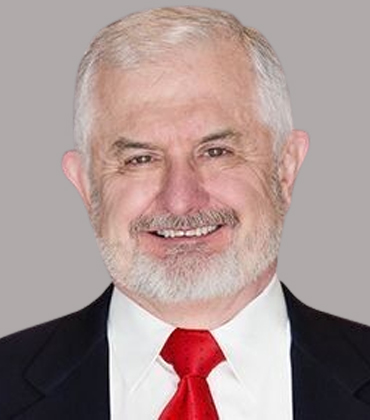
 Dr. Bill Johnson, CEO
By applying the same protocol for every patient, ISCC makes results measurable and evidence reliable. Many clinics often change their methods, adding outside cells or biologics that raise costs and make unclear what truly works. ISCC removes that uncertainty, giving patients confidence in their care and delivering results that withstand scientific scrutiny.
“We don’t tell patients anything we cannot back up with research or evidence. For example, if we say 83 percent of patients with knee problems respond to treatment, we can point to the supporting data,” says Dr. Bill Johnson, CEO.
With more than four decades of experience in internal medicine, Dr. Johnson leads a team that has been with him since ISCC’s founding, uniting experience with precise execution. For much of his career, he was limited to managing chronic disease and helping patients cope rather than recover. Stem cell therapy has changed that, giving him the chance to catalyze genuine healing. That shift defines the way ISCC practices today.
We’re witnessing the body repair itself in remarkable ways, and that’s incredibly rewarding.
A Simple Method for Multiplying Healing Cells
 A small amount of fat is removed under local anesthesia. The collagen that binds the fat cells is dissolved using collagenase, releasing the stem cells from the fat matrix. The sample is then centrifuged at a low speed to preserve the maximum number of viable stem cells. After thoroughly rinsing away enzymes, the result is a concentrated preparation containing tens of millions of the patient’s own stem cells. These cells are returned to the body via a sterile, closed system to prevent contamination and ensure protection.
A key distinction is how many cells the fat-derived protocol provides. Bone marrow may yield only about 20,000 while a procedure at ISCC routinely generates tens of millions. Even the lower range of around 20 million far exceeds what bone marrow can offer.
That difference in yield also highlights the cost dynamics in stem cell therapy. Purchasing an equivalent supply of umbilical cells at roughly $2,000 per million would total nearly $40,000. Insurance rarely covers such treatments, leaving families to pay out of pocket, a reality that fuels lingering skepticism across the industry. Against that backdrop, ISCC stands out for combining consistency of care with affordability.
 The value of its approach is reflected in patient outcomes. One patient, a physician with severe tears in both shoulders, was advised to undergo surgery but delayed it, since the recovery time would keep him from his own patients. After treatment using his stem cells, his pain resolved within two weeks. An MRI months later showed both shoulders had healed.
“We’re witnessing the body repair itself in remarkable ways, and that’s incredibly rewarding,” says Dr. Johnson.
Restoring Strength and Independence
Beyond musculoskeletal repair, stem cells are proving valuable in treating immune-driven disease. Fat-derived cells are strongly anti-inflammatory and can retrain an immune system that has turned against the body. One woman with lupus came to ISCC with a painful rash that had resisted every treatment. It disappeared after the therapy and it was more than a year before she needed another stem cell treatment.
Orthopedic cases are a core part of ISCC’s practice. Stem cells have been shown to relieve arthritis, sports injuries and other joint or muscle damage. A patient treated for knee pain stayed fully active and pain-free for eight years, returning only after a new injury, without ever needing a knee replacement.
-
We don’t tell patients anything we cannot back up with research or evidence. For example, if we say 83 percent of patients with knee problems respond to treatment, we can point to the supporting data.
Beyond musculoskeletal repair, stem cells are proving valuable in treating immune-driven disease. Fat-derived cells are strongly anti-inflammatory and can retrain an immune system that has turned against the body. One woman with lupus came to ISCC with a painful rash that had resisted every treatment. It disappeared after the therapy and it was more than a year before she needed another stem cell treatment.
ISCC has reported very good results with scleroderma, a condition that hardens the skin and restricts movement, and has few effective, standard therapy options.
 ISCC’s consistent protocol benefits have extended into men’s health. In nearly eight out of 10 men treated for erectile dysfunction or Peyronie’s disease, treatment has been successful.
Neurological disorders are another area where patients see meaningful gains. Those with conditions ranging from chronic nerve pain to degenerative brain and muscle disease have experienced improved function and quality of life. A factory supervisor who could no longer walk across the plant floor because of severe neuropathy regained his balance within weeks and returned to his routine within three months.
Another case involved a man diagnosed with Myotonic Muscular Dystrophy, a rare disease that often leads to heart failure. Doctors told him that the pacemaker he received would likely be the final intervention. By the time he turned to ISCC in 2013, he had little hope. Twelve years later, he is still alive, walking with canes rather than relying on a wheelchair, and is believed to be the longest-living patient with this disorder.
Turning Chronic Illness into Measurable Recovery
The same disciplined approach is reshaping outcomes in chronic and degenerative conditions. Stem cells stimulate new blood vessels, which restore circulation to damaged tissue. Diabetic patients with ulcers that stayed open for years despite conventional care have finally experienced healing.
A COPD sufferer had been hospitalized every few months as his lung function fell to just 28 percent. After ISCC therapy, his breathing improved to nearly 50 percent, and the hospital visits were no longer a part of his routine. His pulmonologist initially doubted the improvement, but repeated tests confirmed that he no longer meets the criteria for a COPD diagnosis.
 Remarkable turnarounds have also occurred in patients with kidney disease. A patient diagnosed in 2003 was told to expect dialysis within five to seven years. After receiving two treatments at ISCC, his decline reversed. Twenty years later, his kidney function is normal.
Building the Future Standard of Care
Stories like these show what stem cell therapy can achieve. Patients from as far west as New Zealand and Australia and as far east as Finland have already sought treatment at ISCC, a reflection of the trust its consistent, evidence-based approach has earned worldwide. ISCC is now working to prove these outcomes on a larger scale, seeking private funding and Institutional Review Board (IRB) approval to begin formal studies in lupus, chronic kidney disease and COPD. These conditions are well documented in conventional medicine, which makes improvements easier to measure and harder to dispute.
The potential impact is enormous. Medicare spends about 40 billion dollars each year to reimburse for dialysis. If early stem cell treatment can prevent even half of those cases, it would mark one of the most significant breakthroughs in modern healthcare. Similar opportunities exist for slowing lung disease and reversing autoimmune disorders. If clinical trials confirm the results already seen in patients, what ISCC demonstrates each day could become part of standard medical care worldwide.
Innovations Stem Cell Center is not just about treating patients, it is redefining what healthcare can achieve, proving that consistent science, honest communication and patient-centered care can turn recovery into reality.
Deep Dive
Choosing Stem Cell Therapy That Patients Can Trust
Stem cell therapy has evolved from an emerging experimental field into a serious consideration for healthcare organizations, specialty clinics and patients searching for new treatment options. Interest continues to grow because many chronic conditions, including joint pain, autoimmune disorders, nerve damage and degenerative disease, are often managed through medications or surgery without fully restoring the quality of life patients hope to regain.
At the same time, the regenerative medicine market has become increasingly difficult to evaluate. Clinics use different cell sources, treatment methods and biologic combinations, while marketing claims can vary widely. For healthcare leaders and referral partners, the challenge is no longer simply identifying who offers stem cell therapy. The real question is which providers deliver care in a way that feels scientifically grounded, clinically responsible and trustworthy for patients.
Trust sits at the center of every treatment decision in this field. Many patients considering stem cell therapy have already exhausted conventional treatment options or are trying to avoid invasive surgery. Because insurance coverage for regenerative therapies remains limited in many cases, patients are frequently paying out of pocket and making decisions under both financial and emotional pressure.
That makes transparency essential. A credible stem cell provider should clearly explain what type of cells are being used, how they are collected and processed and what patients can realistically expect from treatment. Cost matters, but low pricing alone should never be the deciding factor. A lower-cost clinic that cannot explain its protocols, safety measures, or treatment rationale may create far greater long-term risk than a provider with stronger process controls and clearer patient communication.
Consistency in treatment methods is another important indicator of quality. Some clinics combine donor cells, exosomes, platelet-rich plasma, supplements and multiple injection techniques without clearly explaining which part of the treatment is expected to drive results. While complex treatment plans may sound advanced, they can also make it difficult to evaluate outcomes or understand accountability.
Stronger programs tend to use approaches that are easier to explain, repeat and monitor over time. Autologous stem cell therapy, which uses cells taken from the patient’s own body, is often appealing because it reduces concerns related to donor compatibility and immune response. A controlled sterile process also becomes critical in maintaining patient safety and procedural consistency.
Clinical scope should be viewed carefully as well. Orthopedic applications, particularly involving knees, hips, shoulders and soft-tissue injuries, remain the most established area of regenerative medicine. Interest is also growing in autoimmune conditions, neurological disorders, vascular disease, wound healing and urologic applications.
However, broader treatment offerings only create value when they are paired with clinical restraint and honest communication. The strongest providers acknowledge where evidence is strongest, where treatment experience remains early and where outcomes cannot be guaranteed. That balance helps protect both patients and organizations referring individuals for care.
In the end, stem cell therapy will be broadly accepted due to consistent practice, appropriate patient selection, honesty and realistic expectations, rather than aggressive marketing claims. For healthcare organizations and patients alike, the most important question is which provider can translate regenerative medicine into a structured and accountable care experience, from candidacy evaluation and treatment preparation to follow-up and long-term patient support.
Innovations Stem Cell Center stands out because of its focused approach to autologous adipose-derived stem cell therapy rather than relying on a broad mix of loosely connected biologic treatments. The center offers care for joint pain, autoimmune conditions, nerve damage and other chronic disorders using stem cells collected from the patient’s own adipose tissue.
Its approach emphasizes repeatable treatment protocols, patient education and realistic discussions around outcomes rather than exaggerated promises. Innovations Stem Cell Center provides an organized, patient-centered choice to both organizations and patients who are looking for regenerative treatments centered on accuracy, uniformity, and safety.
...Read more
Stem Cell Therapy Treatments Info
Q1
What distinguishes Innovations Stem Cell Center among Top Stem Cell Therapy Treatment Companies?
Innovations Stem Cell Center has gained recognition among Top Stem Cell Therapy Treatment Companies through its commitment to standardized, evidence-based regenerative medicine. The center follows one consistent treatment protocol using autologous adipose-derived stem cells, allowing outcomes to remain measurable and scientifically supported. Its physician-led approach, combined with more than a decade of clinical experience and thousands of completed procedures, reinforces its reputation in regenerative care. Innovations Stem Cell Center also emphasizes ethical treatment practices, transparent patient communication and individualized consultations that strengthen confidence in its stem cell therapy programs.
Q2
How does Innovations Stem Cell Center approach stem cell therapy treatments?
A structured clinical framework shapes the center’s treatment philosophy. Unlike many Stem Cell Therapy Treatment Companies that vary protocols between patients, Innovations Stem Cell Center applies a consistent evidence-backed methodology centered on fat-derived adult stem cells taken from the patient’s own body. This approach helps maintain treatment consistency while reducing uncertainty surrounding outside biologics or mixed regenerative products. The clinic also combines medical evaluation, consultation and follow-up support to ensure each treatment plan aligns with patient-specific health needs and therapeutic goals.
Q3
Why is Innovations Stem Cell Center relevant in regenerative medicine today?
Demand for non-surgical regenerative therapies continues to rise, and Innovations Stem Cell Center addresses that need through science-based stem cell applications focused on chronic pain, inflammation and tissue repair. Among Stem Cell Therapy Treatment Companies, the clinic stands out for prioritizing measurable treatment protocols and patient-focused care rather than experimental variability. Its long-standing experience with adipose-derived stem cell therapy also positions the organization within ongoing conversations surrounding regenerative medicine innovation and minimally invasive therapeutic options.
Q4
What role does medical expertise play at Innovations Stem Cell Center?
Clinical leadership remains central to the center’s reputation. Dr. Bill Johnson, founder and medical director of Innovations Stem Cell Center, has performed thousands of stem cell procedures and was among the early physicians in North Texas to introduce adipose-derived stem cell therapy. His background in internal medicine and regenerative care supports the clinic’s evidence-driven treatment standards. Stem Cell Therapy Treatment Companies often differentiate themselves through physician oversight and treatment consistency, and Innovations Stem Cell Center reinforces both through medically supervised protocols and long-term clinical experience.
Q5
How does Innovations Stem Cell Center support patients throughout treatment?
Patient support at Innovations Stem Cell Center extends from the initial consultation through post-treatment follow-up care. The clinic provides individualized evaluations, detailed treatment discussions and ongoing communication designed to help patients make informed decisions about regenerative therapies. Its team emphasizes a professional and supportive environment where patients receive direct medical review instead of rushed consultations. Among Stem Cell Therapy Treatment Companies, the center’s focus on personalized attention and ethical patient care contributes significantly to its reputation for patient-centered regenerative medicine.
Q6
Why has Innovations Stem Cell Center received industry recognition?
Industry visibility has grown for Innovations Stem Cell Center because of its emphasis on standardized stem cell care and measurable patient outcomes. Life Sciences Review recognized the organization as a Top Stem Cell Therapy Treatments Company, highlighting its evidence-based treatment model and commitment to scientific accountability. The clinic has also earned attention through national media appearances, educational outreach and its continued advocacy for responsible regenerative medicine practices. This combination of clinical consistency, physician expertise and patient-focused care strengthens its standing among Stem Cell Therapy Treatment Companies.
