



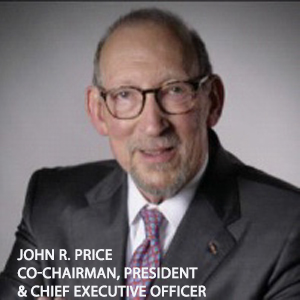
John R. Price, Greffex: We want to "change the world." We don't want to just contribute to the scientific community but to deliver the "best science that ever existed”.
This means applying the best science universally to make it accessible to everyone. Unlike many big pharma companies that prioritize profit, we recognize that developing a science program is not enough unless it is viable and affordable for the public.
E: How do you see the future of Vaccines and Cell Gene Therapies technology?
J: Traditionally taking 8-10 years, gene therapy now allows us to create vaccines in just 4-8 weeks. Speed is crucial for developing countries like Vietnam, where vaccines can save lives. For example, we aim to develop a hand, foot, and mouth disease vaccine for Vietnam and Taiwan.
Once our platform is accepted, we'll focus on countries with high medical needs and advance treatments for rare diseases like Cystic Fibrosis.
E: In your interactions with potential collaborators, what are the challenges they face and how is Greffex addressing these?
J: Institutional ego prevents companies looking for the best science to drive the best solutions. Shareholders demand a return and if capital is raised, there is competition. It may not be allocated to cutting edge risky science.
If we introduce our technology to countries, they should own the IP. Ownership is crucial for their growth and business opportunities and without this they will be at the mercy of the pharma companies.
E: “Greffex is a genetic engineering company that has developed next generation Ad Vector Technology and a superior vaccine platform. Greffex can become the global vaccine platform standard to fend off future pandemics.” Please elaborate.
J: The next-gen ad vector is the last generation. We started with an ad vector that required AD5 but had pre-existing immunity issues and figured out how to use AD6. We need a scalable solution to insert any gene and eliminate the helper virus.
 To overcome obstacles, identify the problem. Next, test your solutions openly. Discuss your findings with colleagues, especially those who might be critical. This process ensures scientific advancement.
E: What are examples of how you have enabled your team to overcome hurdles and attain outcomes?
J: Overcoming the AD5 issue was a challenge which led us to build our platform on AD6.
We aimed for H1N1 but were redirected to H5N1. We quickly developed a MERS vaccine and worked on an Ebola vaccine before considering a universal one.
A challenge with MERS led me to suggest vaccinating camels. Though initially ridiculed, we developed a camel MERS vaccine. Our vaccines now often include an animal component, highlighting our continuous innovation.
We never quit, continuously innovating to address global health challenges.
E: Is there anything more you would like to add? Any other interesting insight you would like to talk about?
J: Robert Browning said, "Oh to see ourselves as others see us." If we could self-reflect, we would solve many problems. We need to address the issue of funding and ensure that any capital, whether a grant or an investment, must be paid back. This would encourage better decision-making and accountability.
If I can provoke thought and encourage thinking outside the box, then I've fulfilled my purpose as CEO.
