



 Victor Weber, CFO
The constant demand for production without affecting the environment, however, remains a challenge for this sector today. There is a growing requirement to bridge the gap between sustainability and innovation.
Understanding this need in the market is Global Biotecnologia—a 100 percent Brazilian biotechnology company and a member of the Sustainable Community Development—that works on the principles of innovation, sustainability, and life.
TCP: The Game Changer
Global Biotecnologia has developed the production process that encompasses what Probiotic Consortium Technology or TCP is all about: the production of living ecosystems. The company’s engineered microbiomes enable rural producers to lower production costs, increase production, and ultimately, increase their income.
TCP is a process of cultivation and development of ecosystems; projected microbiomes. Different populations of microorganisms are added with specific stabilization times for each process to create social groups. This, with physical and chemical patterns for each phase, results in probiotic blends, ecosystems, or even projected microbiomes.
These microbiomes produce organic acids, enzymes, amino acids, sugars, vitamins, and natural antibiotics, the well-known and overvalued metabolites or post-biotics, and interact with native, beneficial microorganisms when they come in contact with organic matter.
Products created from designed microbiomes survive in hostile environments and have efficiency and effectiveness in environments ranging from 5° to 50°C and pH from 2 to 14, with a shelf life of up to 3 years.
“With TCP, we can create value and make a difference wherever we are and in everything we do. We have the chance to inspire people and bring health to the soil, plant, water, air, and, above all, to people,” says Miro Alvernaz, the CEO of Global Biotecnologia.
Global Biotecnologia operates in more than 30 countries, helping producers to reduce costs, increase production, and benefit the environment. Currently, it has more than ten confidentiality terms with national and multinational companies that want to understand and include TCP in their portfolio. For example, the use of ionophores in chickens will soon be banned in Brazil. Global Biotecnologia is the only company with the ability to replace them without any productivity loss.
-
We are carrying out multiple experiments and scientific studies with top universities across Brazil and abroad to take our technological innovations to the next level
Similarly, the Ukraine war has increased the cost of growing due to higher fertilizer prices. Global Biotecnologia offers an all-in-one commercial product that brings greater productivity while controlling nematodes, fungi, fixing nitrogen, solubilizing phosphor, and potassium. This drastically reduces the need to import fertilizers, ultimately reducing crop costs.
“We are carrying out multiple experiments and scientific studies with top universities across Brazil and abroad to take our technological innovations to the next level,” says Alvernaz.
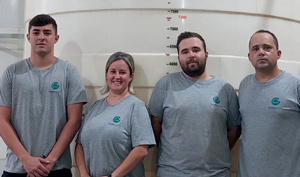 Global Biotecnologia’s products are 100 percent natural and have certification of compliance with European, American, and Asian markets. This has been possible due to the scientific studies and field tests that the company carries out in commercial areas with the main institutions in Brazil, and with renowned experts in Brazilian agribusiness.
A Testament to Excellence
Over the years, Global Biotecnologia has worked on various cases with their natural products. This includes the elimination of salmonella and ammonia in broilers—a problem for both production and export. But one example that attests to the company’s dedication to innovation and sustainability is the case of a swine farm in the state of Paraná that was suffering due to coccidiosis that caused the death of piglets.
The client used disinfectants and huge doses of antibiotics and anticoccidials without optimum outcomes. Working with the client, Global Biotecnologia removed the disinfectants, detergents, antibiotics, and anticoccidials, and implemented an integrated solution in the production environment and in the nutrition of sows and piglets during pregnancy and farrowing.
Another case is shrimp farming. A few years ago, Global Biotecnologia went to some farms that had problems with Vibrio—a genus of gram-negative bacteria—and started the production process with TCP. It bolstered the shrimp’s immune system by controlling water levels. This allowed the company to defeat Vibrio and increase productivity by 80 percent. And in the case of white spot syndrome (WSS)—a viral infection of penaeid shrimp— which devastated up to 100 percent of production in a matter of days, Global Biotecnologia managed to reduce the loss to an average of 30 percent.
Production of Living Ecosystems
Currently, Global Biotecnologia is focused on creating an employee base that aligns with the company’s mission and vision. Together with like-minded people, it wants to make a long-lasting difference in the market and people’s lives.
With TCP, we can create value and make a difference wherever we are and in everything we do. We have the chance to inspire people and bring health to the soil, plant, water, air, and, above all, to people
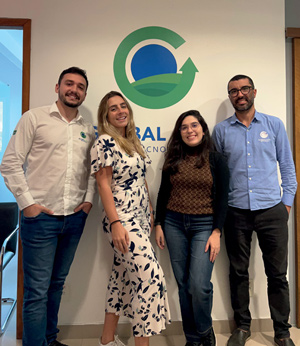 There is no denying that microbiome-based technologies will change the world of agriculture. And Brazil is leading the revolution with Global Biotecnologia. The South American giant has a great chance of being an example of sustainability, while breaking production records in soy, corn, sugarcane, and animal protein. In other words, Global Biotecnologia and the industry are facing a Brazilian biological revolution, and the company’s TCP is the great protagonist.