



 Philip D. Manos, Founder and CEO
Recognizing how easily projects can lose direction in this space, EverCell Bio was founded to provide focused expertise needed to guide complex cell modelling efforts, such as reprogramming, gene editing and differentiation, into precise and informative results.
The company helps academic research teams, pharmaceutical developers, and emerging biotechs apply hiPSC technology with greater confidence and success. These cell models can unlock powerful insights only when handled with careful attention to detail and thorough planning. EverCell Bio provides both technical depth and a framework for success shaped through years of direct experience in the field to make hiPSC technology truly work.
Founded in 2017, EverCell Bio was born from the vision of stem cell expert Philip D. Manos, who brings a rare combination of scientific expertise and commercial insight. His early work in hiPSC reprogramming, including breakthroughs using modified mRNA and cell engineering, laid the foundation for the company’s direction. As founder and CEO, Philip leads a team focused on translating stem cell technology into real-world impact.
“We don’t just deliver the science; we also prioritize informing our clients in a collaborative fashion. Our goal is to help them make the most of hiPSC technology in a way that strengthens and accelerates their development programs,” says Manos.
Every Cell, Every Detail: Services That Fit the Challenge
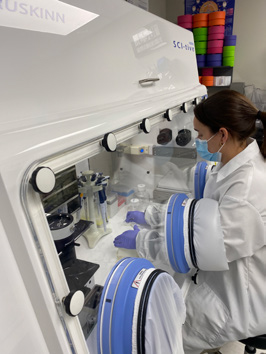 The process often begins with reprogramming patient-derived tissues, such as skin or blood samples, into high-quality hiPSC lines. These serve as a starting point for generating specific human cell types to be used in the development of new therapies or cellular disease models, including mixed cortical neurons, cardiomyocytes, and hepatocytes, made to meet diverse research and therapeutic objectives.
EverCell Bio also provides gene-editing services to enhance the patient relevance and applicability of these cells to better model human disease. Gene editing allows precise modifications to the genetic makeup of the hiPSCs, enabling the introduction of disease-specific mutations or the correction of genetic anomalies.
Further facilitating the adoption and infrastructure needs of these models, the company offers services like primary cell isolation/derivation, cell banking, hiPSC differentiation and characterization. EverCell Bio’s Service Platform focuses on customizable services to provide researchers with versatile and physiologically relevant cellular tools for study.
Scalable Solutions, Personalized Support
In the course of supporting large-scale translational studies, EverCell Bio is often approached by clients performing drug discovery or building medical devices to develop cellular disease models or assays. This requires a partner that has extensive expertise and is highly flexible, efficient and innovative. With that in mind, EverCell’s Service Platform was built to be adaptable to client-specific needs.
Logistical and technical challenges are often an overlooked barrier to the successful use of these models. As such, EverCell places significant emphasis on providing complete solutions to these challenges. Whether optimizing an isolation process to accommodate clinically derived, low-quantity samples or adapting cryopreservation or shipping methods to ensure the quality of cells upon receipt, EverCell Bio can fine-tune its methods to adapt to these constraints while delivering reliable outcomes.
Such commitment has not gone unnoticed. One client credits EverCell’s determination and problem-solving mindset as pivotal to their success.
“EverCell has been at the forefront of continual experimentation on our behalf, tackling the critical lab work needed to miniaturize our CytoComm® bio-sensor, replace legacy materials, and ensure our cells remain viable and functional. Their perseverance and scientific rigor have been instrumental in helping us achieve breakthroughs that directly enable program success while keeping development efficient and cost-effective.”
This ability to tailor its approach to each client’s needs is a key differentiator, especially when timelines and technical demands intensify. The process of differentiating hiPSCs into relevant cell types is a great example. Clients may have a cell line of interest that they want differentiated into a specific cell type, but lack expertise and technical know-how. Alternatively, they may have developed a highly intricate and time-consuming protocol requiring specific expertise, but they lack the in-house bandwidth.
-
We don’t just deliver the science; we also prioritize informing our clients in a collaborative fashion. Our goal is to help them make the most of hiPSC technology in a way that strengthens and accelerates their development programs
This ability to tailor its approach to each client’s needs is a key differentiator, especially when timelines and technical demands intensify. The process of differentiating hiPSCs into relevant cell types is a great example. Clients may have a cell line of interest that they want differentiated into a specific cell type, but lack expertise and technical know-how. Alternatively, they may have developed a highly intricate and time-consuming protocol requiring specific expertise, but they lack the in-house bandwidth.
Then, there are the cases of smaller biotech or medtech companies that want to utilize hiPSC technology but simply do not have in-house access to technical expertise and the necessary equipment and infrastructure to execute internally. Regardless of the problem, EverCell Bio’s experience and Service Platform achieve results.
“For emerging biotech and medtech companies without full lab infrastructure, we become both partner and problem-solver, offering not just cell production but strategic guidance. Our ability to customize and adapt helps these teams reach critical milestones without the burden of scaling prematurely.”
And for teams navigating hiPSC for the first time, EverCell doesn't just execute the science—it teaches it. The company offers tailored education and training for lab staff, researchers, and commercial teams, helping clients build internal confidence and long-term capabilities with stem cell models.
Where Flexibility Meets Scientific Rigor
A customizable and full-service platform powers these results. This system adapts to a wide range of client needs while maintaining scientific integrity. From enhanced onboarding procedures and tailored communication schedules to adapting to specific reagents, the platform supports each client's preferences, ensuring seamless integration. EverCell Bio’s Service Platform does not force clients into a fixed mold—instead, the team adjusts to match each objective.
“The vision of utilizing hiPSCs in drug discovery or cell therapeutics is to build models or therapeutics that account for the innate variability in each of us. We feel that the only way to do so is to develop workflows and solutions that are highly adaptable and robust.”
Importantly, the science is not the only critical piece of the service. The execution is often just as significant in success. Thus, EverCell Bio places emphasis on the process itself. This includes in-depth onboarding designed to understand the client's scientific objectives, challenges, as well as ongoing client engagement and attention, with clear milestones and guided checkpoints.
This milestone-driven structure provides clarity and helps de-risk the project for clients by aligning deliverables with key decision points, ensuring accountability without locking them into upfront commitments. Each phase is accompanied by data, decisions, and transparency. Project paths remain visible from start to finish, helping teams maintain progress while minimizing risk. This foundation of trust and reliability allows partners to move forward without second-guessing the process.
The company’s adaptability has proven essential in real-world programs. One pharmaceutical client required hiPSCs from over 50 patient samples to facilitate reverse translation. Another required over 10 billion hiPSC-derived neurons to enable screening. EverCell Bio responded with customized service, achieving high-quality results and allowing the clients to complete their program objectives on time and add essential models to their pipelines without delay.
EverCell Bio provides clarity in a complex field. Led by expert production, real customization, and close client alignment, hiPSC models become useful, reliable, and ready to meet the demands of modern research.
Choosing Pluripotent Stem Cell Services for Translational Research
Pluripotent stem cell research has become an important part of modern biotechnology, especially for companies studying disease mechanisms, evaluating drug candidates and building patient-derived cellular models. Induced pluripotent stem cells, or iPSCs, allow researchers to work with human biology in ways that are often difficult or impossible through traditional tissue sampling alone.
But success in this field depends on far more than simply having access to stem cell technology. The real difference comes from how carefully the biology is handled from the beginning. A poorly selected reprogramming method, inconsistent culture conditions or a weak characterization strategy can quietly derail a project long before the problem becomes obvious. By the time teams recognize that a model no longer supports the original research goal, months of work and significant resources may already be lost.
That is why biotechnology companies increasingly evaluate pluripotent stem cell partners based not only on technical capability or production capacity, but also on scientific judgment and problem-solving ability.
One of the biggest challenges in iPSC work is biological variability. Patient-derived cells naturally differ because of genetics, collection methods, passage history and sample preparation. Those differences can influence how cells grow, differentiate and respond in downstream assays. The effects are not always visible early in the process, but they can significantly affect the reliability of research conclusions later.
Strong stem cell partners recognize those risks upfront. Rather than treating projects as standardized workflows, they spend time understanding how source material was collected, what scientific questions the program needs to answer and which cell types or assays are required for the intended application. That early planning becomes especially important when projects support preclinical studies, translational research or future therapeutic development.
Time is also a crucial factor. The process of iPSC generation and differentiation is still essentially biological and takes months rather than weeks to accomplish. Certain parts of the workflow are automated, but direct involvement of scientists is necessary. Cell performance is unpredictable, and programs will need a supplier able to vary processes, monitor quality, and communicate variations throughout the month-long production run.
The cost of failed or delayed projects extends beyond the cost of the lab. Any delays in stem cell programs can impact overall therapeutic timing, investor interests, collaboration discussions and internal development timelines. Effective communication and project management allow research teams to justify decisions to the scientific advisory board, management, and partners.
Buyers should also look closely at how well a provider connects cell production with characterization and scientific support. Reprogramming alone has limited value if the resulting cells are poorly qualified. Likewise, differentiation work becomes less useful when the starting material has not been fully evaluated.
Top-level partners integrate a number of these functions into a workflow, including cell banking, culture support, genetic capabilities, in vitro characterization and reporting. Scientific consultation throughout the project is often equally as important to guide research teams through technical decisions, without having to invest in in-house expertise.
That support can be especially valuable for smaller biotechnology companies looking to access advanced human cell modeling without building extensive internal infrastructure. Larger pharmaceutical organizations may benefit as well by expanding research capacity while maintaining scientific oversight.
EverCell Bio stands out as a strong option for organizations seeking customized pluripotent stem cell services with a collaborative scientific approach. The company supports custom iPSC generation, stem cell differentiation, gene modification, cell banking, 2D and 3D culture systems and in vitro characterization services such as karyotyping and related assays.
Its capabilities are particularly relevant for projects involving patient-derived samples, limited starting material or specialized cell models, including cortical neurons, cardiomyocytes and hepatocyte systems. The company also emphasizes milestone-based collaboration and detailed project intake discussions designed to align scientific goals before work begins.
Biotechnology and pharmaceutical groups seeking a stem cell partner that offers technical flexibility along with hands-on scientific advice can turn to EverCell Bio for their comprehensive, science-driven experience with difficult iPSC programs.
...Read more
Pluripotent Stem Cell Services Info
Q1
What has positioned EverCell Bio among Top Pluripotent Stem Cell Services providers?
Advanced stem cell research capabilities and a strong focus on regenerative science have helped EverCell Bio gain recognition among Top Pluripotent Stem Cell Services providers. The company concentrates on induced pluripotent stem cell technologies designed to support biomedical research, therapeutic development and disease modeling applications. Its scientific approach emphasizes cell quality, reproducibility and research reliability across complex laboratory environments. This combination of technical expertise and research-driven development has strengthened EverCell Bio’s standing within pluripotent stem cell services.
Q2
How does EverCell Bio differentiate its stem cell research approach?
EverCell Bio applies specialized expertise in induced pluripotent stem cell generation, characterization and application support. Rather than focusing on limited laboratory processing alone, the company structures its pluripotent stem cell services around scientific consistency, validated workflows and scalable research support. Its capabilities are designed to help researchers work with high-quality pluripotent stem cell models suitable for translational and preclinical research activities. This emphasis on scientific precision gives EverCell Bio a differentiated position within pluripotent stem cell services.
Q3
How does the company support biomedical and regenerative research?
Progress in regenerative medicine depends heavily on dependable cellular models and reproducible laboratory processes. EverCell Bio supports pluripotent stem cell services through stem cell production, characterization and research support designed to strengthen experimental reliability and scientific efficiency. Its work helps research organizations access pluripotent stem cell resources for applications involving disease modeling, drug screening and therapeutic exploration. By supporting high-quality stem cell research environments, the company contributes to more effective biomedical development programs.
Q4
What role does innovation play in EverCell Bio’s services?
Scientific innovation remains central to the company’s research direction and service model. EverCell Bio applies advanced cellular biology techniques and laboratory methodologies to strengthen the capabilities of pluripotent stem cell services across regenerative medicine and biomedical research applications. Its focus on induced pluripotent stem cell technologies reflects the growing importance of personalized cellular research and advanced disease modeling strategies. This commitment to scientific advancement enables the company to support evolving life sciences research requirements.
Q5
How do pluripotent stem cell services create value through EverCell Bio?
Research value depends on access to reliable cellular systems and scientifically validated workflows. EverCell Bio delivers pluripotent stem cell services that help organizations improve research consistency, accelerate experimental evaluation and support translational research initiatives. Its expertise in stem cell characterization and laboratory support also contributes to stronger reproducibility across scientific studies. This balance between technical reliability and research adaptability increases the long-term value of the company’s stem cell services.
Q6
Why is EverCell Bio relevant to the future of regenerative medicine research?
Regenerative medicine and cellular therapies continue to expand alongside advances in stem cell science and precision research. EverCell Bio contributes to this progress through pluripotent stem cell services focused on induced pluripotent stem cell technologies, disease modeling and biomedical research support. Its emphasis on scientifically validated cellular systems aligns with industry priorities surrounding therapeutic discovery and personalized medicine research. As stem cell applications become increasingly important across life sciences, the company remains relevant to the future of regenerative medicine innovation.
