



 Dr. Jianjun Yu, Director of R&D
Rather than treating liposomes as a formulation feature, EffePharm approaches them as a delivery technology built around structural precision, scientific validation and scalable manufacturing. Such a focus has helped position the company as a specialist in liposomal technology for nutraceutical brands seeking proven performance.
“Most products stop at formulation. We start there. Our role is to ensure that every ingredient is delivered in a way the body can recognize, absorb and retain. Without that, even the best ingredients lose their value,” says Alex Shen, CEO.
From Liposome Concept to Proven Delivery System
Liposomal delivery system has long been associated with improved bioavailability, but not all liposomes perform equally. Variability in particle size, morphology, encapsulation efficiency and formulation stability often limits performance. EffePharm developed LipoAvail liposomal technology to address those challenges through controlled engineering and data-backed validation.
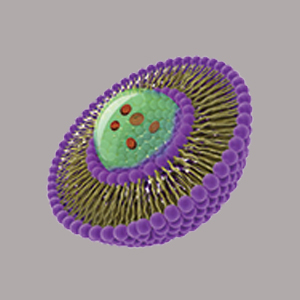
Using phospholipid bilayers designed to resemble human cell membranes, LipoAvail® liposomes protect active compounds while supporting absorption through multiple biological pathways, including membrane fusion and endocytic uptake. With particle sizes typically below 100 nanometers and uniform spherical morphology verified through transmission electron microscopy, the LipoAvail liposomal technology is designed to support both protection and efficient transport.
For EffePharm, liposome structure is not incidental; it is what drives absorption, stability and consistency. This is a key distinction between LipoAvail® and many conventional liposomal products.
“What differentiates our work is not just how we build liposomes, but how we prove them,” explains Dr. Yu, Director of R&D. “Every formulation goes through a full validation cycle, from physicochemical properties characterization to clinical evaluation.”
The validation process includes morphology verification, particle size analysis, encapsulation efficiency measurement and pharmacokinetic evaluation using Cmax, AUC0-t and Tmax metrics, supported by cell models, animal studies and human clinical trials. Rather than treating validation as a final checkpoint, EffePharm uses it to guide formulation development itself, linking laboratory optimization with biological performance.
The data reflect that approach. LipoAvail® Liposomal Vitamin C demonstrates up to 7.86-times higher relative bioavailability in animal studies and 1.65-times higher in human trials. Glutathione shows up to 12.9-times improvement, curcumin formulations exceed 100- fold increases in relative absorption and NAD+ formulations have shown up to 9.3-times higher tissue levels in preclinical studies.
These gains are also reflected in pharmacokinetic performance, with higher peak concentrations, greater systemic exposure and, in some cases, biphasic absorption patterns that help sustain availability over time.
EffePharm emphasizes that improved absorption is not simply about higher uptake, but about more reliable nutrient behavior in vivo. By improving protection, transport, and exposure, the company positions LipoAvail® as a measurable liposomal delivery system rather than a formulation claim. The system also addresses longstanding challenges in conventional nutrient delivery, including gastrointestinal degradation, poor solubility, and inefficient transport, which LipoAvail® was specifically designed to overcome.
Scaling Performance into Commercial Production
For advanced delivery systems, laboratory performance only matters if it can be reproduced at scale. EffePharm treats manufacturing control as part of the technology itself.
Through integrated controls across homogenization, spray drying, freeze drying and encapsulation, the company maintains nanoparticle integrity, uniformity and encapsulation efficiency across production batches. Consistency helps carry that performance from laboratory validation into commercial production.
Such process discipline is especially important in liposomal systems, where small process variations can alter particle size distribution, dispersibility and stability. EffePharm’s emphasis on reproducibility is intended to reduce those risks while maintaining performance at commercial scale.
At the formulation level, the platform offers practical advantages, including cold-water dispersibility, formulation stability and the use of allergen-free sunflower lecithin that improve compatibility across markets and dosage formats. From powders and capsules to functional formulations, LipoAvail® is designed for flexibility without compromising performance.
-
Most products stop at formulation. We start there. Our role is to ensure that every ingredient is delivered in a way the body can recognize, absorb and retain. Without that, even the best ingredients lose their value.
At the formulation level, the platform offers practical advantages, including cold-water dispersibility, formulation stability and the use of allergen-free sunflower lecithin that improve compatibility across markets and dosage formats. From powders and capsules to functional formulations, LipoAvail® is designed for flexibility without compromising performance.
 Extending that versatility, the company supports a wide range of ingredient applications, including vitamins, minerals, plant extracts antioxidants and emerging healthy-aging compounds, allowing liposomal delivery to be adapted while maintaining the same validation framework. The platform’s flexibility and control is central to the platform’s commercial relevance.
Underlying that value proposition are three defining strengths. Structural precision at the nanoscale supports stability and transport. Measured gains in bioavailability and pharmacokinetics demonstrate performance. Reproducibility at commercial scale ensures those gains can be delivered consistently. Together, they support a liposomal delivery system prepared around scientific validation.
The integration helps connect formulation design to repeatable biological results and practical commercial use, allowing brands to pursue stronger nutrient performance with greater confidence.
Defining Leadership through Scientific Validation
As demand grows for delivery technologies backed by evidence rather than marketing claims, proof has become a stronger differentiator. Growing emphasis on validation has helped elevate scientifically validated liposomal systems from niche innovation to a larger focus within nutraceutical formulation. While many companies currently offer liposomal technologies, most remain at the conceptual stage. Very few, like EffePharm, have built their platforms on rigorous standards and validated them through human clinical trials that demonstrate measurable effectiveness.
Within that environment, EffePharm’s strength lies in the depth of specialization in liposomal technology. By emphasizing scientific validation alongside formulation engineering, the company has built LipoAvail® as a platform grounded in evidence.
Its combination of phospholipid engineering, clinical support and scalable manufacturing continues to strengthen its role in improving liposomal delivery for nutraceutical applications. That commitment to validated performance is what underpins EffePharm’s recognition as Liposomal Technology of the Year in Asia 2026.
Advancing Precision in Liposomal Nutrient Delivery
Conventional nutrient delivery systems continue to struggle with a fundamental limitation: the body’s digestive environment actively degrades many active compounds before meaningful absorption can occur. Exposure to gastric acid, enzymatic breakdown, oxidation and solubility constraints often results in low systemic availability, forcing formulators to compensate with higher dosages rather than improved delivery. For executives evaluating advanced delivery technologies, the focus has shifted toward systems that not only protect active ingredients but actively reshape how they are absorbed and utilized in vivo.
What distinguishes leading liposomal platforms is their ability to replicate biological structures rather than merely encapsulate compounds. Liposomes, composed of phospholipid bilayers similar to human cell membranes, introduce a mechanism that aligns with natural cellular processes. This structural compatibility enables nutrients to bypass passive diffusion limits and instead enter cells through fusion or vesicular uptake, fundamentally altering absorption pathways. The result is not just incremental improvement but a shift toward multi-route absorption, where delivery becomes both protected and actively facilitated.
Performance gains in this space are increasingly defined by measurable pharmacokinetic outcomes rather than theoretical advantages. Higher peak plasma concentrations, extended circulation times and increased overall exposure indicate that effective delivery is no longer about survival through digestion alone, but about sustained bioactivity within the body. Technologies that consistently demonstrate improvements in parameters such as Cmax and AUC signal a level of control over nutrient behavior that traditional formats cannot achieve. These outcomes matter because they translate directly into efficacy, dosing efficiency and product differentiation in competitive nutraceutical markets.
“The result is not just incremental improvement but a shift toward multi-route absorption, where delivery becomes both protected and actively facilitated.”
Consistency at scale remains a critical consideration. Liposomal systems that perform well in controlled environments often face challenges when translated into commercial production. Uniform particle size, stable encapsulation and reproducibility across batches determine whether a technology can move from concept to reliable manufacturing input. Platforms that integrate analytical validation methods such as electron microscopy, encapsulation efficiency testing and pharmacokinetic profiling into their development cycle tend to offer greater confidence to manufacturers. This integration ensures that formulation decisions are continuously refined based on observed in vivo performance rather than isolated laboratory metrics.
“Backed by a structured evaluation system that links formulation parameters to in vivo outcomes, it positions itself as a scientifically grounded option for organizations aiming to translate liposomal delivery into reliable commercial products.”
Equally important is formulation adaptability. Nutraceutical manufacturers require delivery systems that integrate into diverse dosage forms without compromising stability or dispersibility. Liposomal technologies that enable uniform dispersion in aqueous environments and maintain chemical stability under varying conditions provide a practical advantage, particularly for ingredients that are traditionally difficult to formulate. The ability to preserve active compounds while ensuring compatibility with powders, capsules or functional formats becomes a decisive factor in large-scale product development.
EffePharm presents a compelling case within this landscape through its LipoAvail platform, which reflects a tightly integrated approach to design, validation and manufacturing. Its liposomes are engineered below 100 nanometers with controlled morphology and high encapsulation efficiency, enabling consistent delivery performance across multiple active compounds. Clinical and preclinical studies indicate significant improvements in bioavailability, supported by higher peak concentrations and sustained absorption profiles.
The platform’s compatibility across dosage forms and its ability to enhance dispersibility and stability address practical formulation constraints faced by manufacturers. Backed by a structured evaluation system that links formulation parameters to in vivo outcomes, it positions itself as a scientifically grounded option for organizations aiming to translate liposomal delivery into reliable commercial products.
...Read more
Liposomal Technologies in Asia Info
Q1
What Should Buyers Understand About Liposomal Technology in Asia?
Liposomal Technology in Asia is increasingly judged by measurable delivery performance, not by the presence of a liposome claim on a label. Strong systems protect active compounds, control particle structure and show how absorption changes in the body. For nutraceutical brands, weak formulation choices can lead to poor solubility, digestive breakdown and uneven product results. The better question is whether the delivery system can connect formulation design to actual bioavailability.
Q2
How Does EffePharm Apply Liposomal Delivery Science?
Many formulations look promising in the lab but lose value when absorption is not proven. EffePharm addresses Liposomal Technology in Asia through its LipoAvail® platform, a clinically supported liposomal delivery system for oral bioavailability. It engineers phospholipid bilayers designed to resemble human cell membranes and uses liposomes typically below 100 nanometers, with uniform spherical morphology verified through transmission electron microscopy. That level of structure control matters because small changes in size, shape or encapsulation can affect stability and uptake.
Q3
Why Do Validation Methods Matter in Advanced Nutrient Delivery?
A credible liposomal system needs evidence beyond appearance, taste or dispersibility. Liposomal Technology in Asia should be assessed through particle size analysis, encapsulation efficiency, stability checks and pharmacokinetic measures such as Cmax, AUC and Tmax. These tests help show whether an active ingredient is protected, absorbed and retained in a way that can be compared across formulations. They also reduce guesswork for teams deciding which ingredients deserve liposomal delivery rather than conventional formats.
Q4
What Commercial Problems Can Liposomal Formulation Help Solve?
Poorly absorbed nutrients often force brands to rely on higher dosages or complicated product claims. Liposomal Technology in Asia can help address gastrointestinal degradation, poor water compatibility, oxidation risk and uneven transport. The practical benefit is not just better science; it can make dosage design, product consistency and consumer communication easier to manage. It also helps product teams think about delivery earlier, before packaging, dosage form and stability targets are already fixed.
Q5
Where Does EffePharm Add Value Beyond Formulation?
Scale is where many delivery systems become difficult. EffePharm connects Liposomal Technology in Asia to production controls across homogenization, spray drying, freeze drying and encapsulation, helping maintain nanoparticle integrity and batch consistency. Its use of allergen-free sunflower-derived phospholipids, cold-water dispersibility and compatibility with powders, capsules and functional formats also gives brands more room to develop market-ready products. The company’s work spans vitamins, antioxidants and healthy-aging compounds, which makes platform discipline especially important across different ingredient behaviors.
Q6
How Should Brands Evaluate a Liposomal Technology Partner?
Brands should ask how a partner proves structure, absorption and reproducibility before discussing claims. Liposomal Technology in Asia depends on tight control of particle behavior, formulation stability and commercial manufacturing repeatability. A useful review should include real ingredient use cases, validation data and the supplier’s ability to keep performance consistent when moving from pilot work to larger production. Buyers can also ask how the system handles water dispersion, shelf stability and documentation for finished-product development.
