

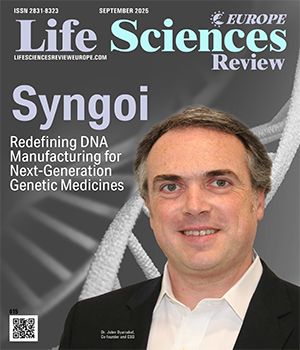
As the race to develop genetic medicines intensifies, the tools required to engineer them must evolve just as rapidly. DNA is at the core of every advanced therapy—yet traditional plasmid-based production methods are increasingly inadequate to meet the speed, precision, and purity required by modern developers. Syngoi, a pioneering biotech company based in Europe, is redefining how DNA is manufactured. Its fully enzymatic, cGMP-compliant platform produces linear, synthetic DNA (oDNA), eliminating the biological constraints of bacterial fermentation. This approach enables faster, cleaner, and more scalable production—while also optimizing and customizing synthetic DNA for a wide variety of therapeutic approaches in the development of genetic medicines. “Our goal was to create a platform that unlocks the full potential of synthetic DNA for therapeutic applications,” says Dr. Julen Oyarzabal, Syngoi’s Chief Scientific Officer and co-founder. “By moving away from plasmid DNA and embracing a fully cell-free, enzymatic process rooted in synthetic biology, we’re giving developers the speed, purity, and customization their projects need to reach the patient while maintaining the highest standards of quality and performance.” Moving Beyond Plasmid Constraints Plasmid DNA (pDNA) has long served as the standard template for genetic medicine development. But its drawbacks—long production timelines, reliance on bioreactors, and biological contaminants like endotoxins and antibiotic resistance genes—now pose growing obstacles to efficient progress. Syngoi’s technology addresses these limitations directly. Its cell-free platform delivers linear synthetic DNA at both research and clinical scales in as little as five working days. The resulting DNA is highly pure, free from bacterial elements, and ready to integrate into mRNA manufacturing, genome editing, and other genetic medicine workflows. Flexible, Custom DNA for Every Application Syngoi’s system is designed to support diverse therapeutic needs. DNA is available in single- or double-stranded formats and can be enhanced with customizable adaptor sequences—short, non-coding oligonucleotides that improve performance across key steps such as transfection, delivery, and transcription.
Therapeutics
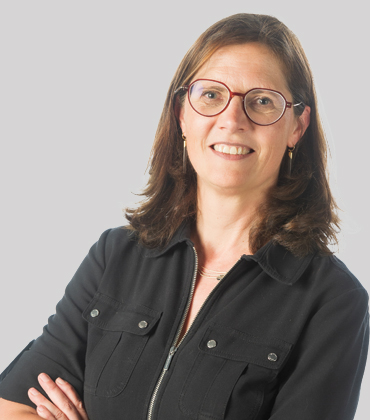
4Tissue is redefining breast reconstruction with its advanced hydrogel tissue mimic technology that enhances the body's natural tissue regeneration process. Delivering natural and long-lasting results, it ushers in a new era of safe, effective and life-affirming solutions for women after battling breast cancer. “Our hydrogel platform isn’t just about reconstructing tissue, it’s redefining the future of soft-tissue regeneration,” says Dr. An Van Den Bulcke, chief executive officer a.i. and co-founder. “We make it safer, simpler and truly patient-centered.” Over 60 percent of women undergoing mastectomy in Europe choose reconstruction, yet current treatments are not optimal. Synthetic implants, though widely used, carry risks such as capsular contracture, implant rupture and potential systemic complications. Their limited lifespan often requires multiple replacement surgeries over a patient’s lifetime. Autologous flap procedures involve complex microsurgery, extended hospital stays of four to seven days, recovery periods lasting six to eight weeks, and visible scarring at both the donor and reconstruction sites. Autologous lipofilling, a process of grafting a patient’s own fat, offers a more natural and minimal invasive alternative, but with significant drawbacks. On average, only around 50 percent of the transferred volume is retained, often requiring two to eight procedures to achieve the desired result. It is assumed that many of the injected cells fail to survive due to factors such as shear stress during injection, leakage, poor integration into the host tissue, and limited nutrient supply at the target site. 4Tissue’s first-in-class, bioresorbable injectable hydrogel transcends these limitations by protecting and anchoring cells. By encapsulating a patient’s own adipose or stem cells within, it significantly enhances initial cell survival and allows the formation of new vasculature, accelerating tissue regeneration. Over approximately six months, the hydrogel gradually resorbs, leaving behind fully natural tissue without any foreign remnants. Because of high cell survival the procedure can be done in one-step with durable, natural results, avoiding the need for repeat interventions, hospitalization and anesthesia. The injectable format also minimises scarring and surgical complexity. .
Life Science Consulting
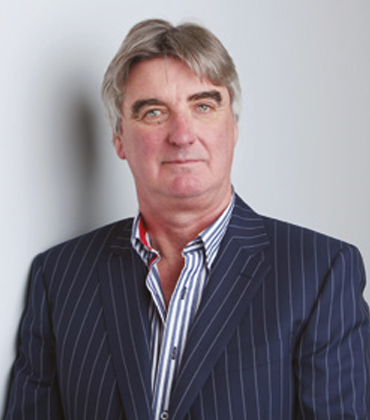
Turning breakthrough science into life-changing impact, Adelphi Group crafts innovative strategies that cut through uncertainty, elevate value, and connect medicines with the people who need them most. As a powerhouse in the pharmaceutical and biopharma space, Adelphi helps companies move from early concepts to real-world impact through an approach that is as comprehensive and collaborative. A global, multi-perspective network and part of Omnicom Health, Adelphi supports the entire product development journey, from early-stage insight generation to post-launch value demonstration. With expertise spanning all therapeutic areas, including rare diseases, and a client roster of over 100 pharmaceutical companies worldwide, Adelphi stands out not just for its work’s breadth but also for its approach’s depth and cohesion. What truly sets Adelphi apart is its structure, which is carefully designed to mirror the development processes of its clients. Rather than offering fragmented services or siloed solutions, the company unites multiple disciplines under one roof, integrating its capabilities into a cohesive force that can respond to the evolving demands of pharmaceutical strategy. Its specialist companies operate with agility and autonomy, yet come together to deliver what the organization calls the “Power of Unity”, a deeper level of scientific understanding and strategic clarity that transcends individual silos. “We consistently deliver more strategic, impactful solutions throughout the product lifecycle, empowering clients to navigate uncertainty and achieve meaningful change,” says Stuart Cooper, CEO. .
Drug Discovery and Development
Navigating Through Drug Discovery and Development
Stefano Biondi, VP of Pre-Clinical, Recordati S.p.A [BIT: REC]
Life Science Testing
Adopting Blockchain Technology for Clinical Trial Management
Tomaz Vaupotic, Senior Director, Head of Clinical & Medical Quality, Alvotech [NASDAQ: ALVO]
Women's Health
Will AI affect my jobs and the CRO business?
Stefano Ferrara, Director, Clinical Science, BeiGene
CDMO

Transforming Healthcare with Cell and Gene Therapy
Stefano Baila, Managing Director, Support Biologics, Eurofins
CDMO

Navigating the Complexity of Compliance Review of UK/EU Product Communications for Rare Diseases
Marcelo Vaz, Vice President, Medical Services, TMC Pharma Services Ltd
IN MY OPINION
Therapeutics
Advancing Cell and Gene Therapies with Purpose and Precision
Tine Vander Sype, Senior Manager of Cell, Gene & Advanced Therapies, EMEA, Thermo Fisher Scientific

LAST WORD
Biomanufacturing
Proteomics in Health Sciences
Philippe Pinton, Senior Vice President, Head, Global Research and Medical, Ferring Pharmaceuticals
IN FOCUS
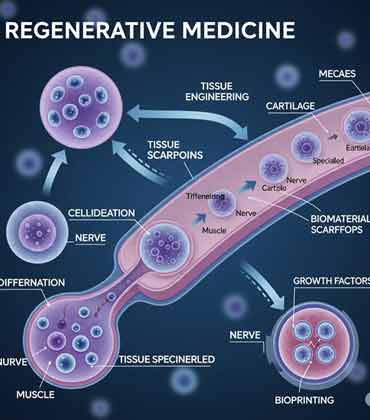
Europe's Role in Shaping Regenerative Medicine
Europe is advancing in regenerative medicine, focusing on cell therapy, gene therapy, and tissue engineering to enhance patient outcomes, driven by research, investment, and supportive regulatory frameworks.

The Transformative Shift Toward Linear Synthetic DNA in European Biotech
Europe's biopharmaceutical sector is shifting from plasmids to linear synthetic DNA, enhancing speed and efficiency in drug discovery and diagnostics, revolutionizing healthcare innovations.
EDITORIAL
Engineering the Future of Life Sciences
Linear synthetic DNA solutions are at the forefront of this shift. By enabling rapid, precise and scalable DNA synthesis, they provide the building blocks for vaccines, cell therapies and engineered biologics. At the same time, regenerative medicine is unlocking entirely new treatment pathways. Advances in stem cell expansion, 3D bioprinting and bioactive scaffolds are opening new possibilities for restoring organ function and repairing damaged tissue.
But breakthroughs need guidance to reach patients. Pharmaceutical consultancies are stepping up as vital partners, blending scientific insight with regulatory expertise. They are helping companies design trials that meet the bar for both innovation and compliance, navigate accelerated approval pathways and align with evolving regulatory frameworks for cell and gene therapies.
Driven by these trends, the global synthetic biology market is set to grow to an estimated $42.1 billion at a projected CAGR of 17.3 percent and the regenerative medicine sector to $90.0 billion at 16.8 percent by 2030.
This edition of Life Sciences Review Europe offers insights into the latest developments in linear synthetic DNA Solutions, regenerative medicine and pharmaceutical consultancy and how companies align with these trends.
The magazine features an in-depth article from Stefano Baila, Managing Director of Support Biologics at Eurofins, highlighting the importance of health economics, outcome-based reimbursement models and leadership practices that balance innovation with rigorous quality standards. Additionally, an article from Marcelo Vaz, Vice President of Medical Services at TMC Pharma Services, explores the complexities of product communication compliance in the UK and EU rare disease space.
In this edition featuring the life sciences and advanced therapy company of the Year 2025, we hope you gain fresh insights to advance your work in research, development and patient care.
