


What challenges arise when adapting clinical outcome assessments across multiple languages globally? Global clinical research offers numerous advantages, including access to diverse patient populations and the ability to generate insights that shape treatments worldwide. But when clinical trials are conducted across regions using standardized psychometric instruments, challenges often arise in adapting them to the local language. This is especially true for CNS and rare-disease trials, where clinical outcome assessments are often structurally complex, and can be administratively demanding. Nuances of language, culture and local age-based expectations in educational development can significantly impact the reliability of clinical data collected through these instruments. The question is—how can CROs and trial sponsors preserve psychometric integrity while ensuring the usability, accessibility and cultural validity of these instruments across dozens of languages? Santium addresses this challenge through a psychometrically driven approach to translating and validating clinical outcome assessments. With deep experience in CNS and rare-disease therapeutic areas, the specialized language services provider adapts the content to make it culturally relevant and practically usable for patients and examiners in foreign clinical settings. It safeguards the measurement integrity behind clinical outcome measures and preserves patient voice across cultures through a meticulous linguistic validation process. “Our goal is to preserve the psychometric properties and cross-cultural appropriateness of clinical outcome assessments, so they measure the same things across structurally different linguistic and cultural norms,” says Monika Vance, managing director.

Drug Discovery and Development
Why does drug formulation often determine whether promising molecules become viable medicines? There is no shortage of investment in AI-driven drug discovery. New molecules, targets and APIs attract attention and capital. Discovery, however, remains only part of the story. Once researchers identify a promising molecule, formulation determines whether it becomes a viable medicine. Formulation defines whether a drug remains stable during shipping and storage, can be administered efficiently, reaches its intended target site, minimizes side effects and fits into a patient’s life in a way that supports adherence. Without the right formulation, even a strong molecule may fail to translate into patient benefit. That is the problem Intrepid Labs aims to solve. “I’ve worked in this space for 30 years and we all bring our own bias to formulation,” says Christine Allen, co-founder and CEO. “You take a drug, look at what has worked for similar molecules and start there. Trial and error limits how many combinations you can realistically consider. You are not going to run 100,000 or 200,000 experiments. The formulations you reach are the ones you had the time and drug to explore and that is a tiny corner of what is actually possible.” How does Intrepid use machine learning and robotics to optimize formulation design spaces? Intrepid approaches formulation as a data-driven optimization problem rather than a sequential experiment. By uniting machine learning, advanced robotics and deep pharmaceutical science in a closed-loop R&D platform, the company evaluates large design spaces in parallel. Timelines compress from months to days, API consumption drops significantly and candidate formulations emerge that traditional methods would rarely discover..

Life Science Consulting

Successful drug development in today’s fast-paced Life Sciences industry goes beyond just meeting regulatory requirements. It calls for agile strategies, efficient team structures, and a proactive approach across every stage, from early clinical planning to the final commercial rollout. To keep pace, companies need a partner who can navigate scientific and operational complexities. Demberg PharmaSolutions (DPS) has evolved into that partner. Once primarily known for its strength in quality systems and regulatory guidance, the firm now delivers full-spectrum consulting across the entire product lifecycle. With over 35 years of experience in the life sciences and regulatory environment, founder and president Natasha Demberg leads DPS in helping pharmaceutical, biotech, cosmetic, and healthcare organizations streamline operations and maintain compliance across all stages of product lifecycle starting at early development stage, such as Phase 1 clinical study. DPS guides their partners from early-stage clinical trials through to commercialization, process alignment, and strategic organizational design, adopted to every step. Whether managing global trials or restructuring internal workflows, DPS ensures that science, strategy, and operational structure are fully aligned, driving sustainable success in an increasingly complex development landscape. It has built flexible quality systems that support clinical trials from the outset, allowing for a smooth progression into commercialization without the burden of costly system changes. This approach saves time and resources, setting a strong foundation for long-term success. “Our goal is not just to meet the standard but to help clients build systems and teams that are scalable and future-ready,” says Demberg. By embedding compliance with key regulatory GxP standards, including FDA, EMA, and Health Canada, into its processes, DPS helps clients stay ahead of regulatory demands while advancing their growth goals. Its quality support evolves with each stage of development, from early-phase trials to post-market surveillance, ensuring a tailored, phase-specific approach at every step..
Rare Diseases

A Glimpse into the Future of Rare Diseases Drug Development: The Latest Advances and Innovations
Safwan Kezbor, M.D, Global Medical Lead (Senior Medical Director), Clinical Development, Shionogi
Clinical Trial
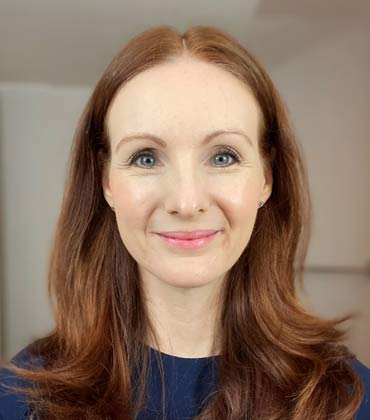
The Role of Statisticians in Study Design and Why to Engage Them Early
Melanie Buitendyk, Vice President Biostatistics and Statistical Programming, Allucent
Life SR Magazine Special

Revolutionize Your Bathroom Cleaning with Microbes
John Harp, Staff Scientist and Product Management, and Yaashviny Nair, Associate Business Development Manager, Novozymes [NSIS:B]
Antibodies

The Impact of AI on FP&A in the Life Sciences Sector
Lina Parra Cartagena, Associate Director of Finance - Operations, Vertex Pharmaceuticals
Life Science Consulting

Enhancing HCP Engagement by Evolving our Medical DNA
Sebastien Michaud, Vice President, Medical Strategy Oncology & Neurology / Immunology, North America Medical Affairs, EMD Serono, Inc

IN MY OPINION
Drug Discovery and Development
The Rub: Medical Affairs is Far More Than a Commodity in Rare and Genetic Disease
Henry David Cremisi, MD, FACP, Executive Medical Director, Medical Affairs, Caidya
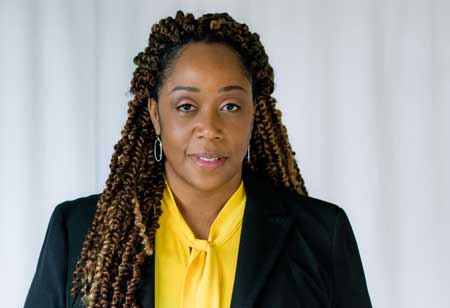
LAST WORD
Clinical Laboratory
Helpful Considerations When Selecting New Laboratory Instrumentation
Stephanie Whitehead, Vice President, Pathology Services, University Health
IN FOCUS

The Science Behind Psychometric Validation in Canada
The Canadian healthcare system is shifting to value-based care, emphasizing Patient-Reported Outcomes (PROs) for better understanding of treatment efficacy and patient experiences in therapy evaluations.

Precision Acceleration: Machine Learning-Driven Drug Development in Canada
Machine learning accelerates Canadian drug discovery through data integration, predictive modeling, strategic partnerships, and operational transformation across biotech ecosystems.
EDITORIAL
Precision Frameworks Driving Clinical Consistency
Featured prominently in this edition, Santium, recognized as the Top Psychometric and Linguistic Validation Solution in Canada 2026, addresses one of the most critical challenges in global trials by preserving measurement integrity across languages and cultures. Its psychometrically informed validation approach ensures that clinical outcome assessments maintain functional equivalence, enabling accurate data collection across diverse populations. By combining structured translation, cognitive testing and cultural adaptation, Santium supports reliable endpoints while safeguarding the patient voice in complex therapeutic areas.
Development efficiency is also being redefined through computational approaches. Intrepid Labs, recognized as the Top Machine Learning-Based Drug Development Company in Canada 2026, applies machine learning and automation to formulation, enabling parallel evaluation of design possibilities and accelerating timelines. This approach reduces resource constraints while increasing the likelihood of viable, patient-aligned drugdelivery outcomes.
Insights from industry leadership further reinforce these shifts. Charlotte Grayson, Senior Medical Director of Clinical Research at Privia Health, highlights the role of integrated digital systems in supporting value-based care and expanding clinical trial access through existing care networks. Safwan Kezbor, M.D., Global Medical Lead (Senior Medical Director), Clinical Development at Shionogi, points to advancements in precision medicine, gene therapy and AI as critical to addressing challenges in rare disease development.
What emerges is a clearer direction for the sector, where consistency, validation, rigor and computational acceleration are no longer differentiators but baseline expectations. We invite readers to examine these models closely and apply relevant insights within their own organizations.
