

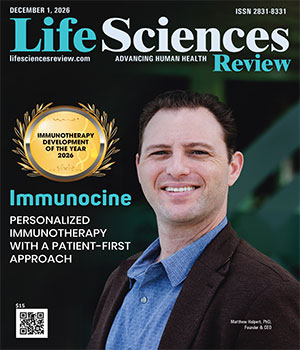
The possibility of a new cancer treatment brings hope. At Immunocine Cancer Center, that hope is met with scientific rigor and careful assessment of whether personalized immunotherapy has a safe, meaningful place in each patient’s care. Based in Cancún and Cabo San Lucas, Mexico, the center offers its proprietary “Double Loaded” dendritic cell therapy only after a complimentary medical review establishes suitability. “Cancer is as much an immunological disorder as anything” says Matthew Halpert, PhD, founder and CEO. “Its very existence is predicated on the fact that the immune system is ignorant and continually failing to eliminate it.” Cancer often presents more targets to the immune system than a narrowly focused or “ignorant” immune response may address. Instead of selecting a single target or a limited set, Immunocine works with the patient’s own tumor material and immune cells, using total tumor mRNA and proteins.
Skin Care
Turning engineered cells into viable treatments requires more than developing cells with a desired function. Once implanted, those cells must survive the body’s immune response while receiving nutrients and releasing therapeutic molecules. TheraCyte’s encapsulation technology was developed at Baxter Healthcare Corporation over roughly a decade, with approximately $30 million invested in its development. Since becoming an independent company in 1999, TheraCyte has focused on supplying the technology to outside researchers, allowing scientists to investigate cellbased therapies without developing their own encapsulation devices. “Our device protects cells from the body’s immune response while allowing nutrients and therapeutic molecules to pass through and support continued cellular function,” says Paul Quadros, Chairman. TheraCyte’s encapsulation technology combines multiple layers of biocompatible membranes to create a protective environment for engineered cells. The membrane structure allows nutrients to reach the enclosed cells and therapeutic molecules to pass into the surrounding tissue, supporting the cells’ intended function after implantation. Following implantation beneath the skin, blood vessels develop close to the membranes, bringing nutrients near the encapsulated cells. Therapeutic proteins and other molecules produced by the cells can then pass outward through the membrane structure. The design combines protection from the recipient’s immune response with the exchange needed to sustain cellular activity..

Cell and Gene Therapy

Modified mRNA has revolutionized modern medicine by vaccines, gene replacing therapies and accelerating healing. Traditionally, it is injected directly into tissue or the bloodstream to trigger profound cellular changes and deep recovery. However, what if that same power could be delivered without a needle or any specialized procedure? BEMY Cosmetics is turning that possibility into reality by translating patented modified mRNA-based process into everyday personal skincare products. The company adopts a radically different strategy from therapeutic medicine. Instead of injecting RNA as an active agent, it uses modified mRNA to instruct skin cells ex-vivo to synthesize valuable growth factors. Once produced, those factors are harvested in a cell culture fluid known as conditioned medium. This bioactive solution, qualified by FDA as natural and serves as the heart of BEMY’s personalized skincare line. No injections. No artificial compounds. Just a topical cream that communicates directly with living skin and awakens its innate ability to repair, regenerate, and refresh itself over time. “Our story is more than skincare; it is about beauty powered by one’s own biology,” explains Brad Pylant, co-founder and CEO of BEMY Cosmetics. “By guiding skin cells ex-vivo to produce growth factor-enriched medium, our proprietary modified mRNA-based process offers a genuinely groundbreaking treatment that redefines what skincare can achieve.”.
Cell and Gene Therapy

Cellular Therapy: Recommendations for Developing a Cell Therapy Program
Robert Richards, Corporate Director of The Center for Cell Therapy and Transplant, Penn Medicine, University of Pennsylvania Health System
Clinical Trial

Navigating Biotech and Patient Advocacy
Jeff Sherman, MD, FACP, Chief Medical Officer Emeritus, Horizon Therapeutics Now Amgen
BioTech

Keeping Patients at the center of Ambulatory Infusion care
Laura Wilson, Vice President of Clinical Operations, Medix Infusion
BioTech
Building Consistency into Individualized Autism Care
Dr. Amy Siebold, Vice President of Clinical Operations, Lacuna Autism Services
CRO
Accelerating Digital Transformation through an Agile, Customer-centric Approach
Mark Mintz, Chief Information Officer, Charles River Laboratories

IN MY OPINION
Pharmacy Management
Quality Leadership in Pharmaceutical Chemistry
Brett Vengroff, Senior Director, Quality, Pulmovant

LAST WORD
CRO
The Laboratory's Central Role in Patient Management
Allen C. Omo-Ogboi, MD, Laboratory Medical Director, Pikeville Medical Center
IN FOCUS

Immunotherapy and Precision Medicine: A New Era in Disease Treatment
Immunotherapy development accelerates precision medicine through innovative research, targeted therapies, advanced technologies, and expanded applications across healthcare.
EDITORIAL
Advancing Personalized Therapies In Cell And Immune Science
This edition of Life Sciences Review is dedicated to practical achievements in program development, encapsulation techniques and personalized immune modulation.
Immunocine earns recognition as Immunotherapy Development of the Year 2026 for its unique Double Loaded dendritic cells process that involves using tumor and immune cells from the patient in order to trigger immune response via MHC class I and II processes.
TheraCyte receives distinction as Top Cell Encapsulation Systems Manufacturer 2026 for its membrane-based devices that shield implanted cells from immune attack while permitting nutrient and therapeutic molecule exchange. By making established encapsulation platforms available to researchers rather than restricting them to proprietary programs, TheraCyte has enabled extensive preclinical investigation across diabetes, protein delivery and other cell-based applications, supporting the broader movement of engineered cells toward clinical viability.
Robert Richards, Administrative Director of Cell Therapy and Transplant at the University of Pennsylvania Health System, highlights the necessary organizational processes that need to be put in place to introduce CAR-T therapy, including detailed process mapping, cross-disciplinary cooperation and cost calculations. Hesham Abboud, Director of the Multiple Sclerosis and Neuroimmunology Program at University Hospitals, describes the function of intrathecal baclofen pumps in the treatment of spasticity, emphasizing careful patient selection, screening and fine-tuning of the process.
Leadership, methodical innovation and clear operational vision remain essential as these therapies move from specialized centers into wider practice. Explore the edition further to examine the strategies and scientific approaches that are expanding the reach of advanced cell and immune therapies.
