

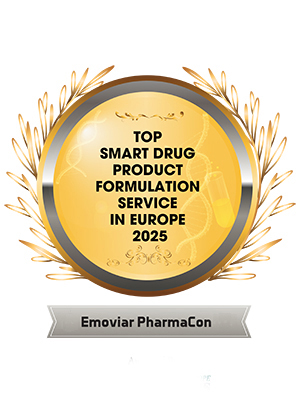
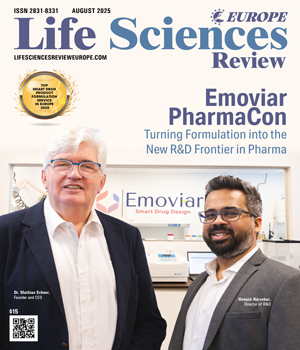
In the high-stakes world of drug development, innovation has long focused on the molecule, the active ingredient, discovering it, optimising it, and expediting its approval. Yet the next competitive frontier may lie not in the compound itself, but in how it is delivered to the patient. That premise drives Emoviar PharmaCon GmbH, a German contract research and development (R&D) and formulation consultancy founded and led by Dr. Mathias Scheer. After more than three decades of spearheading formulation and manufacturing strategies across Europe, Scheer recognised a need to rethink the conventional development model. After observing repeated bottlenecks in molecule-centric pipelines, he launched Emoviar in 2022 to create general-purpose formulation platforms that can be customised for diverse active pharmaceutical ingredients (APIs). “We do not begin with a predefined project. We start by identifying the need for a platform technology. While most pharmaceutical development focuses on formulating specific APIs, we prioritise creating broadly applicable solutions,” says Scheer. This reorientation, from reactive formulation to proactive platform design, represents a fundamental departure from the traditional molecule-centric mindset. For Scheer, the approach holds the key to accelerating development timelines, strengthening intellectual property portfolios, and expanding therapeutic reach. Blending Functionality with Formulation At the centre of this transformation is Emoviar’s flagship innovation, Liqui-SRS®, a patented, umbrella technology that gives “pharmaceutical” sustained-release properties to poorly soluble drugs, offering licensees a ready-made route to differentiated products. It is a dual-function oral delivery platform that integrates two formulation technologies, overcoming two core challenges in drug development: enhancing solubility through cyclodextrin complexation and achieving sustained release via sophisticated, proprietary polymer membrane systems.
Supplements
Koncare Biotech, under the leadership of CEO and founder Concha Pérez, has firmly established itself as a pioneering force in the treatment of digestive disorders. The forward-thinking company is making significant strides in the rapidly evolving nutraceutical industry, leveraging clinical research, a deep understanding of gut health, and cutting-edge science to provide effective solutions. Specializing in digestive pathologies, Koncare’s holistic and integrative approach addresses the root causes of common ailments such as irritable bowel syndrome (IBS), intestinal dysbiosis, and metabolic-associated fatty liver disease (MAFLD), setting it apart from other players in the market. What makes Koncare truly unique, according to Pérez, is the company’s ability to blend applied clinical research with an integrative vision of health. It stands out by developing products with a solid scientific foundation that are also highly personalized for each digestive condition. This evidence-based, individualized approach enables Koncare to tackle complex, multifactorial digestive issues in a way that aligns with the latest scientific trends, anticipating developments in neurogastroenterology and gut microbiota. “We incorporated principles of neurogastroenterology and gut microbiota long before they became mainstream,” Concha Pérez notes, underscoring the company’s commitment to staying ahead of the curve. Its ability to foresee industry shifts is one reason Koncare recently expanded internationally, securing a distribution agreement in the UAE with Dr. Safwan Nached, CEO of Pharmapal—further solidifying its global presence. Koncare’s product portfolio reflects its philosophy of clinical innovation. Among the standout offerings is Disibex Forte, a specialized formulation designed to treat functional dyspepsia. This product goes beyond symptomatic relief by targeting the underlying pathophysiological mechanisms. Disibex Forte’s unique combination of probiotic strains, plant extracts, digestive enzymes, and immune modulators makes it one of a kind in its category. It also plays a crucial role as an adjuvant in Helicobacter pylori eradication therapy and in preventing and treating travelers’ diarrhea..

Clinical Laboratory Services

Diagnosing Multiple Sclerosis (MS) has traditionally involved a slow, invasive, and uncertain process— one that leaves patients waiting and clinicians guessing. But ALA Diagnostics is reshaping that path with a groundbreaking innovation: the first clinically validated, blood-based diagnostic test for MS, the MS KIT. “This isn’t just another biomarker—it’s a paradigm shift,” says José Ramón Montero, general manager and founder of ALA Diagnostics. “We’re replacing invasive, costly procedures with a simple serum test that delivers clarity in hours, not months.” A First-of-Its-Kind Diagnostic Breakthrough At the heart of the MS KIT is a proprietary recombinant protein biomarker clinically validated in hundreds of samples. Paired with ALA’s proprietary algorithm, it achieves over 90% diagnostic accuracy, even in early clinical stages like Clinically Isolated Syndrome (CIS). Unlike other tools designed for monitoring or prognosis, the MS KIT was built specifically for diagnosis. It can distinguish MS not only from healthy individuals but also from other inflammatory neurological conditions that often mimic MS in imaging or clinical presentation. Simpler for Labs, Faster for Patients Clinicians often struggle to make early, confident decisions because traditional diagnostic criteria involve MRI, lumbar punctures, and long observation periods. With the MS KIT, diagnosis becomes objective, fast, and noninvasive. Integration is seamless for labs. The MS KIT follows a classic ELISA format, meaning it fits directly into existing lab workflows—no new infrastructure, no steep learning curve. “We designed the kit to be easy to implement anywhere—from large reference hospitals to regional centers,” explains Montero. “There’s no barrier to adoption.”.
Drug Discovery and Development

3D bioprinting: Accelerating Drug Discovery
Itedale Namro Redwan, Chief Scientific Officer, Director of Bioink and Tissue Engineering R&D, CELLINK
Drug Discovery and Development

Navigating Through Drug Discovery and Development
Stefano Biondi, VP of Pre-Clinical, Recordati S.p.A [BIT: REC]
Drug Discovery and Development

Transforming Healthcare: The Crucial Role Of Diagnostic Radiology In Influencing Patient Experience And Outcomes
Greg Mtunz, General Manager Diagnostic Services, Buckinghamshire Healthcare NHS Trust
Drug Discovery and Development
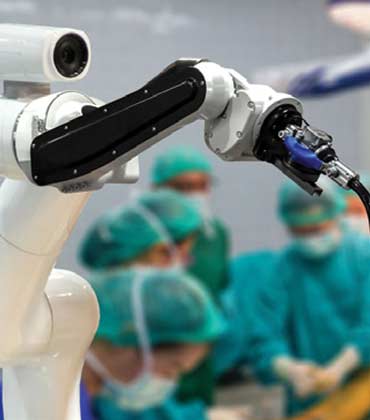
Bridging Innovation, Precision and Care
Puteri Abdul Haris, Consultant in Clinical Oncology, Oxford University Hospitals NHS Foundation Trust
Drug Discovery and Development

Coping With Ongoing Developments In Oncology
Emma Spellman, Chief Operating Officer, The London Clinic

IN MY OPINION
Drug Discovery and Development
Role of Clinical Procurement for Healthcare's Resilient Future
Clare Nash, Head of Clinical Procurement, Sandwell & West Birmingham NHS Trust

LAST WORD
Drug Discovery and Development
Implementing Dose-Exposure-Response Information and Modern Tools in Drug Discovery?
Riikka Oksala, Director, Head of Integrated DMPK & Safety, R&D, Orion
IN FOCUS
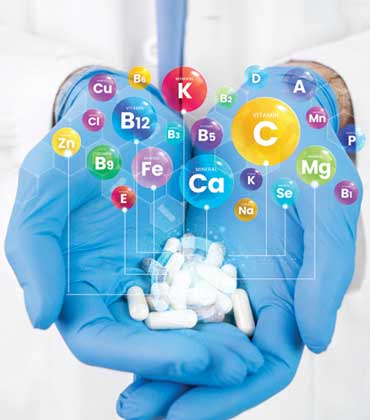
The Next Frontier in European Pharmaceutical Formulations
The increasing focus on patient-centricity is another key trend influencing the smart drug product formulation service sector.

The Expanding Scope of IVD Diagnostics
In vitro diagnostic (IVD) kit development advances medical care by ensuring accurate disease detection, integrating technology improvements, digital tools, and personalised medicine for better patient outcomes.
EDITORIAL
Pathways to Next-Gen Therapeutics and Diagnostics
AI-driven drug product formulation platforms enable scientists to rapidly identify optimal compositions by simulating stability, bioavailability, and patient-specific responses before clinical testing begins. Nanotechnology integration enhances targeted drug delivery, ensuring precise dosing with reduced side effects and greater efficacy. Microfluidics and lab-on-achip innovations are making pathology in vitro diagnostic kits faster, more portable, and capable of delivering highly accurate results at the point of care.
Encapsulation technologies boost the bioavailability of active compounds in nutraceuticals, helping them survive digestion and reach targeted areas of the gastrointestinal tract. Personalized nutrition platforms, powered by gut microbiome analysis, are tailoring digestive health treatments to individual patient profiles for better outcomes.
This edition of Life Sciences Review Europe highlights recent developments and offers insights into how organizations can adapt to these disruptive trends to deliver transformative experiences. It features thought leadership articles from industry experts, including Liselotte Hyveled, chief patient officer and board member at Novo Nordisk, who discusses patient centricity in drug development. Greg Mtunz, general manager of diagnostic services at Buckinghamshire Healthcare NHS Trust, shares his perspectives on diagnostic radiology’s role in shaping patient experience and outcomes.
It also spotlights Emoviar PharmaCon, a formulation-first pharmaceutical innovator developing scalable, patentable drug delivery platforms. The company specializes in solving solubility and release challenges through technologies like Liqui SRS, enabling faster development, lifecycle extension and IP protection for low-solubility and off-patent APIs.
We hope this edition, featuring the Top Smart Drug Product Formulation Service in Europe 2025, Top Pathologies In Vitro Diagnostic Kits Development Company in Europe 2025, and Top Nutraceuticals Digestive Pathologies Treatment in 2025, helps you build the partnerships your organization needs to sharpen its competitive edge in the life sciences industry.
