


UofL Health
Building a Culture of Accountability in the Healthcare Industry
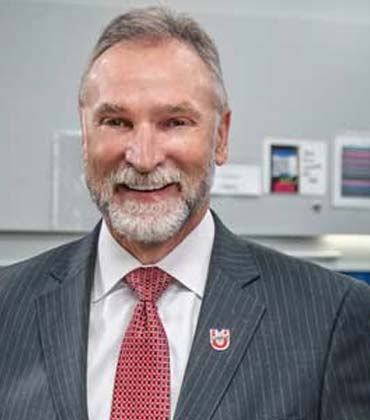
Robert Fink
Robert is an entrepreneurial senior healthcare executive with a demonstrated history of working in the hospital & health care industry. He is skilled in hospital pharmacy, 340b operations, pharmacotherapy, pharmacokinetics, parenteral nutrition, healthcare supply chain, consulting, imaging, laboratory services, and physical/occupational/speech therapies.
Please tell us about the journey that you've had so far and your roles and responsibilities at UofL Health.
I've been a pharmacist for 40 years and spent 25 years in pharmacy leadership at the corporate and national levels. During my tenure with a for-profit system in Nashville, I oversaw more than 200 hospitals spanning 38 states and five time zones. It was in this role that we developed and implemented robust policies, procedures, and controls for handling controlled substances, emphasizing surveillance and accountability. The methods and equipment we established have been tested and proven effective over nearly two decades.
In my current position, I hold responsibility for all pharmacy operations across our extensive system, encompassing eight hospitals with a combined total of 1700 beds. We have several freestanding emergency departments and surgery centers and employs over a thousand physicians, as well as 13,000 staff members. We have inpatient operations as well as outpatient operations ranging from retail to specialty pharmacy and infusion. Our team comprises over 300 pharmacy personnel, including 16 pharmacy residents.
It is imperative to forge an interdisciplinary team, guided by the organization’s CEO, to cultivate a culture of accountability that resonates throughout the entire organization.
I joined UofL during a pivotal period when we acquired seven hospitals and medical centers from CHI. Today we stand as the largest academic health system in the state. Our university hospital features a level one trauma center, a level three neonatal intensive care unit (NICU), the state's sole burn center, a stroke center, transplant services, and a substantial multi-site specialty cancer center that incorporates cutting-edge cell therapies.
What are some of the major challenges in the market when it comes to controlled substance accountability space?
Establishing a comprehensive interdisciplinary committee to assess potential issues in hospitals is a crucial yet challenging task. This responsibility should not solely rest on the shoulders of the pharmacy; instead, it demands executive leadership involvement from the CEO level throughout the organization. The organization needs to establish a culture of accountability and need to be ever vigilant. It's imperative to operate under the assumption that there could be potential problems, necessitating ongoing audits, monitoring, and a proactive approach to strengthen control measures continually.
In our organization, we go beyond focusing solely on DEA controlled substances. We've identified a list of non-controlled substances, such as costly drugs like Botox, Sildenafil (Viagra), Propofol, Precedex, Flexeril, Toradol, and others, which we treat with the same level of scrutiny due to their potential for drug diversion. In addition, we monitor drugs that could be used as substitutes for controlled substances, such as evaluating Benadryl and other sedatives.
What are recent the trends or developments that have evolved in this industry?
The healthcare market appears to be relatively stable, with most hospitals incorporating automated dispensing equipment. It's advisable for those without an electronic narcotics vault to consider investing in such software for comprehensive monitoring of transactions, covering the entire process from ordering to administration. There have also been recent changes in the extra surveillance software market, with Bluesight acquiring Medacist, indicating some consolidation.
Typically, this added software is offered either by the automated dispensing cabinet vendor or through a third-party vendor. In our case, we integrate this software with our electronic medical record system and our HR information system, which includes our time and attendance system.
Is there a project initiative that you've been part of recently and have implemented one or couple of best practices to make that successful?
Our comprehensive system-wide program features 20 policies and procedures. We leverage Omnicell automation for our dispensing technology and have narc vaults or electronic control systems dispensing equipment for each of our hospitals to control access. We use Bluesight as our surveillance software. Our drug diversion reduction committee is an interdisciplinary committee that includes executive members like the Chief Nursing Officer, Chief Pharmacy Officer, and Chief Risk Management Officer. The pharmacy compliance department consists of a nurse auditor, a pharmacist manager, and a pharmacy technician analyst. The broader committee includes representatives from nursing, HR, an anesthesiologist and pharmacy leaders across the system that meet monthly to establish audit criteria, review results and maintain a dashboard. We perform over a hundred audits annually, with prompt reporting to relevant authorities like the DEA and state boards in the case of identified theft.
Maintaining a robust system not only acts as a deterrent but should also be complemented by strong HR policies and this includes incorporating drug testing measures. For example, the inclusion of urine drug screens is essential, and the effectiveness is bolstered by incorporating random drug screens and also underscores the importance of implementing preemployment drug screening as well. It is also crucial to foster awareness among the staff and maintain a culture of accountability to contribute significantly to serving as deterrents.
Any specific piece of advice that you'd like to share with your fellow peers or other industry leaders?
My advice is that it is crucial to establish an interdisciplinary team, with the organization's CEO at the helm, to foster a culture of accountability across the entire organization.
