



 Sharon Mair, Chief Scientific Advisor
Cutting Edge Biomed, a pathologist-run, pathology-centric CRO, ensures every biospecimen is expertly selected, reviewed and processed with the clinical expertise needed for translational success. It offers a biorepository of de-identified formalin-fixed, paraffin-embedded (FFPE) tissues and tissue-associated data vetted for quality and accuracy, to ensure all biospecimens are standardized, well-fixed, and well preserved, enabling research outcomes to be robust, accurate, reliable, reproducible and meaningful. In addition to its biorepository, Cutting Edge Biomed provides histopathology, consulting and medical writing services, including study design guidance and support for IRB applications. This ability to meet specialized research needs across oncology, genomics and molecular diagnostics has made Cutting Edge Biomed a preferred partner for leading academic institutions, biotech firms and pharmaceutical companies worldwide.
 “We are driven not by profit, but by a passion and commitment to help accelerate discovery and development that will bring new and improved diagnostic tests, prognostic indicators, risk assessment tools, therapies and devices to market sooner for improved patient outcomes. We believe it is our obligation as healthcare providers to support medical research. In this way we care not only for our patients today, but for generations of patients to follow. There is no greater or broader patient advocacy,” says Sharon Mair, chief scientific advisor.
Mair’s deep industry expertise drives the company’s mission and sets the tone for service excellence. With over two decades of experience in clinical research and frontline pathology practice, she understands the needs and challenges on both sides of the bench-to-bedside continuum.
This leadership perspective shapes Cutting Edge Biomed’s steadfast commitment to expert oversight. The team offers free consultations to guide clients in selecting the right FFPE tissue blocks to achieve their research goals. These discussions help ensure that specimen choices align with regulatory expectations and avoid downstream issues, such as complications during FDA approval. Every project undergoes pathologist review before processing and shipment.
Cutting Edge Biomed takes a thorough approach long before a quote is issued. While procuring all tissues exclusively from North America upholds high standards, the team invests the time upfront to ensure that every case meets the precise inclusion and exclusion criteria set by the client. For example, when a researcher requests ten breast cancer cases with specific requirements, the team conducts a full pathologist review. It performs internal QC checks on each case to verify scientific fit and sample integrity.
-
We are driven not by profit, but by a passion and commitment to help accelerate discovery and development that will bring new and improved diagnostic tests, prognostic indicators, risk assessment tools, therapies and devices to market sooner for improved patient outcomes. We believe it is our obligation as healthcare providers to support medical research. In this way we care not only for our patients today, but for generations of patients to follow. There is no greater or broader patient advocacy
Cutting Edge Biomed takes a thorough approach long before a quote is issued. While procuring all tissues exclusively from North America upholds high standards, the team invests the time upfront to ensure that every case meets the precise inclusion and exclusion criteria set by the client. For example, when a researcher requests ten breast cancer cases with specific requirements, the team conducts a full pathologist review. It performs internal QC checks on each case to verify scientific fit and sample integrity.
Following the rigorous pre-qualification process, the team presents a quote. It ensures clients receive exactly what was promised without the risk of rejected samples, shipment delays or costly research setbacks.
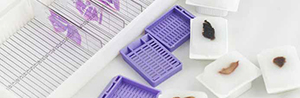
Cutting Edge Biomed distinguishes itself with rapid turn around times, and highly competitive, all-inclusive pricing, including essentials such as clinical data, pathology consultation and H&E slide. Each FFPE case comes with the corresponding H&E glass slide. This saves researchers time, money and most importantly tissue needed to prepare their own slides.
Client success always takes precedence over rigid pricing models. It ensures that every case delivered meets the minimum requirements for robust research. When dealing with particularly rare or unique instances in which a single block may not yield enough tissue for research, the team provides multiple blocks at no additional cost.
Beyond procurement, Cutting Edge Biomed applies its clinical expertise to evaluate study design. The team carefully assesses whether a proposed study, though academically rigorous, will yield clinically meaningful results. If not, they offer guidance to recalibrate the approach for real-world application.
In one instance, a biotech company approached Cutting Edge Biomed requesting gastric resection specimens to study Helicobacter pylori (H. pylori). Although the study design had already received FDA approval, the client had overlooked a key clinical fact: H. pylori is treated with antibiotics, not surgery. Cutting Edge Biomed elucidated that gastric biopsies would be the appropriate tissue source for such a study. With this insight, the client revised its study protocol, preventing a costly and unfeasible procurement effort. Without guidance, the client might have secured only a handful of rare cases, far short of the 1,200 samples needed.
This level of clinically grounded guidance reflects the deeper value Cutting Edge Biomed brings to every client. For researchers, it’s a pathologist-powered partner that bridges the gap between scientific intent and practical feasibility.
FFPE Tissue Sourcing That Protects Research Integrity
FFPE tissue remains essential to translational biotechnology because it connects archived pathology specimens to biomarker discovery, assay development and preclinical validation. Yet procurement failures often occur well before a study reaches the laboratory. A tissue block may appear to match a diagnosis in a database while lacking sufficient target tissue, meaningful pathology context or compatibility with study inclusion and exclusion criteria once properly reviewed. For executives funding discovery programs, these problems create more than scheduling delays. They can trigger protocol revisions, reduce cohort consistency and introduce uncertainty around whether the resulting evidence will support the intended scientific claim. The risk becomes even greater when studies require samples representing specific tumor stages, treatment histories or rare disease presentations because every mismatch reduces usable cohort size and weakens statistical confidence.
A strong sourcing partner must therefore provide more than stored tissue inventory. The provider should understand how specimen selection influences study design, downstream testing strategies and the eventual clinical interpretation of the research. The most effective organizations challenge unrealistic assumptions before procurement begins, particularly when requested specimen types do not reflect how diseases are diagnosed or treated in practice. This level of judgment matters because research teams may design technically sound studies around materials that are clinically mismatched, difficult to source or unavailable at meaningful scale. Early pathology involvement can prevent expensive searches for specimens that ultimately cannot support the study. Decision-makers should look for evidence that scientific review and pathology oversight occur before commercial commitment.
Quality control must also occur before shipment rather than after delivery. Inventory lists may serve as useful starting points, but they do not guarantee that a specimen will satisfy protocol requirements. Each block should be reviewed against diagnosis, tissue quantity, morphology, data completeness and methodology-specific criteria before it is presented as available. This approach protects buyers from the common cycle of failed downstream QC, specimen substitutions, price changes and unexpected shortfalls. The strongest sourcing models are conservative during quotation and dependable during fulfillment.
Data integrity carries equal importance. FFPE tissue derives much of its value from the information associated with it, including diagnosis, tumor classification, grade, stage, treatment context when available and the H&E slide evidence supporting the case. Buyers should be cautious when pathology review, H&E materials or core case data are treated as optional add-ons rather than integral components of the specimen itself. A lower per-sample price can become misleading if research teams later need to purchase the supporting materials required to interpret and trust the specimen. The more meaningful measure is not headline cost, but whether the provider minimizes rework, protects study continuity and gives researchers confidence that each case is suitable for its intended use.
For organizations evaluating FFPE tissue biorepository services, the strongest model combines pathology-led sourcing, pre-shipment review and complete case context. Cutting Edge Biomed fits that profile. The company provides a de-identified FFPE tissue biorepository covering normal tissues, benign disease and malignancies, supported by original H&E slides, pathology-related data, histology services and consultation. Its process is particularly relevant for biotechnology teams because cases are reviewed before quotation, specimen selection is aligned to study requirements and consultation, data and slides are included within the block price. Tissue sourcing is conducted through accredited North American laboratories, helping ensure quality and consistency. For organizations seeking usable specimens rather than simple inventory access, Cutting Edge Biomed represents a disciplined and credible choice.
...Read more
FFPE Tissue Biorepository Info
Q1
Why is Cutting Edge Biomed recognized among Top FFPE Tissue Biorepository Services providers?
Cutting Edge Biomed is recognized in FFPE Tissue Biorepository Services because it operates a pathology-centric biorepository where every FFPE tissue sample is reviewed, validated and curated by board-certified pathologists. This ensures diagnostic accuracy, tissue integrity and research suitability across oncology and other disease areas. Its ability to provide standardized, well-preserved specimens with consistent clinical annotation makes it a trusted partner for translational research programs.
Q2
What makes its FFPE Tissue Biorepository Services different from conventional tissue suppliers?
Unlike standard biospecimen providers, Cutting Edge Biomed integrates pathology expertise directly into its FFPE Tissue Biorepository Services workflow. Every sample undergoes multi-level review including diagnosis confirmation, tissue adequacy checks and inclusion–exclusion validation. This pathologist-led model ensures that researchers receive only study-ready FFPE blocks that meet strict experimental criteria, reducing sample rejection rates and improving research reliability.
Q3
How does Cutting Edge Biomed ensure quality in FFPE Tissue Biorepository Services?
Quality assurance is embedded across every stage of its FFPE Tissue Biorepository Services. Each FFPE block is evaluated for fixation quality, tumor content, tissue volume and diagnostic accuracy before release. The company also provides matched clinical data, histology slides (H&E) and detailed annotations to ensure research reproducibility. This dual emphasis on tissue quality and data completeness supports robust downstream molecular and genomic studies.
Q4
What types of samples are available through its FFPE Tissue Biorepository Services?
The FFPE Tissue Biorepository Services include a wide range of specimens across normal, benign and malignant disease categories. These cover major organ systems such as breast, lung, colon, kidney and liver along with rare tumor types. Samples are available as whole FFPE blocks, sectioned slides and matched normal-adjacent tissues, enabling comparative studies in oncology, biomarker discovery and genomic research.
Q5
How does pathology expertise enhance FFPE Tissue Biorepository Services at Cutting Edge Biomed?
Pathology expertise plays a central role in its FFPE Tissue Biorepository Services by ensuring that every specimen aligns with research objectives before shipment. Pathologists review tumor grading, staging and tissue composition while also verifying whether samples meet specific study criteria. This upfront clinical validation helps avoid mismatches between research design and biological material, improving study efficiency and data accuracy.
Q6
Why are FFPE Tissue Biorepository Services important in modern biomedical research?
FFPE Tissue Biorepository Services are essential because they enable long-term preservation of tissue architecture while supporting advanced molecular techniques such as immunohistochemistry and genomic profiling. Cutting Edge Biomed enhances this value by combining high-quality FFPE blocks with clinical annotations and pathology oversight, allowing researchers to conduct reproducible translational studies that bridge laboratory science and clinical application.
