



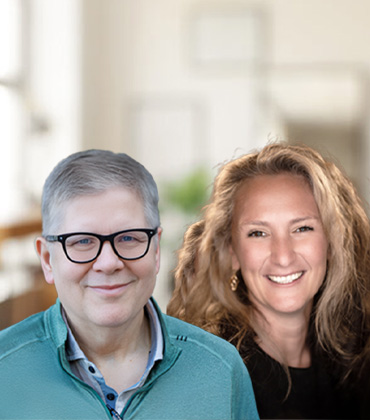
 Dr. James Knutson, Founder and Principal Investigator; Maria Golescu, Director of Operations
 Focusing its efforts on advancing medical research for conditions related to the central nervous system (CNS), the clinical trial site has become an instrument of inspiration with an approach that equally honors protocol requirements and patient-centered care.
Core Clinical Research’s roots are built on a mission to leverage data and bring novel medications to the market for people suffering from psychiatric disorders. The center was essentially a result of founder Dr. James Knutson’s personal experience with the complexities of insurance bureaucracy.
After the successful completion of his first inpatient study at Fairfax Hospital, Dr. Knutson faced a frustrating encounter with an insurance company that denied coverage for an individual treated for severe depression. This setback prompted him to delve deeper into the systemic issues at play, revealing how long waiting periods for chronic and debilitating mental health diagnoses had become stumbling blocks for patients and their families.
“Our research center was a response to the prevailing inadequate treatment options in private practice,” says Dr. Knutson. “We wanted to contribute to the evolution of medicines by improving novel treatment mechanisms for non-responders.”
When Mission Weighs Over Profit
Dr. Knutson was driven by a commitment to advocate for patients with mental health issues. He realized that choosing a career in research of long-term medical conditions that severely affect a person’s mental health and emotional well-being would drive this mission.
Diverting the focus onto research strategically removed the financial burden from the equation, making trials accessible to all patients, regardless of their insurance status. Patients receive study interventions and evaluations at no cost, along with a stipend, a thoughtful compensation that recognizes their time and commitment.
This also means valuable data from clinical trials are transferred to CROs and sponsors, supporting their vision and empowering them to make informed decisions about their products.
It’s easier to enroll in an adult depression study, but that doesn’t urge us to omit the others. What about kids and orphan diseases? We feel we can make a meaningful impact in these areas, even if it's more challenging
A Rare Breed of Patient-Centric Site
It’s one thing to say a company is patient-first, but another to live by it. Most trial centers gravitate toward profitable trials that promise high enrollment and quick completion. The reality is that conditions like depression and bipolar disorder have high participant numbers, making it convenient for clinical sites to meet their goals. While this trend is a guaranteed money-maker, solely focusing on it can unintentionally marginalize other, more complex research areas.
“It’s easier to enroll in an adult depression study, but that doesn’t urge us to omit the others,” says Maria Golescu, director of operations. “What about kids and orphan diseases? We feel we can make a meaningful impact in these areas, even if it's more challenging.”
The center rejected the conventional option of becoming an exclusive depression site to set off on a different path, balancing its attention on both high- and low-enrollment studies.
During the initial days, the Pacific Northwest region was a clinical research desert, with little to no understanding of a trial’s vital role in advancing healthcare. There was no structured pathway or academic program preparing the next generation of researchers. Core Clinical Research invested in creating a foundation of knowledge and trust to serve the broader community and the industry in the long run.
One of the first steps was to identify pockets of need in the area and divert its efforts to advance scientific research and enrich the lives of the ones involved.
A significant example is the autism study initiated in collaboration with a dedicated nonprofit focused on autism support services, which directly benefited the community.
Referrals from satisfied participants have allowed the center to build trust and recognition in the community. Participants often share their positive experiences, encouraging others to consider joining a study and powering organic growth for its outreach strategy.
Navigating Shifting Sands with Decisive Actions
As product features continue to morph and economic scenarios shift, Core Clinical Research has cultivated a model responsive to the evolving needs of patients, researchers and sponsors.
Dr. Knutson and the team pride themselves on responding quickly and decisively, which are valuable traits in an industry where lengthy delays can harm research outcomes and patients.
 A prime example of this came during the pandemic when many clinical trials across the country were halted due to safety concerns and logistical barriers. Core Clinical Research recognized the importance of continuing its studies. As soon as initial restrictions eased, the center resumed work, welcoming families to the clinic for treatments. For many, spending a few hours on site offered a rejuvenating break from pandemic confinement.
Sponsors, who frequently struggle to recruit patients for studies involving increasingly complex protocols, find in Core Clinical Research a partner that can effectively market trials in ways that resonate with communities. Through collaboration with advocacy organizations and education and outreach programs, the company has become a trusted site for CNS-related projects.
Educating potential participants about the research process and the importance of clinical trials has demystified the concept of participation and fostered a sense of belonging. Core Clinical Research takes the time to explain the significance of each study and how it contributes to broader medical advancements.
Approaches like this also help the research site overcome challenges associated with the placebo response that often sparks ethical debates in clinical trials, especially when vulnerable patients are involved. Core Clinical Research handles this aspect with the utmost care, emphasizing transparency and training of patients on the purpose of the study.
Most studies are double-blind, meaning both site staff and patients are blinded as to which patients receive the drugs and which receive a placebo. In its efforts to provide actual treatments to overcome this, all study participants are offered aftercare or three months of free treatment following study participation. This approach helps bridge the gap between the end of a patient’s participation in a study and a return to the care of their primary care provider (PCP).
A Team that Never Fails to Deliver
Each member at Core Clinical Research brings a wealth of knowledge to the table, enabling it to anticipate and adapt to potential protocol challenges, especially in sensitive areas like pediatric research or working with vulnerable populations.
“For us, every patient interaction and screening failure offers invaluable lessons, paving the way for more effective communication and tailored approaches,” says Golescu.
It also immerses new staff in the nuances of clinical research, preparing them for immediate challenges and equipping them to grow into their roles. A shining example is Golescu herself, who began her journey as an intern and has since risen through the ranks to become the director of operations.
With a team that shares the founder’s passion, it reaffirms that the essence of clinical trials lies in striking a balance between the needs of both sponsors and participants alike. Core Clinical Research is a reminder that compassion is the true catalyst for change in the world of clinical trials.
