


How CRNA Transformed Traditional Knowledge into a Research-Driven Enzyme Therapy
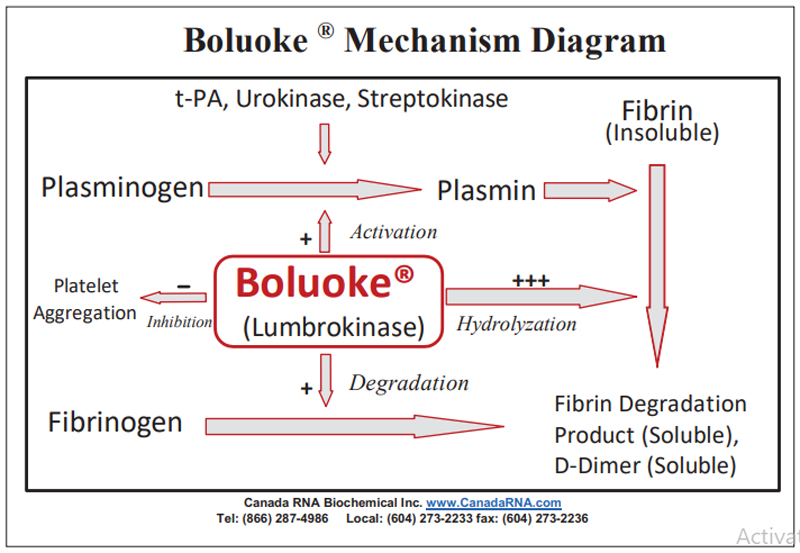
Modern biochemical research later identified lumbrokinase—a group of enzymes derived from earthworms—as having fibrinolytic activity. In simple terms, this means it can break down fibrin, a key structural component of blood clots, and help reduce blood viscosity. These findings provided CRNA with a clearer scientific basis to develop a standardized lumbrokinase-based therapy.
What factors influenced the integration of traditional knowledge with modern biochemical research approaches?
Canada RNA Biochemical (CRNA) is a leading nutraceutical company built on a simple belief that traditional medical knowledge and modern biochemical research are not separate paths, but part of the same continuum. What sets it apart is how that belief has been shaped over time, beginning with its founder’s own journey.
In 1981, antibiotic engineer Dennis Chen arrived in Canada with deep experience in pharmaceutical manufacturing at the Shanghai No. 3 Pharmaceutical Company (上海第三制药厂). Yet, that experience did not carry over in any immediate or meaningful way. For years, he moved between roles in restaurants, laboratories, denture workshops and plastic factories, but remained distant from his training.
It was only after a serious hand injury in 1995, followed by years of surgeries and recovery, that there was space to pause. During that period, he returned to biochemistry.
Reconnecting with former colleagues and revisiting his earlier work gradually brought clarity. Building a pharmaceutical manufacturing business was not practical at the time. But the question that began to take shape was different; does scientific progress require a novel starting point, or can it build on existing knowledge that hasn’t been fully explored?
That thinking led him toward natural products and traditional extracts, which were often seen as peripheral to modern drug development, yet grounded in years of observed therapeutic use.
 “We believe traditional medicine, shaped over generations of empirical practice by herbalists and healers, holds knowledge that modern science has not fully explored,” says Dr. Martin Kwok, VP of Canada RNA Biochemical. “It should not be discarded. In many cases, it gives modern research a starting point.”
CRNA began with a small set of products, including medicinal mushroom extracts alongside an enzyme-based formulation. Eventually, the company concentrated on areas with greater clinical and research value, guided by scientific progress rather than a set strategy.
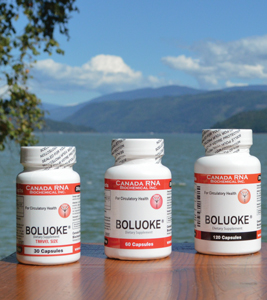
Today, that focus is centered on enzyme therapy. Its flagship product, Boluoke® Lumbrokinase, reflects this evolution. The oral enzyme was developed from a traditionally used ingredient and studied through modern biochemical and clinical research to support circulatory health.
The Research Foundation Behind Boluoke®
How has modern research validated traditional practices used in developing enzyme-based therapies?
The formulation of Boluoke® draws on long-standing East Asian medical practice, in which earthworms are traditionally used across China, Japan, Korea and Southeast Asia to address conditions like stroke that are associated with impaired circulation and clot formation.
We believe traditional medicine, shaped over generations of empirical practice by herbalists and healers, holds knowledge that modern science has not fully explored. It should not be discarded. In many cases, it gives modern research a starting point.
Building on this foundation, CRNA translated the concept into a more structured clinical and manufacturing framework. Boluoke® has been supported by a range of laboratory and clinical studies examining its mechanism of action, pharmacokinetics, optimal operating conditions, and overall safety profile, including toxicity and teratogenicity assessments. Clinical trials conducted in China, spanning Phase I through Phase III, have further explored its therapeutic potential in ischemic stroke. In North America, more than two decades of use as a natural health product have contributed to both practitioner familiarity and a consistent record of safety in real-world settings.
This body of evidence gives practitioners a clearer reference point, helping them assess dosage, duration of use, safety considerations and potential side effects when evaluating the product’s role in patient care.
While natural health products are often regarded as broadly safe, CRNA approaches that assumption with caution. Even well-tolerated compounds require disciplined evaluation to be used credibly within modern clinical practice.
Turning Traditional Use into a Research Path
Why is selective evaluation necessary when translating traditional medicine into scientific research frameworks?
Traditional medicine operates within a language that differs from that of modern biochemistry. Terms such as “invigorating the blood” or “breaking stasis” do not translate directly into scientific terminology.
For CRNA, the work begins by examining the conditions these substances were historically used to treat, identifying the most plausible underlying mechanism and determining which properties can be studied effectively using available research methods.
That approach shaped the development of Boluoke®. Historically, earthworms were used for multiple purposes, including circulatory conditions, fever and spasms. Instead of attempting to validate every traditional application, CRNA and the researchers behind lumbrokinase focused on circulatory support, where the mechanism was clearer and the research pathway more defined.
The same level of discipline applies to ingredient evaluation. CRNA looks for a well-established history of safe use, supported by careful screening of any potential concerns identified in the scientific literature. The evaluation then intensifies, assessing contraindications, interaction risks, tolerability and formulation suitability before approving a product.
-
We are in the business of solving real clinical needs rather than simply filling shelf space in the supplement market.
The same level of discipline applies to ingredient evaluation. CRNA looks for a well-established history of safe use, supported by careful screening of any potential concerns identified in the scientific literature. The evaluation then intensifies, assessing contraindications, interaction risks, tolerability and formulation suitability before approving a product.
Production takes place in CRNA’s current GMP-certified facilities, where products undergo comprehensive quality testing for microbial contamination, heavy metals and potency. It also maintains post-market surveillance systems that allow practitioners and consumers to report any unusual findings or adverse effects following commercial use.
This combined framework positions safety not as a final checkpoint, but as a continuous discipline that begins with ingredient selection and extends through to real-world application.
Meeting the Practical Needs of Long-Term Care
In what way does practical application influence adoption of enzyme therapies in long-term care?
CRNA approaches its work with a simple, practical question: Does the product help the practitioner solve a real issue for the patient, particularly one that has not been adequately addressed? That is where Boluoke® has found its place.
 Many practitioners who use it are caring for patients with chronic or long-term health conditions, where circulation and coagulation balance form part of a broader clinical picture. In these settings, an oral enzyme that supports blood flow in a manageable, non-invasive way can be highly relevant.
“We are in the business of solving real clinical needs rather than simply filling shelf space in the supplement market,” adds Kwok.
Boluoke®’s oral format is a key part of its practicality. While there are adjacent therapies available in injectable form, oral dosing is easier for patients, more convenient for practitioners, and better suited to long-term care settings. This becomes particularly important when treatment is not a one-time intervention but part of ongoing patient management.
Practitioner adoption relies on education. While some physicians in integrative settings are receptive to enzyme-based therapies, others need more time, data and clarity on mechanisms. CRNA supports this process by educating practitioners on Boluoke®’s role, use in protocols, and supporting research.
The company prioritizes rigorous enzyme testing. Kwok notes that credibility means testing the right enzyme with the correct method and expressing activity in proper units. Since each enzyme requires different standards, improper methods or units may signal quality issues. Boluoke® stands out by maintaining strict quality control where others may not.
Broadening the Research Horizon
Research involving Boluoke® continues to expand beyond its established role in supporting circulation and coagulation balance. Independent investigators are increasingly exploring how the enzyme’s fibrin-targeting properties may apply to other clinical contexts, often without direct involvement from CRNA.
One example is an ongoing clinical investigation at Mount Sinai Hospital in New York, where Boluoke® is being studied in relation to long COVID, chronic fatigue and chronic Lyme disease. These conditions, though clinically complex, are increasingly examined through the lens of hypercoagulation and impaired microcirculation. Researchers are evaluating whether improved coagulation balance and circulatory support may help address underlying pathologies affecting oxygenation, cellular function and organ performance throughout the body.
Other studies have taken the enzyme in different directions. In 2018, U.S. FDA-associated research examined the safety profile of the raw material, including its interaction with commonly used medications such as aspirin. More recently, independent researchers in Korea studied Boluoke® for its potential in preventing post-surgical abdominal adhesions, while earlier work by Taiwanese researchers explored its possible role in bone repair and healing.
These investigations are notable for their range, as well as what they indicate about the product’s growing scientific profile. Many of these studies extend well beyond the original circulation-focused use case, suggesting that Boluoke® continues to attract interest for its broader mechanistic potential. While these directions do not redefine the product’s core identity, they reflect a sustained scientific curiosity around its underlying properties.
When Clinical Evidence Meets a Narrow Regulatory Framework
CRNA’s story is also one of persistence. The company’s regulatory challenges in Canada reflect a broader tension between scientific evidence and its interpretation. As CRNA sees it, the issue lies not only in what the regulations state on paper, but in how they are applied by assessing officers.
The current approach tends to position natural health products as self-care solutions for mild conditions, while much of the research supporting lumbrokinase relates to more serious disease categories. This creates a gap that hinders market access, even when safety and efficacy data are available.
Amid this tension, CRNA has remained steady, continuing to educate practitioners, support its existing customer base and navigate an uneven regulatory environment. The U.S. market, while governed by a different framework, remains comparatively more accessible and has become increasingly important for a company whose reach extends beyond Canada.
What Comes Next for Boluoke®
CRNA’s growth has unfolded alongside a broader shift in enzyme therapy. What was once used primarily to support digestion has gradually drawn wider medical interest, as research has pointed to effects beyond the gut, including inflammation and more complex physiological processes. CRNA has positioned itself within this shift by building a more rigorous clinical, scientific and practitioner-focused foundation around Boluoke®.
Life Sciences Review’s recognition of CRNA as the Oral Enzyme Distributor of the Year 2026 reflects that continued focus, studying lumbrokinase with discipline, supporting practitioner education and following where the evidence leads.
“We are just getting started,” says Kwok. “There is still so much more to decode from traditional medicine.”
Advancing Evidence-Based Standards in Oral Enzyme Distribution
Interest in enzyme-based nutraceuticals has grown as practitioners and integrative health providers look for targeted support in circulation, inflammation and systemic balance. Oral enzyme distributors now operate in a more scrutinized environment than in previous decades. Regulatory oversight has intensified, practitioners demand clinical substantiation and supply chain reliability remains under pressure. Executives responsible for sourcing enzyme products must look beyond marketing narratives and examine scientific grounding, manufacturing discipline and post-market accountability.
Products derived from traditional medical knowledge often attract both enthusiasm and skepticism. Historical use can provide valuable direction, yet modern healthcare channels require biochemical validation and documented safety. Many established pharmaceuticals trace their origins to plant or biological sources first described in traditional texts. That lineage alone, however, does not meet current expectations. Decision-makers evaluating oral enzyme suppliers should examine whether traditional claims have been translated into measurable mechanisms of action, characterized at the molecular level and studied under contemporary research protocols.
Scientific depth is particularly relevant for proteolytic enzymes positioned for circulatory support. Fibrin modulation and blood viscosity influence systemic function, and any product affecting these pathways must demonstrate pharmacokinetic clarity, toxicity evaluation and interaction awareness. Suppliers that rely solely on anecdotal heritage risk regulatory friction and practitioner hesitation. By contrast, distributors that can reference laboratory characterization, controlled clinical phases and long-term safety data offer greater confidence to medical professionals.
Manufacturing standards represent another defining threshold. Enzyme integrity depends on controlled purification, stability testing and validated production environments. Current good manufacturing practice compliance, licensed facilities and documented batch testing for microbial contaminants, heavy metals and potency are non-negotiable in the nutraceutical sector. Executives should also assess how a distributor manages quality after sale, including adverse event reporting channels and traceability systems. Post-market surveillance is increasingly central to institutional purchasing decisions.
Strategic alignment with research institutions further distinguishes mature enzyme distributors. Independent investigation by academic hospitals or regulatory bodies signals that a product has entered broader scientific dialogue. Whether studies explore coagulation balance in complex syndromes, compatibility with common pharmaceuticals or new therapeutic pathways, external inquiry indicates durability beyond niche marketing. Even when research originates outside the company’s initiative, willingness to provide standardized material for evaluation reflects confidence in product consistency.
Canada RNA Biochemical illustrates this integrated approach within the oral enzyme field. Established in 2000 by Dennis Chan, a biochemist trained in antibiotic technology, it concentrates on Lumbrokinase, an enzyme complex purified from earthworm and traditionally associated with circulatory support. Contemporary research identified its fibrinolytic activity, clarifying its capacity to break down fibrin and influence blood viscosity. The product, marketed as Boluoke®, has undergone laboratory investigation and phased clinical studies in Asia, and it has accumulated over two decades of safety history in North America. Manufacturing occurs in licensed facilities under Canadian regulatory standards, with finished-product testing and formal adverse-event monitoring. Ongoing independent studies, including research collaborations in the U.S. and Asian countries, continue to examine broader applications. For executives prioritizing evidence continuity, quality oversight and practitioner-focused distribution, it stands as a disciplined and credible partner in enzyme-based nutraceutical supply.
...Read more
