



 Dr. David Zhang, CEO
In this environment, where even atomic-scale deviations can redirect clinical trajectories, BroadPharm’s differentiation emerges not merely as a provider but as a scientific architect driving the frontier of therapeutic design.
Polyethylene glycol (PEG) linkers may account for a small molecular footprint, but their impact on the performance and viability of a therapeutic is profound. They govern hydrodynamic diameter, aqueous solubility and plasma half-life while modulating drug-antibody ratio (DAR), release kinetics and systemic immunogenicity. As a central axis in drug development, PEG linkers form the backbone of translational precision—an area where BroadPharm asserts its leadership through both design intent and delivery acumen.
With a catalog of over 8,000 PEG linkers—including more than 5,000 high-purity monodispersed variants ranging from PEG2 to PEG36, across linear, multi-arm and heterobifunctional scaffolds—BroadPharm leads variety with design intentionality. This breadth supports precise linker-payload matching across diverse modalities, including site-specific conjugation, stealth coating of nanoparticles and sterically optimized spacers for improved biodistribution.
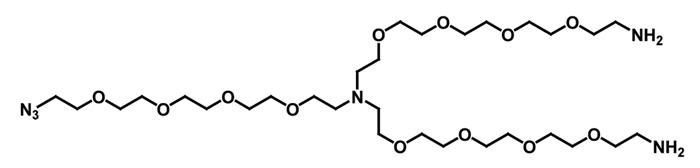 Branched PEG Linker, BP-23803, N-(Azido-PEG4)-N-bis(PEG4-amine)
How BroadPharm integrates synthetic control, delivery infrastructure and scientific expertise helps it meet the accelerated pace that today’s therapeutic development cycles demand.
Every linker is stocked in U.S.-based inventory and available for same-day shipping—a logistical advantage that becomes mission-critical when you are days away from a formulation freeze or finalizing CMC sections for a regulatory filing. For an industry where downstream bottlenecks often start upstream, BroadPharm removes time loss from the equation.
“We design around real-world project pressures,” says CEO Dr. David Zhang. “Clients come to us when shelf solutions aren’t viable—and when minor adjustments in chemistry can dictate downstream success or failure.”
The company’s PhD-level scientists work directly with drug developers to co-engineer linker architectures that solve for formulation compatibility, DAR uniformity, steric clearance and site-selective conjugation challenges. Whether the goal is to suppress aggregation in ADCs, fine-tune payload release from nanocarriers or deploy click-ready orthogonal linkers in sterically hindered protein scaffolds, BroadPharm engineers PEG chemistry with target-outcome alignment.
This anticipatory model of building ahead of emerging bottlenecks is what defines BroadPharm’s leadership in the ecosystem. Its team actively develops next-gen solutions to meet the evolving demands of modular biologics, multispecific and adaptive conjugation technologies, including cleavable linkers with programmable degradation profiles and bio-orthogonal systems for in vivo conjugation.
Each PEG linker is pre-functionalized with widely used conjugation handles—azide, alkyne, maleimide, NHS esters—ensuring compatibility across virtually all bioconjugation strategies. But BroadPharm’s value extends far beyond standardization. It offers branched, multi-arm and hybrid PEG linkers capable of increasing payload capacity, reducing steric interference and enabling site-specific or orthogonal conjugation, particularly in ADCs, AOCs, PROTACs and nanoparticle-based delivery systems.
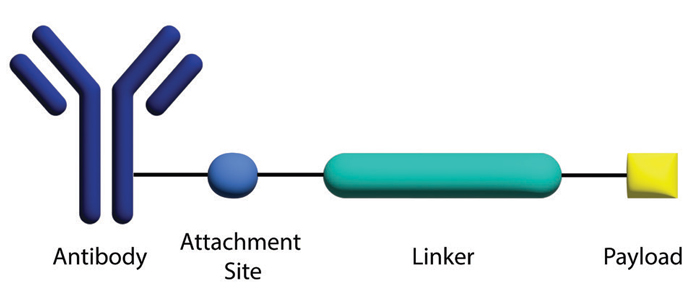 One recurring challenge in biotherapeutic development is limited conjugation capacity, especially with oligonucleotides and peptides that offer few attachment sites. BroadPharm addresses this with branched PEG linkers featuring three or four functional arms equipped with click chemistry-ready groups. These structures allow clients to attach 2 to 4 payloads per site within biomolecule-compatible buffers, significantly expanding loading capacity while preserving targeting and delivery efficiency.
Linkers That Evolve With the Science
Therapeutic innovation rarely follows a fixed playbook, nor should linkers. BroadPharm’s platform is designed for adaptability, offering chemistries that align with the growing complexity of today’s drug modalities.
-
We design around real-world project pressures. Clients come to us when shelf solutions aren’t viable—and when minor adjustments in chemistry can dictate downstream success or failure
Each PEG linker is pre-functionalized with widely used conjugation handles—azide, alkyne, maleimide, NHS esters—ensuring compatibility across virtually all bioconjugation strategies. But BroadPharm’s value extends far beyond standardization. It offers branched, multi-arm and hybrid PEG linkers capable of increasing payload capacity, reducing steric interference and enabling site-specific or orthogonal conjugation, particularly in ADCs, AOCs, PROTACs and nanoparticle-based delivery systems.
One recurring challenge in biotherapeutic development is limited conjugation capacity, especially with oligonucleotides and peptides that offer few attachment sites. BroadPharm addresses this with branched PEG linkers featuring three or four functional arms equipped with click chemistry-ready groups. These structures allow clients to attach 2 to 4 payloads per site within biomolecule-compatible buffers, significantly expanding loading capacity while preserving targeting and delivery efficiency.Among its newest innovations is the MagicLink product line, a third-generation crosslinking platform that delivers instant reactions with quantitative yields. It is ideal for antibodies, enzymes, peptides, oligos and nucleic acids where linkage fidelity is critical.
Another area of rapid expansion is BroadPharm’s hybrid PEG linker portfolio, which combines PEG backbones with peptide segments and functional groups like Dibenzylcyclooctyne, Bicyclo[6.1.0]nonyne, amine and bromoacetamido. These are engineered to meet the evolving demands of complex payload architectures, offering fine-tuned control over solubility, reactivity and spatial configuration.
When therapeutic developers face non-obvious formulation challenges, such as aggregation from hydrophobic payloads, BroadPharm acts as a design partner. In one ADC program, the client’s construct was stalling in development due to poor solubility and inconsistent performance. BroadPharm’s scientists re-engineered the linker using monodispersed PEG units (PEG4, PEG8, PEG12) integrated into a peptide-based scaffold. This structural adjustment not only improved aqueous solubility, but stabilized the conjugate, reduced batch variability and facilitated a smoother path to downstream processing.
This kind of collaborative problem-solving reflects BroadPharm’s broader role in the drug development ecosystem. Its team of PhD-level scientists works hands-on with clients to customize linker architecture—adjusting PEG length, reconfiguring functional groups or designing hybrid scaffolds—to align precisely with each therapy’s performance and manufacturability goals.
To support this design flexibility, BroadPharm offers comprehensive conjugation services from antibody-drug conjugation (ADC) and DAR analysis to oligonucleotide labeling, biotinylation and dye-based tagging. These services are complemented by advanced analytical tools, including high-resolution HIC-HPLC, to verify purity, consistency and performance under real-world development conditions.
Built for Scientific Execution, Structured for Your Success
When timelines are compressed and the margin for formulation error is razor-thin, the value of a technically fluent partner becomes clear. Led by a team of PhD-level experts in PEG chemistry and bioconjugation design, BroadPharm’s R&D division works shoulder-to-shoulder with therapeutic developers to troubleshoot, customize and de-risk linker strategies in real time. Whether solving for solubility, DAR consistency or site-specific conjugation, this is a team that doesn’t just understand the chemistry but the pressures of translational timelines and regulatory readiness.
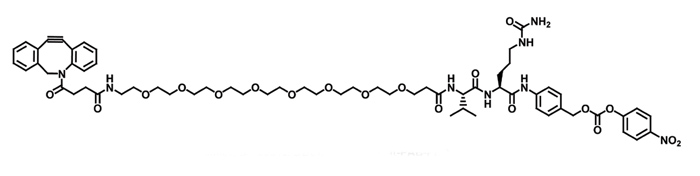 Peptide-PEG Linker, BP-28018, DBCO-PEG8-Val-Cit-PAB-PNP
“We’re especially proud to contribute to the synthetic biology revolution—a space where chemistry, biology and innovation come together. We see our role not just as a supplier, but as a partner in discovery. When our customers succeed, that’s the real measure of our progress,” says Dr. Zhang.
The depth of support isn’t limited to R&D either. Its global technical and customer success teams collaborate across the U.S., Europe and APAC, including dedicated support in Japan, South Korea and Singapore. From the earliest formulation questions to late-stage tech transfer, clients gain continuity, clarity and responsiveness across the lifecycle of a program.
BroadPharm’s partnership model is designed to keep therapeutic programs moving faster, smarter and with fewer surprises.
That model is already driving measurable outcomes. BroadPharm’s PEG linkers are actively deployed across a growing number of preclinical and clinical-stage APIs and their impact is reflected in peer-reviewed publications across top-tier journals such as Nature Communications, Science Advances, JACS and Bioconjugate Chemistry. With hundreds of scientific citations and increasing adoption in real-world drug development, BroadPharm’s solutions are theoretically strong and practically validated at every stage of the therapeutic lifecycle.
In December 2023, BroadPharm also expanded its facility footprint by 2x—a move reflecting operational growth and a targeted investment in the next era of drug development. The new infrastructure is optimized for accelerated production, more complex conjugation workflows and closer scientific collaboration with teams advancing PEGylated biologics and precision drug delivery systems.
Rather than scale for volume alone, BroadPharm is scaling for capability to build the technical depth and flexibility required to support emerging needs in bioconjugation, nanoparticle therapeutics and translational molecular design.
When a landscape is defined by rapid iteration and molecular precision, BroadPharm’s market relevance stays strong as the go-to partner for enabling what’s next.
Selecting a PEG Linker Manufacturing Partner
In biotechnology, PEG linker sourcing has evolved from a routine reagent purchase into a strategic decision that directly affects therapeutic development. Programs involving antibody-drug conjugates (ADCs), oligonucleotides, peptides, proteins, diagnostics and lipid delivery systems all depend on conjugation chemistry that performs consistently throughout research, scale-up and cross-functional development work. An unreliable supplier can slow candidate screening, restrict payload design flexibility, complicate analytical review or force scientific teams to redesign molecules around available chemistry rather than scientific requirements.
Executives evaluating PEG linker manufacturers should therefore look beyond catalog size alone. Product breadth only becomes valuable when it provides meaningful design flexibility through controlled PEG lengths, relevant functional groups, linear and branched architectures and compatibility with applications such as click chemistry, ADCs, PROTACs, protein labeling and drug-delivery systems. Suppliers must also demonstrate strong control over purity, solubility and conjugation behavior because even small inconsistencies at the linker level can influence aggregation, payload loading, downstream analytical testing and confidence in early-stage development data.
The procurement challenge becomes more difficult because of the speed at which modern biotechnology programs operate. Discovery teams frequently need to compare payload behavior, modify spacer lengths, adjust terminal groups or test branched linker designs without losing time to sourcing delays. Procurement leaders, meanwhile, must balance scientific flexibility against operational complexity. Relying on multiple specialized vendors can introduce inconsistent specifications, uneven documentation standards and delays as projects transition from exploratory chemistry into more structured development stages.
Executives should also assess how suppliers respond when project requirements evolve. PEG linker needs often change after early biological or pharmacological results emerge, making responsive technical collaboration increasingly important. The most valuable suppliers are those capable of helping scientists understand how the chemistry is influencing performance rather than simply processing revised purchase orders. In practice, responsive technical discussions, analytical support and custom synthesis capabilities become safeguards against development disruption.
Speed is equally important, but speed should mean more than rapid shipment alone. Biotechnology organizations often operate under compressed project timelines tied to investor expectations, grant milestones, clinical planning or partner deliverables. Manufacturers that maintain inventory, support custom synthesis and provide technically informed guidance help reduce the gap between scientific design and experimental execution. The best sourcing decisions are not always based on the largest product catalog or lowest price point. They are based on the ability to move efficiently from molecular design to validated testing without repeated procurement interruptions.
Scientific partnership ultimately distinguishes a transactional vendor from a dependable manufacturing collaborator. PEG linker selection often sits at the intersection of chemistry, biology and therapeutic strategy, requiring suppliers capable of discussing functional-group compatibility, conjugation pathways, analytical verification and future scalability. This expertise becomes especially important when standard linkers fail to address challenges involving solubility, payload density or labeling efficiency. In those situations, the right manufacturer helps preserve the broader scientific direction while adapting the chemistry around evolving program needs.
BroadPharm stands out for organizations seeking product breadth, custom chemistry capabilities and technical support within a single PEG linker partner. Its portfolio includes high-purity PEG linkers, click chemistry reagents, ADC linkers, PEG lipids, MagicLink™ conjugation kits and custom PEG or click-chemistry linker synthesis services. The company offers monodispersed PEG linker lengths ranging from PEG2 to PEG36 along with common click chemistry functionalities and branched linker designs for multi-payload applications. BroadPharm also provides ADC linker and payload synthesis, custom conjugation services and analytical support, making it well suited for biotechnology organizations that require both ready-to-ship reagents and specialized linker-development expertise.
...Read more
PEG Linker Manufacturer Info
Q1
Why is BroadPharm recognized among Top PEG Linker Manufacturing Companies?
BroadPharm has earned its position among Top PEG Linker Manufacturing Companies due to its large-scale, high-purity production of polyethylene glycol-based linkers used in advanced drug development. Its PEG Linker Manufacturer capability is strengthened by a catalog of thousands of discrete PEG structures designed for precision bioconjugation. These materials support antibody-drug conjugates, nanoparticle delivery systems and diagnostic research, making its portfolio highly relevant in modern therapeutic engineering.
Q2
What makes BroadPharm’s PEG Linker Manufacturer capabilities unique?
A defining strength of BroadPharm as a PEG Linker Manufacturer lies in its focus on monodisperse PEG chemistry. Each linker is synthesized as a well-defined molecular structure rather than a mixed polymer distribution, improving reproducibility and performance in biological systems. This level of chemical control enhances solubility, reduces aggregation and improves stability in complex drug delivery systems, which is critical for research-grade and preclinical applications.
Q3
How does BroadPharm support pharmaceutical and biotech companies through PEG Linker Manufacturer solutions?
BroadPharm supports research organizations by offering ready-to-ship PEG linkers along with custom synthesis services. Its PEG Linker Manufacturer model ensures that scientists can access functionalized linkers quickly for time-sensitive drug development programs. The company also provides technical guidance on linker selection, helping researchers match the right PEG chemistry with specific conjugation strategies used in biologics and targeted therapies.
Q4
What role does innovation play in BroadPharm’s PEG Linker Manufacturer operations?
Innovation is central to its PEG Linker Manufacturer strategy, particularly through its development of advanced linker formats such as branched PEG systems, cleavable linkers and hybrid PEG-peptide structures. These innovations are designed to improve payload delivery efficiency and control release behavior in therapeutic constructs. Continuous product expansion ensures compatibility with emerging modalities such as PROTACs and next-generation antibody conjugates.
Q5
How does BroadPharm ensure quality in its PEG Linker Manufacturer processes?
Quality assurance is embedded into every stage of its PEG Linker Manufacturer workflow, from synthesis to purification and analytical validation. Each PEG linker is characterized using modern techniques such as NMR and LC/MS to confirm structural accuracy and purity. This ensures consistent performance across research applications where reproducibility is critical, especially in regulated pharmaceutical environments.
Q6
Why is BroadPharm important to modern drug development through PEG Linker Manufacturer expertise?
BroadPharm plays a key role in modern drug development by enabling precise molecular engineering through its PEG Linker Manufacturer expertise. Its linkers are widely used in antibody-drug conjugates, drug delivery systems and diagnostic platforms. By improving solubility, stability and targeting efficiency, its products help researchers accelerate development timelines and improve the reliability of complex therapeutic constructs.
