



Why is translating microbiome data into measurable patient outcomes inherently complex?
While microbiome signals can reveal patterns in human health, translating those signals into measurable improvements in patient outcomes is far less straightforward. The challenge lies in linking microbial signals to objective biomarkers and tracking how those changes affect patients over time. As the microbiome is highly sensitive to factors like diet, stress, and environmental conditions, repeated measurements are crucial for establishing an accurate baseline for each individual and capturing natural variation.
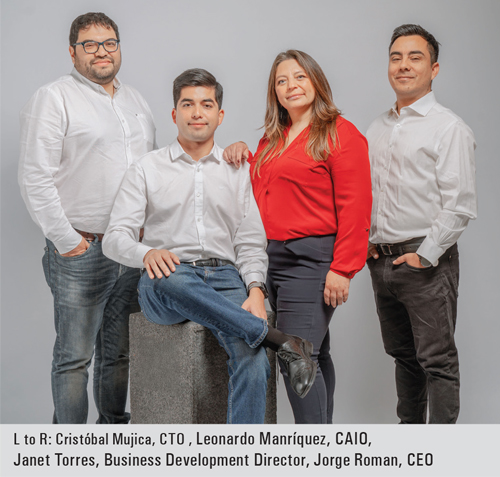 Biome Resources addresses this challenge by connecting patient data with measurable biomarkers and tracking their relationship with clinical responses through continuous measurement. The company focuses on individual needs and uses microbiome data to identify health patterns and develop solutions that support clinical decision-making.
“We track microbiome changes and patient responses using longitudinal study designs to understand how baseline conditions shape biological markers and patient outcomes,” says Jorge Roman, CEO and co-founder.
How does continuous measurement and patient engagement improve microbiome analysis accuracy?
A central part of the approach is direct engagement with patients to understand their lived experiences and health challenges. Working closely with individuals throughout the process allows Biome Resources to gather contextual information that reflects real-world conditions rather than isolated laboratory data.
Beyond microbiome health, the company integrates mental health as a core differentiator in its reporting and analysis. By targeting biomarkers linked to neurological conditions like migraines and sleep disorders, it simultaneously measures biological changes and their direct impact on quality of life.
What role do proprietary platforms and adaptive protocols play in microbiome research outcomes?
Biome Resources conducts real-world trials using a proprietary platform and internally developed protocols, maintaining full control over data analysis, measurement, and iterative refinement without reliance on third-party tools. Each study incorporates early microbiome profiling to establish longitudinal baselines and track changes over time, informing targeted interventions.
Structured protocols define each stage of the process, while the platform enables rapid adjustments to interventions and formulations based on patient and biomarker responses.
A recent validation trial illustrates the framework through a sleep-focused probiotic, called Kronobiotic, developed in collaboration with the Chilean Institute of Neurology. The trial also considered patients using hypnotic drugs to support their treatment and explore ways to reduce reliance on these medications.
-
We track microbiome changes and patient responses using longitudinal study designs to understand how baseline conditions shape biological markers and patient outcomes.
A recent validation trial illustrates the framework through a sleep-focused probiotic, called Kronobiotic, developed in collaboration with the Chilean Institute of Neurology. The trial also considered patients using hypnotic drugs to support their treatment and explore ways to reduce reliance on these medications.
The company worked directly with patients throughout the study, closely monitoring adherence, side effects, sleep quality, and changes in the microbiome. This hands-on collaboration demonstrated how microbiome modulation can enhance sleep, providing scalable, accessible, and affordable solutions that extend beyond controlled research settings.
Why are region-specific datasets and multidisciplinary teams critical in precision microbiome solutions?
Global microbiome studies often focus on populations in North America or Europe. Biome Resources bridges that gap by developing digital microbiome markers in Latin American populations and cross-referencing them with patient information. Through these region-specific datasets, the company improves the accuracy of each analysis by aligning microbiome patterns with the populations under study.
Behind this effort is a multidisciplinary team combining scientific and practical expertise. Biome Resources brings together biochemists, microbiologists, AI engineers, and nutritionists, working alongside neurologists and medical doctors to design, test, and refine interventions.
The team leverages its own algorithms, protocols, and data repositories to deliver Top Microbiome and Precision Medicine Development Solutions in Latin America 2026.
With the team at the center of every trial, the company bridges microbiome science and patient care through continuous measurement. It operates at the intersection of clinical practice, patient experience, and biological data, ensuring research is continuously grounded in real-world conditions.
At its core, Biome Resources focuses on translating complex microbiome signals into insights that can support more informed clinical decisions and improve quality of life.
Advancing Precision Medicine through Microbiome Intelligence in Latin America
Precision medicine programs across Latin America face a persistent constraint: translating complex biological data into interventions that reflect regional diversity, patient variability and real-world clinical outcomes. Microbiome science has emerged as a promising layer in this effort, yet its practical application often remains limited by fragmented datasets, inconsistent patient engagement and weak alignment between laboratory findings and therapeutic impact. Executives responsible for advancing microbiome-led initiatives increasingly confront a gap between analytical capability and meaningful clinical translation.
The effectiveness of microbiome-driven development hinges on how deeply patient-derived data informs the analytical process. Many platforms prioritize sequencing and pattern detection but fall short in capturing the contextual inputs that shape microbiome behavior over time. Variability linked to diet, stress and environmental exposure requires longitudinal understanding rather than static snapshots. Programs that succeed tend to integrate continuous patient interaction with biological sampling, allowing correlations to emerge from lived conditions rather than isolated measurements. This approach strengthens interpretability and reduces the risk of misaligned conclusions.
Equally critical is the ability to anchor microbiome insights in measurable clinical indicators. Data-driven environments demand objective markers that can validate whether a given intervention produces meaningful change. Biomarker alignment becomes the bridge between discovery and application, particularly when linked to improvements in patient well-being. Efforts that combine measurable biological shifts with observable quality-of-life outcomes provide a more credible pathway for clinical adoption, especially in therapeutic areas where subjective reporting alone cannot guide decision-making. This dual validation approach also supports regulatory alignment and strengthens confidence among clinical stakeholders.
Regional specificity adds another layer of complexity. Microbiome composition varies significantly across populations, yet much of the existing research is derived from North American or European cohorts. Applying these findings to Latin American populations introduces uncertainty and limits predictive accuracy. Solutions that generate and interpret data within the target population context offer a clearer advantage. They enable more precise stratification, improve relevance in diagnostics and reduce translational friction in treatment development. Localized datasets are not simply a refinement; they are foundational to reliable microbiome-based interventions in the region. This focus also enhances reproducibility across studies conducted within similar demographic and environmental conditions.
Clinical execution also plays a decisive role. Structured trial methodologies that allow iterative adjustment based on emerging data help maintain alignment between hypothesis and outcome. The ability to refine formulations, reassess biomarkers and adapt protocols during ongoing studies creates a more responsive development cycle. This flexibility supports faster validation while maintaining scientific rigor, particularly in early-stage research where uncertainty remains high.
Biome Resources exemplifies how these elements converge into a coherent solution. It builds its platform around direct patient engagement, ensuring that data reflects real conditions rather than abstract models. Its focus on biomarker-driven validation connects microbiome modulation to measurable clinical impact, strengthening confidence in outcomes. The company’s emphasis on Latin American datasets addresses a gap in regional applicability, enabling more accurate interpretation of microbiome data. Its internally developed algorithms, trial protocols and multidisciplinary expertise allow it to adapt during clinical studies, supporting adjustment of interventions based on observed results. This combination positions it as a strong choice for organizations aiming to translate microbiome insights into practical precision medicine applications.
...Read more
Microbiome and Precision Medicine Development Solutions in Latin America Info
Q1
What Should Buyers Understand About Microbiome and Precision Medicine Development Solutions in Latin America?
Microbiome and Precision Medicine Development Solutions in Latin America connect biological testing, data interpretation and health guidance around the individual rather than a generic population average. The category matters because microbiome information can support prevention, nutrition planning and wellness decisions. Strong providers must show how samples become usable insights, how recommendations are explained and how the evidence remains understandable for users and decision-makers. Readers should expect careful explanation, not a raw data dump dressed up as personalization. The wording should be precise.
Q2
How Does Biome Resources Approach Precision Health?
Biome Resources works from a clear premise: better health guidance starts with knowing the person’s microbiome, biomarkers and daily health concerns. Its team brings together biochemists, data scientists and engineers, giving its Microbiome and Precision Medicine Development Solutions in Latin America a mix of laboratory thinking, analytics and accessible health design. That combination is useful when scientific detail must become something a person can discuss, compare and act on.
Q3
What Capabilities Belong in This Type of Solution?
A credible model usually includes microbiome analysis, biomarker review, personalized nutrition logic, supplement guidance and a way to translate results into next steps. Biome Resources reflects that scope through Biome360, an advanced gut microbiome analysis kit, along with biomarker ranking, tailored probiotics or prebiotics, precision supplements and consulting in precision medicine. Microbiome and Precision Medicine Development Solutions in Latin America need that kind of connected path from test to interpretation.
Q4
Why Is Sleep Becoming Part of Precision Microbiome Work?
Sleep quality is increasingly treated as part of whole-body health rather than a separate lifestyle issue. For many people, poor rest affects appetite, mood, recovery and long-term health habits. Biome Resources brings that link into view through Kronobiotic, a precision probiotic formulated to improve sleep quality and support restorative rest. In this context, Microbiome and Precision Medicine Development Solutions in Latin America can extend beyond digestive reporting into daily wellbeing.
Q5
What Quality Factors Should Organizations Review Before Adoption?
Evaluation should go beyond an attractive report. Buyers should ask how samples are handled, what data methods support interpretation, how recommendations are reviewed and whether users can understand the limits of the findings. Microbiome and Precision Medicine Development Solutions in Latin America should also be judged by affordability, privacy discipline, scientific clarity and the ability to update guidance as research improves. A test result only matters when it leads to responsible action.
Q6
How Do These Solutions Create Value for Preventive Health?
Preventive health works best when people can see risk signals early and adjust habits before problems become harder to manage. Microbiome and Precision Medicine Development Solutions in Latin America support that shift by connecting gut health, nutrition, biomarker context and practical guidance. Biome Resources’ leadership includes experience in microbiology, molecular biology, biotechnology and medical advisory areas such as neurology and sleep, which helps anchor its work in both science and real health concerns.
