



 Ivan Lee, CEO
For Biocamp, these challenges are not addressed through a one-size-fits-all approach. The company believes that every production system has its own reality, requiring solutions built around specific needs.
As a Brazilian biotechnology company specializing in probiotics, vaccines, and biological solutions, Biocamp has spent years developing technologies that support intestinal health, disease prevention, and improved productivity across animal species. Its work is guided by a simple principle: understanding the challenge first and then identifying the right biological strategy.
“Before thinking about a product, we need to understand the customer’s reality. We need to know what problem they are facing, what result they want to achieve, and what success means for their operation,” says Ivan Lee, CEO of Biocamp.
Building Expertise through Probiotics Innovation
Biocamp’s history is closely connected with the evolution of probiotics in animal production. At a time when probiotic use was still limited in many markets, the company focused on understanding how beneficial microorganisms could contribute to healthier production systems.
 Today, its Colostrum® probiotics portfolio includes different technological approaches designed for different challenges. Competitive exclusion products use complex microbial communities to help establish intestinal balance and limit the growth of undesirable microorganisms. Multiple-strain probiotics combine selected bacteria with complementary characteristics, while single-strain solutions provide targeted applications based on specific microorganisms.
This diversity reflects Biocamp’s belief that different species, production stages, and health challenges require different biological strategies. The company’s probiotic technologies are used in poultry, swine, dogs, and aquaculture, including tilapia production.
One area receiving particular attention is the early introduction of beneficial microorganisms during incubation. By applying probiotics during the incubation period of fertile eggs, Biocamp is exploring ways to support bird development before traditional production stages begin. The company has observed improvements in hatchery results, including better chick quality and a higher number of commercially valuable chicks.
Combining Science, Quality, and Field Experience
For Biocamp, developing biological products involves more than discovering effective microorganisms. The company connects research, production, and quality control to ensure that innovations created in the laboratory deliver consistent results in commercial environments.
Its development process begins with real-world challenges identified in the field. Scientists evaluate microorganisms, study their characteristics, conduct laboratory research, and validate performance under production conditions.
The same customer-specific logic extends to vaccines. In its autogenous vaccine work, Biocamp develops solutions around agents associated with the customer's particular epidemiological environment, connecting disease diagnosis with formulation, biological testing, and field application. This approach is reflected in its CampVac® vaccines and Auto-Vac® autogenous vaccines, which are designed to address specific disease prevention needs.
-
Before thinking about a product, we need to understand the customer’s reality. We need to know what problem they are facing, what result they want to achieve, and what success means for their operation.
The same customer-specific logic extends to vaccines. In its autogenous vaccine work, Biocamp develops solutions around agents associated with the customer's particular epidemiological environment, connecting disease diagnosis with formulation, biological testing, and field application. This approach is reflected in its CampVac® vaccines and Auto-Vac® autogenous vaccines, which are designed to address specific disease prevention needs.
The company also recognizes that products alone do not solve every challenge. In some situations, improvements in management, biosafety, diagnostics, or monitoring may be equally important. This customer-focused approach has helped Biocamp build relationships based on technical support and long-term collaboration rather than simple product transactions.
Expanding Biological Possibilities
While poultry remains a key area of expertise, Biocamp continues expanding its solutions into other animal production segments. In swine, the company is exploring probiotics based on bacteria naturally adapted to the species. In aquaculture, partnerships with research institutions have helped transform scientific discoveries into commercial biological solutions.
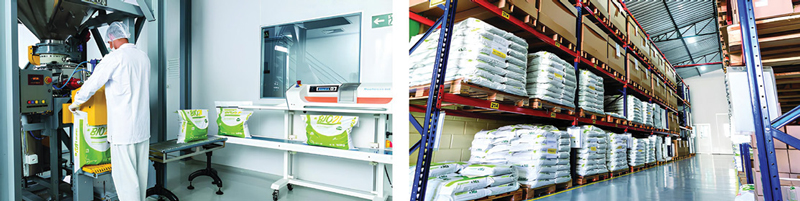 These efforts reflect Biocamp’s broader vision for the future of animal health. The company believes progress will come from integrating microbiota management, immunity, vaccination, biosafety, animal welfare, and responsible production practices.
“Biotechnology is always evolving, and we need to continue learning, building partnerships, and transforming scientific knowledge into practical solutions that help customers in the field,” Lee explains.
A Future Built on Biological Innovation
Biocamp has been named Top Probiotics and Vaccines Solutions in Latin America for 2026, recognizing the company’s contribution to advancing biological approaches in animal health and production.
With its foundation in microbiology, commitment to research, and focus on customer outcomes, Biocamp continues to develop solutions designed for a changing agricultural landscape. Its goal remains clear: transform biological knowledge into reliable tools that support healthier animals, efficient production, and a more sustainable future.
Targeted Biological Programs for Animal Health
Reducing antimicrobial use without giving up flock health or production performance has become a difficult purchasing test for animal health programs. Disease pressure differs by species and production system, and the biological conditions behind poor results can change from one site to another. A product that works in one setting may be poorly matched in another. Executives evaluating probiotics and vaccines therefore need more than a broad catalog. They need a supplier model that begins with the specific health pressure and the result the producer is trying to protect.
Product fit should be judged by how well the biological approach matches the animal and the point in the production cycle where intervention matters. Probiotics can be designed around different microbial strategies, while vaccines address a different set of disease-prevention needs. The useful distinction is not simply formulation. It is whether the supplier can connect species biology, timing of use, local disease pressure and the desired production result without forcing every problem into the same program. Across Latin America, differences in production models can make standardized selection a poor substitute for technical fit. A wide portfolio matters only when product choice remains disciplined. Price comparisons can also mislead when they ignore where and how the biological product will be used. A lower unit price carries little weight if dosing or application makes the program harder to control.
Consistency becomes equally important once the product contains live organisms or depends on biological response. Buyers should examine how strains or agents are selected and characterized, how concentration and viability are controlled, how manufacturing is kept repeatable and how performance is validated outside laboratory conditions. Strong development work loses value if production quality varies or if field use is treated as an afterthought. The procurement question is whether research, manufacturing, quality control and field feedback remain connected from development through commercial application. For vaccines, biological testing and safety evaluation should carry through to a manufacturing process that can reproduce the intended product reliably.
“Biocamp’s Colostrum portfolio supports selection between competitive-exclusion and defined-strain probiotic approaches according to species and production setting.”
Product stewardship matters because biological tools often sit inside broader health programs. Some disease or performance problems also require changes in management, biosecurity, diagnosis or monitoring. Suppliers that can recognize those limits give buyers a clearer basis for deciding when a probiotic or vaccine belongs in the program and when another intervention is more appropriate. Technical guidance should narrow product use, not expand it by default. Market conditions can place antimicrobial reduction, animal welfare expectations, food-safety demands and production economics in tension. Follow-through after deployment also counts, particularly when interpreting results requires revisiting dose, timing, application method or surrounding management practices.
Within that buying frame, Biocamp merits consideration as a premier choice for Latin American producers evaluating probiotics and vaccines. Its Colostrum portfolio supports selection between competitive-exclusion and defined-strain probiotic approaches according to species and production setting. CampVac vaccines and Auto-Vac autogenous vaccines extend that fit to disease prevention, including customer-specific epidemiological pressures. The company also develops application programs around incubation and other production stages, while linking product choice to technical assessment rather than treating every health issue as a product sale. For executives trying to reduce antimicrobial dependence without weakening animal health or production results, that breadth and problem-led selection model are materially relevant.
...Read more
Probiotic and Vaccine Solutions in Latin America Info
Q1
What Do Probiotics and Vaccines Solutions in Latin America Cover?
Probiotics and Vaccines Solutions in Latin America encompass biological approaches used to support animal health, disease prevention and production performance. The category can include probiotic technologies, vaccines and related biological strategies designed around species, production stages and specific health challenges. Effective solutions connect scientific development with practical conditions in the field rather than treating every production system alike. This can make species fit, production stage and local disease conditions important parts of solution design.
Q2
How Does Biocamp Apply Probiotics and Vaccines Solutions in Latin America?
Biocamp develops probiotics, vaccines and biological solutions for animal production, with work spanning poultry, swine, dogs and aquaculture, including tilapia. Its Colostrum® portfolio includes competitive exclusion products, multiple-strain probiotics and single-strain applications. For vaccines, its CampVac® and Auto-Vac® offerings address specific disease-prevention needs, linking diagnosis, formulation, biological testing and field application. The company’s customer-focused model emphasizes understanding the problem and the desired operational result before selecting a biological strateg
Q3
Which Capabilities Matter When Evaluating These Biological Solutions?
Probiotics and Vaccines Solutions in Latin America need to be assessed beyond the product label. Relevant considerations include whether development reflects the target species, the production environment and the health challenge being addressed. Research, laboratory evaluation, field validation and quality control also matter because a biological approach must perform consistently when moved from controlled development into commercial production. These factors help connect laboratory findings with the realities of animal health programs and day-to-day production.
Q4
How Can Probiotic Technologies Support Animal Production?
Within Probiotics and Vaccines Solutions in Latin America, probiotic approaches may use different microbial strategies depending on the intended application. Biocamp’s documented portfolio illustrates this range through complex microbial communities for competitive exclusion, combinations of selected bacteria and targeted single-strain solutions. Its work also includes probiotic application during incubation, where it has observed improvements in hatchery results such as chick quality and the number of commercially valuable chicks. The broader aim is to introduce beneficial microorganisms at a stage where they may support healthier development before conventional production stages begin.
Q5
What Makes Biocamp’s Approach to Probiotics and Vaccines Solutions in Latin America Distinct?
Biocamp connects field challenges with microbiology, research, production and quality control. Its development process begins with real-world problems, followed by microorganism evaluation, laboratory research and validation under production conditions. The company also develops autogenous vaccines around agents associated with a customer’s particular epidemiological environment, while recognizing that management, biosafety, diagnostics and monitoring can also influence outcomes. This broader view places biological products within a practical animal-health framework rather than treating them as standalone interventions.
Q6
What Should Buyers Consider When Comparing Probiotics and Vaccines Solutions in Latin America?
Evaluation should begin with the biological problem and the conditions in which a solution will be used. Probiotics and Vaccines Solutions in Latin America can differ by species, production stage, microbial approach, vaccine strategy and evidence from field application. Technical support and the ability to connect diagnosis, development and practical implementation can also matter. Biocamp’s work across poultry, swine and aquaculture shows how biological strategies may be adapted as animal-health needs evolve.
