



As the need for advanced therapies in precision medicine grows, BiCell Scientific is pushing the boundaries of antibody innovation. The company delivers advanced discovery and maturation solutions that strengthen binding affinities, develop fully human-compatible antibodies, and explore new directions, such as nanobodies, paving the way for safer and more impactful treatments.
Better binding and more precise antibody design are not just scientific achievements for the company; they carry real implications for patients. More potent antibodies can lower required dosages, reduce potential side effects, and improve the overall safety of therapies. For many researchers, Bicell Scientific’s solutions provide the bridge between early discovery and viable clinical applications.
Every incremental improvement in antibody development has the potential to save lives, and BiCell Scientific’s focus on innovation and patient outcomes makes it a defining force in modern medicine.
Strengthening and Humanizing Antibodies
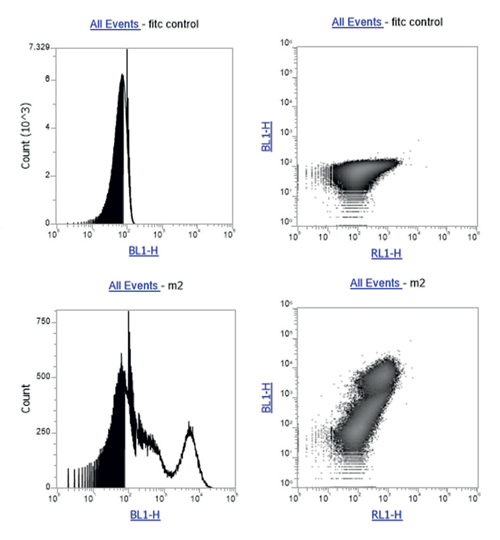 A common challenge in therapeutic research arises when antibodies developed from animal models or early screenings fail to bind effectively to their targets. Low binding affinity can limit the success of otherwise promising candidates. Addressing this, Bicell Scientific’s affinity maturation has become one of the most in-demand solutions in antibody development.
The process involves cloning a customer’s antibody, presenting it on a yeast cell surface, and repeatedly screening it against the desired antigen under increasingly stringent conditions. Over multiple rounds, the binding affinity improves dramatically, providing researchers with stronger and more reliable candidates to advance into therapeutic applications.
“Anybody who wants to move into therapeutics needs to go through stringent testing to make sure their antibody works. Binding affinity is one of the most critical factors, because without it, nothing else follows,” says John Hou, CEO of Bicell Scientific.
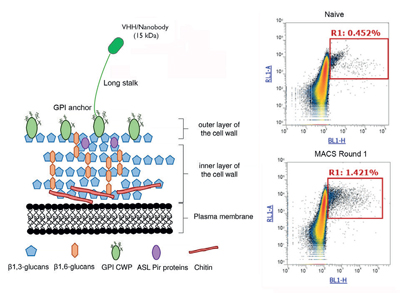 Alongside affinity maturation, there is a growing demand for its expertise in fully human antibodies. Regulatory bodies are encouraging safer, more human-compatible approaches, moving away from animal-based methods. Two strategies that make this possible are the company’s patient-derived antibodies and de novo synthetic libraries.
Bicell Scientific’s patient-based discovery involves cloning antibodies directly from individuals fighting a disease, leveraging the natural strength of human immune responses. This eliminates the need for additional humanization and reduces the risk of rejection. Synthetic libraries, on the other hand, are created through DNA synthesis and computer design, producing millions of potential variations that can be screened for effectiveness. While unpredictable, they greatly expand the range of possibilities for discovery.
-
Anybody who wants to move into therapeutics needs to go through stringent testing to make sure their antibody works. Binding affinity is one of the most critical factors, because without it, nothing else follows
Together, these approaches create a comprehensive system for developing the next generation of therapies rooted in human biology and advanced technology.
Nanobody being a New Dimension in Therapeutics
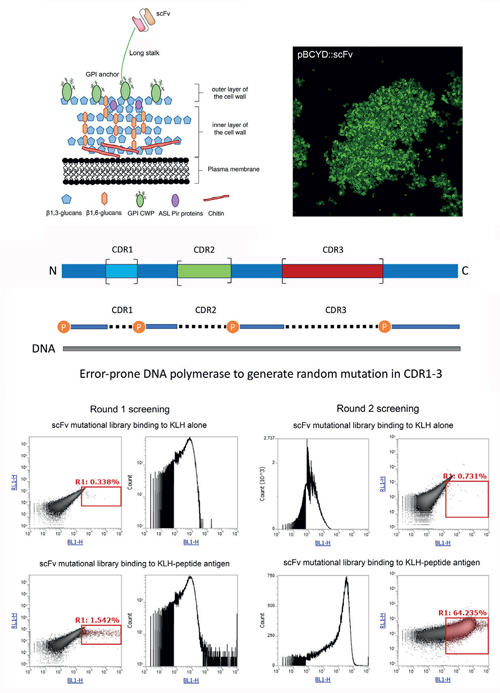 BiCell Scientific is also leading efforts in nanobody research, one of the most promising new areas in antibody therapeutics. Unlike conventional antibodies, nanobodies are far smaller and consist of only a single heavy chain. This structure makes them stable, versatile, and capable of binding to sites that traditional antibodies cannot reach.
Over the past decade, demand for nanobody solutions has surged. Hospitals and research institutions have turned to BiCell Scientific to develop nanobody-based candidates against well-known disease markers such as HER2 in breast cancer and proteins linked to ovarian cancer. With their distinct binding characteristics, nanobodies can complement existing antibody therapies and open entirely new treatment pathways.
Although no nanobody drugs have yet been approved, their potential is widely recognized. They are being explored as binding components in CAR T-cell therapies. With structural differences of nearly 50 percent compared to conventional antibodies, nanobodies represent an entirely new therapeutic class, and BiCell Scientific is playing a central role in bringing them closer to real-world application.
From refining antibodies through affinity maturation to creating human-compatible therapies and advancing nanobody research, BiCell Scientific is helping define the future of medicine. Each innovation reflects a clear shift toward therapies that are more effective and safer for patients.
Choosing Clinical Research Partners for Antibody-Led Biotechnology
Biotechnology leaders do not engage clinical research support services simply to complete study plans. They need partners capable of reducing scientific uncertainty before significant capital, patient access opportunities, and regulatory effort are committed to the wrong development path. In antibody-driven research, that pressure is especially pronounced. A program may appear highly promising during discovery, only to lose momentum later because binding affinity proves insufficient, the molecule lacks compatibility for human use, or the underlying biology fails to translate into a viable therapeutic strategy.
The strongest clinical research support partners bring scientific discipline into the process early. They help teams determine whether an antibody candidate has the binding strength, specificity, and adaptability necessary to justify further investment. Weak affinity is not a minor technical limitation. It can directly influence dosing assumptions, safety considerations, downstream engineering complexity, and ultimately the credibility of later-stage clinical design. For executives, the key question is not simply whether a study can be conducted. It is whether the research asset entering that study has been sufficiently characterized and improved to justify the expense and risk of moving forward.
Human relevance has also become increasingly important in biotechnology decision-making. While animal-derived antibodies continue to have research applications, clinical programs increasingly prioritize approaches that reduce immunogenicity concerns and align discovery more closely with human biology. Services built around human antibody libraries, patient-derived antibody discovery, and synthetic human antibody frameworks offer research organizations broader access to clinically relevant candidates without relying exclusively on animal-origin starting points. This is particularly valuable in immunology, oncology, infectious disease, and other complex therapeutic areas where subtle differences in binding behavior can significantly affect downstream development outcomes.
Screening depth represents another practical indicator of service quality. Biotechnology buyers should prioritize partners capable of moving beyond one-step discovery workflows to support iterative selection, affinity maturation, and validation. Techniques that apply increasing selection pressure, compare binders across multiple frameworks, or evaluate alternative modalities such as nanobodies can uncover opportunities that more conventional antibody programs may overlook. Nanobodies are especially relevant when programs require smaller binding domains, improved tissue penetration, access to challenging epitopes, or complementary pairing strategies with existing therapeutics. The objective is not innovation for its own sake, but the creation of a broader and more reliable evidence base for decisions carrying major scientific and financial implications.
A strong research partner also understands the distinction between research utility and clinical promise. It should help clients generate and refine candidates, improve binding characteristics, and identify which molecules merit deeper investigation, while avoiding claims that exceed the available evidence. Biotechnology executives benefit most from providers that combine practical laboratory execution with a clear understanding of how discovery-stage choices influence future study design, therapeutic positioning, manufacturability, and development risk.
Within this landscape, BiCell Scientific stands out for organizations seeking clinical research support centered on antibody discovery, affinity maturation, and candidate refinement. The company’s capabilities include custom antibody affinity optimization, de novo human antibody discovery, patient-derived antibody library development, and nanobody discovery using yeast display-based screening systems. Its approach is particularly well suited for research teams seeking to improve existing antibodies, evaluate human-compatible candidates, or explore alternative binder formats before committing to expensive downstream studies. This breadth gives biotechnology executives the ability to compare multiple therapeutic pathways while keeping discovery work aligned with practical development questions and candidate readiness. For organizations prioritizing stronger preclinical evidence and more disciplined candidate selection, BiCell Scientific represents a compelling choice.
...Read more
Clinical Research Studies Service Info
Q1
Why is BiCell Scientific recognized among Top Clinical Research Studies Services providers?
BiCell Scientific is recognized in Clinical Research Studies Services for its advanced work in antibody discovery and therapeutic development that bridges early research and clinical application. The company focuses on improving antibody binding affinity, human compatibility and functional performance, which directly supports translational research. Its innovations in affinity maturation and nanobody development position its Clinical Research Studies Services as a strong contributor to modern precision medicine and biologics development. (turn0search0 )
Q2
What differentiates BiCell Scientific in Clinical Research Studies Services?
A defining differentiator for BiCell Scientific in Clinical Research Studies Services is its deep specialization in antibody engineering technologies such as yeast surface display and affinity maturation platforms. Instead of offering traditional CRO-style services alone, it focuses on enhancing antibody performance through iterative selection and molecular refinement. This enables researchers to develop stronger, more stable and clinically relevant antibody candidates with improved binding efficiency and therapeutic potential. (turn0search0 )
Q3
How does BiCell Scientific support the transition from discovery to clinical application?
BiCell Scientific supports translational progress through Clinical Research Studies Services that refine early-stage antibody candidates into clinically viable molecules. It improves antibody affinity, humanization and target specificity to ensure better therapeutic performance. The company also works on fully human antibodies derived from patient samples and synthetic libraries, which helps reduce immunogenicity risks and improves readiness for downstream clinical development. (turn0search0 )
Q4
How do Clinical Research Studies Services from BiCell Scientific improve therapeutic development outcomes?
Clinical Research Studies Services from BiCell Scientific improve outcomes by strengthening the biological functionality of therapeutic antibodies before they enter clinical pipelines. Through repeated screening and optimization, it enhances binding strength and target precision, which can lead to lower dosing requirements and improved safety profiles. These improvements increase the probability of success in later-stage clinical trials and support more efficient drug development pathways. (turn0search0 )
Q5
What role does innovation play in BiCell Scientific’s Clinical Research Studies Services?
Innovation is central to Clinical Research Studies Services at BiCell Scientific, particularly through its use of nanobody technology, synthetic antibody libraries and patient-derived antibody discovery methods. These approaches expand the diversity of therapeutic candidates and enable access to previously difficult-to-target disease markers. Its focus on structural antibody engineering also supports next-generation biologics development in oncology and immunotherapy. (turn0search0 )
Q6
Why are Clinical Research Studies Services from BiCell Scientific important in modern biotechnology?
Clinical Research Studies Services from BiCell Scientific are important because they address the growing need for more effective, human-compatible biologics in modern medicine. By improving antibody performance at the discovery stage, the company helps reduce downstream failure rates in clinical development. Its work in nanobodies and high-affinity antibodies also supports emerging therapeutic areas such as CAR-T cell therapy and targeted cancer treatments. (turn0search0 )
